
Table of Contents
Why Courtroom Acoustics Matter
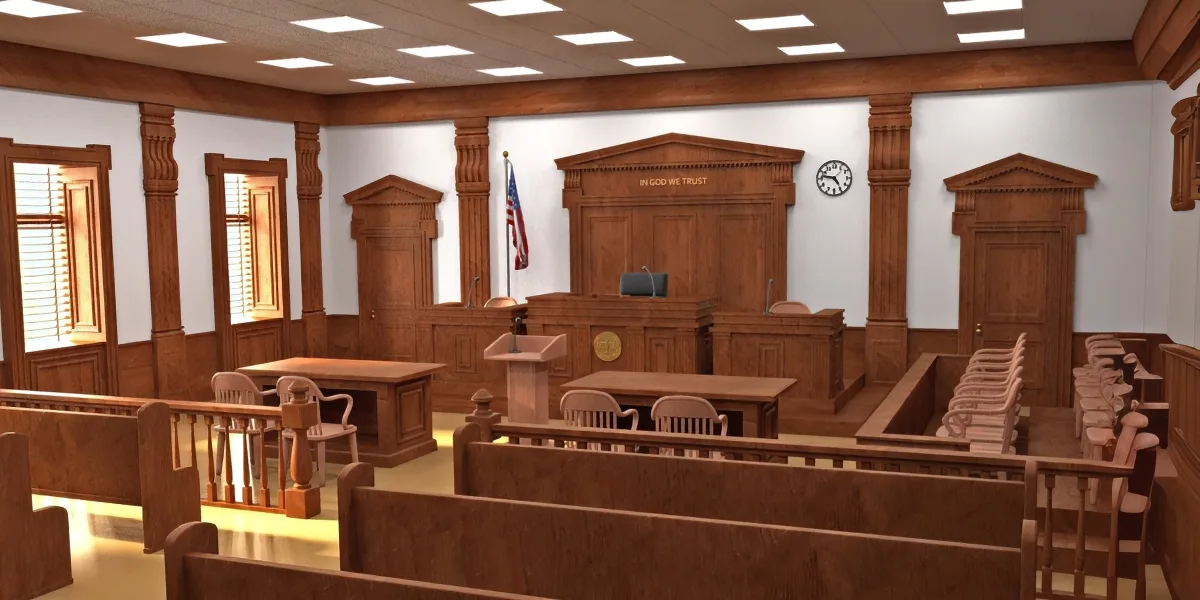
Clear communication is the foundation of justice. Inside a courtroom, every statement, testimony, and ruling must be heard and understood without distortion. Yet, many courthouses suffer from poor acoustics—high ceilings, hard surfaces, and open layouts that reflect and amplify sound instead of controlling it.
Courtrooms rely on speech more than any other civic space, and when sound quality suffers, so does comprehension. Jurors miss key details, attorneys repeat themselves, and judges struggle to maintain order. Proper acoustic treatment ensures that every voice carries clearly and that private discussions stay private.
Unique Acoustic Challenges in Courthouses
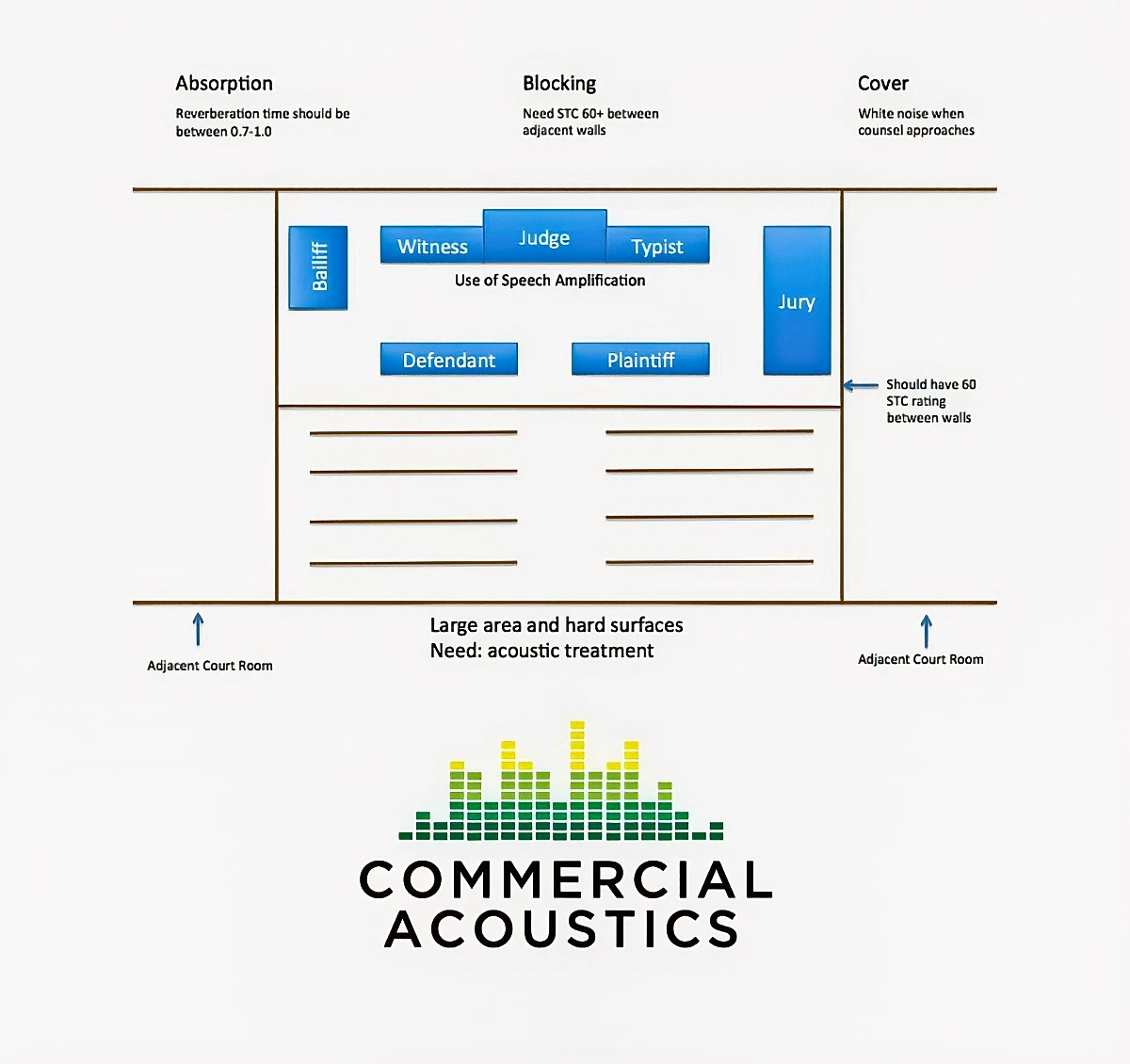
- Amplified Speech & Cross-Talk: Microphones help the jury and audience hear, but can transmit sound between adjoining courtrooms.
- Reverberation in Large Volumes: Tall ceilings and hard finishes cause echoes that make speech unintelligible.
- Speech Privacy: Sidebars and bench discussions require isolation from the public gallery.
Courtrooms present a blend of acoustic challenges: they must balance audibility with confidentiality. Large, reflective chambers allow voices to linger, while adjacent rooms can transmit amplified speech through walls. Acoustic treatment must therefore address both sound control and sound containment.
Acoustic Constraints & Architectural Considerations
- Reflective Finishes: Wood paneling, stone, and plaster surfaces create excessive reverberation.
- Geometric Shapes: Vaulted ceilings and irregular layouts cause uneven sound distribution.
- Shared Walls: Sound easily transfers between adjoining courtrooms without proper insulation.
Courtrooms are often designed for prestige, not performance. Their hard surfaces and elevated ceilings amplify echo, while adjacent rooms can experience sound bleed from amplified voices or nearby hallways. Without acoustic treatment, speech becomes muddy, and private dialogue risks exposure.
Maintaining Courtroom Aesthetics with Custom Acoustic Panels
- Architectural Harmony: Acoustic panels can match existing wood tones or neutral finishes.
- Durable Materials: Fabric-wrapped panels withstand daily use and preserve visual integrity.
- Discreet Design: Treatments blend seamlessly into traditional interiors.
Courtrooms are formal spaces that demand aesthetic restraint. Acoustic panels, ceiling clouds, and baffles can be designed to complement the existing architecture—integrating quietly behind the wood grain and symmetry of the room. Acoustic treatments should never distract from the environment; they should simply make it function better.
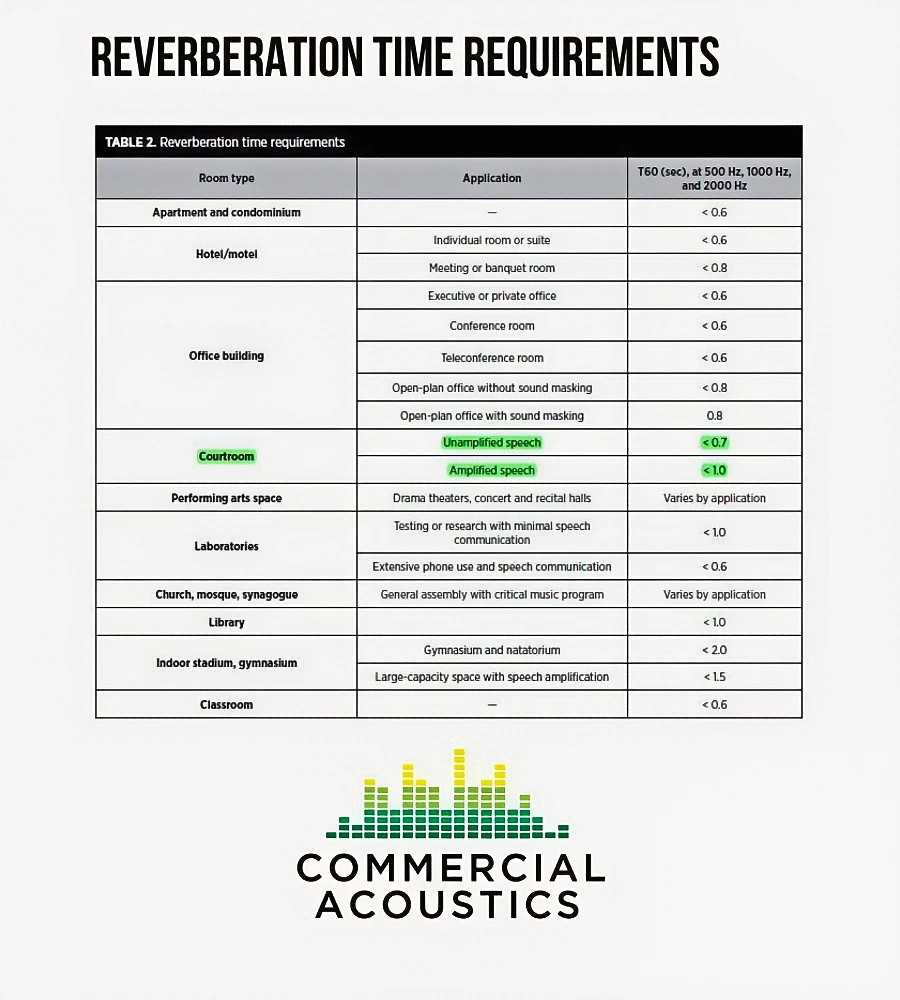
Courtrooms need acoustic treatment to keep reverberation below 0.7 seconds for speech and under 1.0 second when amplified.
Primary Acoustic Issues in Courtrooms
- Reverberation (Echo): Excess echo disrupts speech clarity and focus.
- Sound Transmission: Noise travels through shared walls, floors, and entry doors.
- Imbalanced Sound Fields: Judges, jurors, and spectators may experience uneven sound.
While total silence isn’t the goal, excessive reverberation creates confusion. In adjacent rooms, amplified speech may leak through partitions, distracting ongoing trials. The ideal reverberation time for courtrooms is typically below 0.7 seconds for unamplified speech and under 1.0 second for amplified sound.
Recommended Acoustic Treatments
- Sound Absorption: Acoustic wall panels, ceiling clouds, and baffles to reduce reverberation.
- Sound Blocking: Wall Blokker PRO or similar membranes to raise partition ratings to STC 60 or higher.
- Sound Masking: Controlled white noise to maintain privacy during bench conferences or sidebar discussions.
Commercial Acoustics uses the ABC² framework—Absorption, Blocking, Cover, and Consulting—to design complete solutions for courtroom acoustics. Absorption products should achieve NRC ratings of 0.8 or higher. Soundproof membranes, such as Wall Blokker PRO, are essential for limiting transmission between adjacent rooms. For confidential conversations, sound masking ensures speech privacy without disrupting proceedings. Use Acoustic Calculator to determine necessary acoustic treatment area.
When to Implement Acoustic Treatment
- During Design or Renovation: Plan for acoustic control before finishes are installed.
- Before Installing Audio Systems: Manage reflections prior to microphone calibration.
- In Response to Complaints: Address echo, feedback, or privacy issues reported by judges and staff.
Acoustic treatment can be introduced at any stage of design or construction, but early integration yields the best results. Retrofitting treatments after occupancy is possible and often highly effective with the right materials and design strategy.
You can learn more about our real-world results by exploring our courthouse acoustic case studies.
Conclusion: Building Courtrooms That Sound as Professional as They Look
Courtroom acoustics are about more than comfort—they’re about fairness, clarity, and authority. Poor acoustics can compromise understanding and concentration, while well-designed spaces enhance communication and respect for the process.
Commercial Acoustics provides design consultation, modeling, fabrication, and installation for courthouse acoustic treatment nationwide. If your facility struggles with echo, sound transmission, or speech privacy, contact our team to create a courtroom that delivers clarity and confidentiality in equal measure.
FAQs: Courtroom Acoustics & Acoustic Treatment for Courthouses
What is the ideal reverberation time for a courtroom?
Typically under 0.7 seconds for unamplified speech and below 1.0 second for amplified speech, ensuring clear and natural dialogue.
How can courtroom privacy be improved?
Installing sound masking systems near the bench or sidebar provides privacy for confidential discussions without disrupting proceedings.
Can acoustic panels match courtroom wood finishes?
Yes. Panels can be fabric-wrapped or designed with wood veneers to match existing décor, preserving the courtroom’s traditional aesthetic.
Do older courthouses need acoustic upgrades?
Most do. Older courthouses were not built with modern acoustic standards in mind, and targeted treatments can dramatically improve clarity.
Does Commercial Acoustics provide turnkey service?
Yes. Our team handles acoustic analysis, material design, and installation for courthouses and civic buildings across the country.
