Table of Contents
The Role of Acoustic Testing Equipment in Modern Consulting
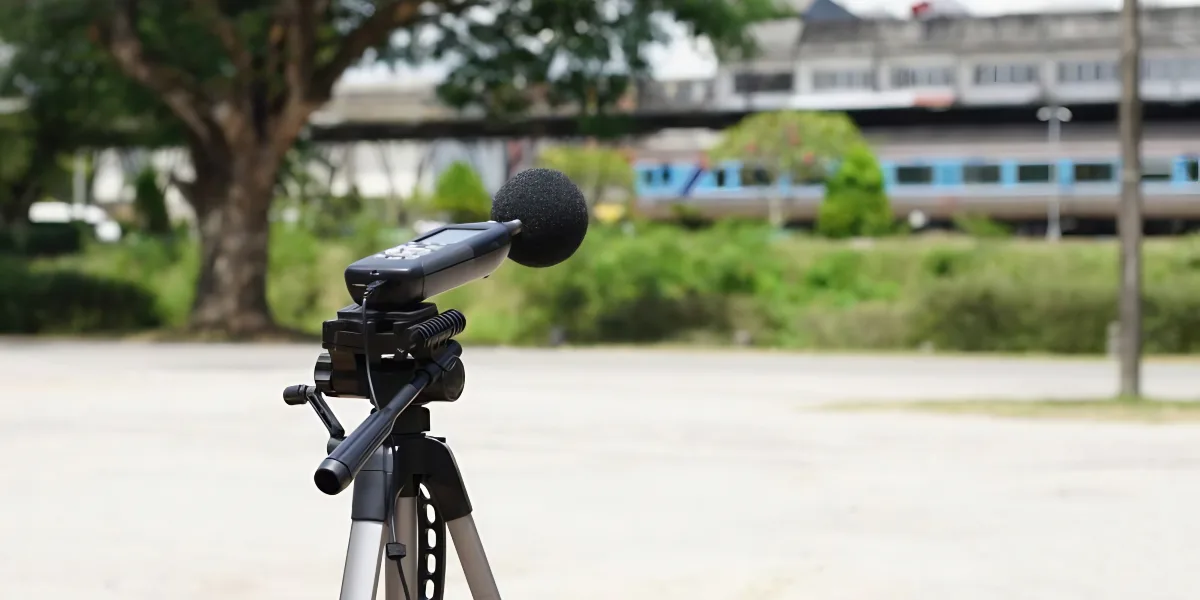
Accurate acoustic design begins with precise measurement—and that depends on the quality of the testing hardware behind it. Professional consultants rely on specialized acoustic testing equipment and hardware to quantify how sound behaves within walls, across floors, and throughout open spaces. From calibrated SPL meters to tapping machines, each instrument plays a critical role in turning noise into data architects and engineers can trust.
These calibrated tools measure airborne sound, structural vibration, and reverberation decay with repeatable accuracy. The results verify code compliance, guide design decisions, and confirm real-world performance after construction. In short, reliable hardware transforms acoustic testing from guesswork into science—and helps ensure that every space performs exactly as intended.
Essential Acoustic Testing Equipment
- Sound Pressure Level (SPL) Meters: Measure loudness and frequency response
- Tapping Machines: Create repeatable impact noise for floor testing
- White Noise Sources: Produce broadband sound for wall transmission tests
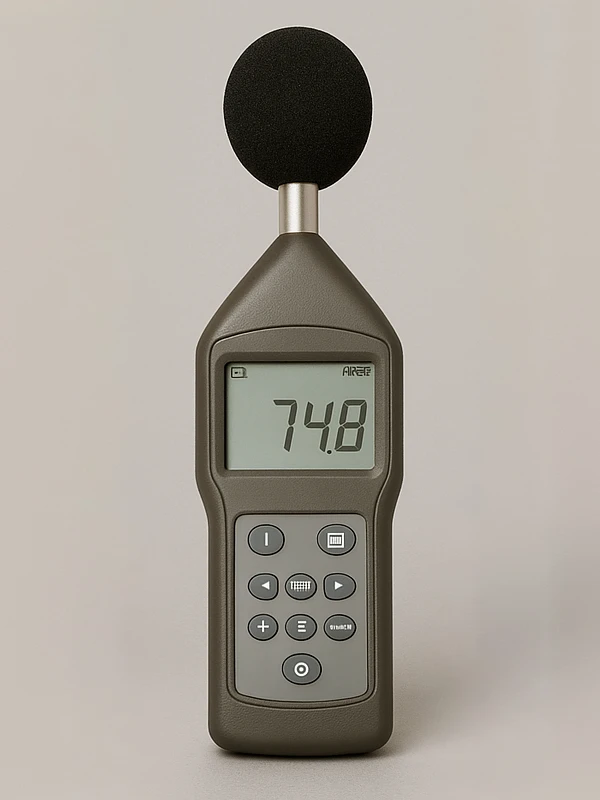
At the heart of every test lies accurate measurement. Professional acoustic testing equipment—especially calibrated SPL meters—provides the precision needed to record true sound levels across multiple frequencies. Type 1 SPL meters offer ±1 dB accuracy, while Type 2 models are slightly less precise but still reliable for most field conditions. The tapping machine, which repeatedly drops metal hammers on a test floor, simulates footfall to determine structural noise transmission. Finally, the white noise source (or loudspeaker) produces a controlled frequency spectrum used during wall and partition tests to measure airborne sound transmission.
Common Acoustic Testing Hardware in the Field
- Impulse Generators: Balloons, cap guns, or automated clappers for RT60 testing
- Integrating-Averaging Meters: Capture real-time average sound levels
- Calibration Devices: Maintain annual accuracy across all instruments
Beyond the basic SPL meter, acoustic consultants use specialized testing hardware to ensure every measurement is accurate and repeatable. Impulse generators produce short bursts of sound that allow reverberation times to be measured precisely. Integrating-averaging meters record fluctuating sound levels over time, while calibration devices guarantee compliance with ANSI and ISO standards. This precision distinguishes professional results from consumer-grade apps, which can vary by more than 10 dB.
Acoustic Test Types: STC, IIC & RT60
- STC (Sound Transmission Class): Airborne sound isolation of walls
- IIC (Impact Insulation Class): Structure-borne sound isolation of floors
- RT60 (Reverberation Time): Echo decay rate in enclosed spaces
Each test type reveals a different dimension of acoustic performance. An STC test measures how effectively a wall blocks airborne sound. By playing high-amplitude white noise (typically around 100 dBA) on one side and measuring sound levels on the other, consultants determine the difference—known as ASTC in field conditions.
An IIC test uses a tapping machine to simulate footsteps and structural vibration. The lower the measured dB level below the floor, the better the isolation.
Lastly, the RT60 test measures how long it takes for sound energy to decay by 60 dB after an impulse. This data helps designers select the right acoustic treatments—like wall panels or ceiling baffles—to achieve target reverberation times for classrooms, auditoriums, or studios.
Understanding Sound Duration Measurements
- Ldn: Day-night sound averages with nighttime penalty adjustments
- Leq: Equivalent continuous noise level over a period of time
- L90: Sound level exceeded 10% of the time
While frequency and amplitude get the spotlight, duration matters just as much. Acoustic consultants evaluate how noise fluctuates across minutes or hours, using duration metrics to paint a fuller picture. The Ldn value accounts for day-night cycles by adding a 10 dB penalty to nighttime noise. Leq averages overall exposure across time, and L90 isolates persistent background noise levels. Together, these metrics provide insight into real-world conditions—whether in an airport, factory, or residential community.
When to Hire an Acoustic Consultant
- Pre-Construction Testing: Establish baseline sound conditions
- Post-Construction Verification: Confirm wall and floor assemblies meet design targets
- Problem-Solving Analysis: Diagnose occupant complaints or code violations
Hiring a professional acoustic consultant ensures that data collected from acoustic testing equipment is both defensible and actionable. Consultants use calibrated hardware, standardized procedures, and independent analysis to confirm that your project meets acoustic design intent. For architects and contractors, this means fewer warranty calls, smoother occupancy approvals, and happier clients.
Conclusion: Precision Hardware for Proven Acoustic Performance
Behind every successful acoustic project is a toolbox of precision instruments—and a consultant who knows how to use them. Accurate readings depend on specialized hardware that can detect, record, and analyze sound in ways human hearing simply can’t. The result is hard data that informs design, validates construction, and protects long-term performance.
For professionals in architecture and construction, investing in qualified acoustic testing isn’t just about compliance—it’s about confidence. With the right acoustic testing equipment, you gain measurable proof that your design goals are met and your spaces perform as intended.
If you’re ready to bring data-driven precision to your next project, connect with our acoustic consulting team today at Commercial Acoustics for reliable testing, certified hardware, and results that stand up to real-world performance.
FAQs: Acoustic Testing Equipment & Hardware
What’s the difference between Type 1 and Type 2 SPL meters?
Type 1 meters are laboratory-grade with ±1 dB precision, while Type 2 are used for general field work. Both require annual calibration to maintain accuracy.
Can I use a smartphone app for acoustic testing?
Not reliably. Consumer devices can be off by 10 dB or more. Professional acoustic testing hardware ensures results that meet ANSI/ISO standards.
What’s the most important tool for an acoustic consultant?
A calibrated SPL meter remains the cornerstone of all measurements, but accuracy ultimately depends on a full suite of tools—tapping machines, white-noise sources, and impulse generators working together.
How often should acoustic testing equipment be calibrated?
Typically, once per year. However, consultants performing frequent field tests or lab measurements often recalibrate more frequently to maintain compliance with ASTM and ISO standards.
Is acoustic testing equipment available for short-term rental?
Yes. Many consultants and testing firms offer rental options for tapping machines, SPL meters, and microphones. Renting can be practical for one-time verification projects, while ownership makes sense for ongoing facility assessments.
