Mass Loaded Vinyl Sound Barrier: When to Use & Why It Works!
Table of Contents
Introduction: A Flexible, High-Performance Sound Barrier
This soundproofing membrane is widely used in commercial, residential, and industrial buildings for blocking airborne noise. Its ability to add acoustic mass without increasing wall thickness makes it a smart choice when space, weight, or budget is limited.
Unlike absorbent materials that trap sound energy, this solution works by interrupting sound waves through its dense, limp structure. Whether installed behind drywall or beneath flooring, it’s a practical method to improve acoustic isolation without reengineering the assembly.
What Is Mass Loaded Vinyl & How Does It Work?
- Flexible Sound Barrier: Blocks airborne noise with limp mass properties
- Mineral-Loaded PVC: Filled with calcium carbonate or barium sulfate
- STC Booster: Increases sound ratings by 5–10 points in typical builds
This barrier material is a heavy, plasticized sheet designed to stop sound from passing through partitions. Its density comes from mineral fillers, while its limpness helps dissipate vibrations rather than allowing them to transmit through rigid surfaces. You can explore available products on our Mass Loaded Vinyl product page.

Best Use Cases for MLV in Building Assemblies
- Steel Stud Walls: Improves STC without double-stud framing
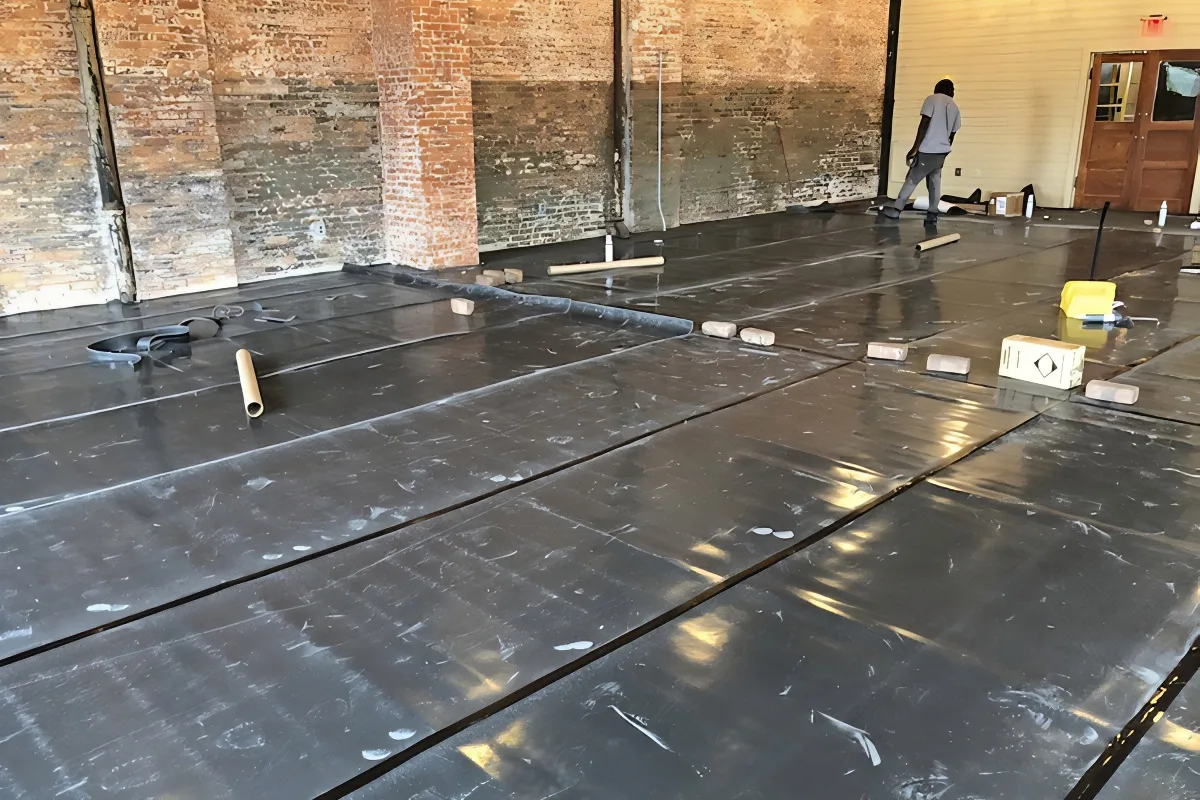
- Ceiling & Floor Retrofits: Installs between layers or under flooring
- Studios, Theaters & MEP Rooms: Used where acoustic isolation is critical
This material performs exceptionally well in steel stud wall assemblies where boosting STC is needed without the complexity of double-stud construction. It’s also ideal for high-sensitivity spaces like recording studios, theaters, and mechanical rooms, where isolating airborne noise is critical. In retrofit scenarios, it can be installed above ceilings, below flooring, or even wrapped around ductwork and noisy equipment for added acoustic control.
Pros & Cons of Mass Loaded Vinyl
- Cost-Efficient Performance: Delivers reliable sound isolation affordably
- Consistent Field Results: Performs close to lab values in real-world installs
- Quick Installation: Crews can install 700+ square feet per day
This solution offers an ideal balance between acoustic performance and affordability, making it a go-to option for value-driven projects. Unlike more complex systems that rely heavily on precise installation, it delivers consistent results even in less-than-perfect field conditions. With fast install rates and minimal learning curve, it’s a practical upgrade for commercial partitions and retrofit applications alike.
How to Select the Right MLV for Your Project
- 1 lb vs. 2 lb Options: Select weight based on frequency control & layout
- Fire Rating Compliance: Use ASTM E84 Class A rated products
- Backing Types: Choose smooth or fleece-backed for your application
Standard 1 lb MLV works well for most wall and ceiling assemblies, while 2 lb versions offer stronger low-frequency performance but are heavier and more difficult to install. Always verify fire rating compliance—Class A per ASTM E84 is typically required in commercial builds. Backing options like smooth or fleece-faced rolls can also impact handling and adhesion, depending on your installation method. For direct comparisons of thickness, cost, and availability, you can explore product specs at Soundproof Direct.
What Does MLV Cost Per Square Foot?
- Standard Pricing: 1 lb MLV usually costs $1.00–$2.00 per square foot
- Thinner Options: 1/16″ thick sheets may cost as low as $0.50/sf
- Premium Grades: High-performance MLV can range up to $8.00/sf
While manufacturing costs are relatively low, final pricing depends on product weight, thickness, and supplier markup. Standard 1 lb MLV typically runs between $1.00 and $2.00 per square foot, while thinner 1/16″ options may be as low as $0.50/sf. On the higher end, premium or specialty versions can reach $8.00/sf. Always compare cost with verified acoustic data to ensure performance aligns with your project goals.

Tips for Installing MLV Sound Barriers
- Use Mechanical Fasteners: Staple, screw, or nail directly to framing
- Seal All Seams: Acoustical caulk or seam tape prevents flanking
- Avoid Compression: Never sandwich MLV between rigid drywall layers
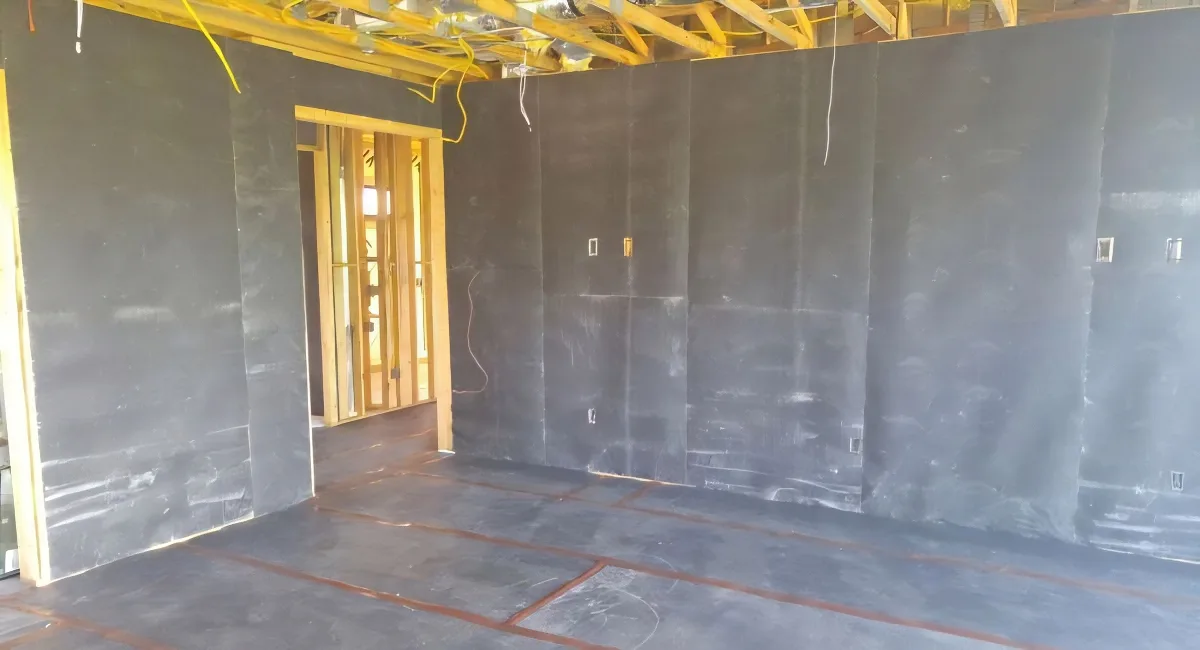
Correct installation is key to achieving full acoustic benefit. MLV should be fastened directly to studs or joists using screws, nails, or staples with large washers. Seams must be sealed with acoustical caulk or seam tape to prevent flanking paths. Avoid compressing it between rigid layers—doing so limits its flexibility and weakens its ability to absorb and block sound energy effectively.
Mass Loaded Vinyl does have some limitations when used on wood studs. Although it does improve STC rating, it is much more effective when used on staggered wood studs, and performs even better on metal studs.
Where MLV Falls Short: Limitations & Smarter Alternatives
- Impact Noise Control: MLV won’t address footstep or structural vibration
- Low Tear Strength: Requires support on long spans or ceilings
- VOC Off-Gassing: Cheaper MLVs may affect air quality or degrade over time
While excellent for airborne sound, MLV isn’t effective against impact noise like footfalls or vibrations through structure. In these scenarios, it should be paired with resilient underlayments or floating floors. Additionally, its low tear strength requires reinforcement in ceiling applications or long spans. Some budget-grade MLV products may also emit VOCs over time, so material quality matters—especially in sealed environments.
Wall Blokker vs. Standard MLV: Key Differences
- Improved STC Ratings: Higher acoustic performance per pound
- Custom Roll Lengths: Ideal for reducing seams in tall walls
- Lab-Tested Assemblies: Backed by ASTM E90 sound tests
Wall Blokker offers a high-performance upgrade with improved STC ratings and reduced seam waste thanks to custom roll lengths. It’s backed by ASTM E90 lab data, making it ideal for applications where verified performance is required. While more expensive, it offers better sound-blocking efficiency per pound and greater design flexibility for high-spec acoustic builds.
Case Studies: MLV Soundproofing in Action
Cinepolis Hamlin: Luxury Cinema Soundproofing with MLV
At Cinepolis Hamlin in Winter Garden, FL, deep bass noise was bleeding between auditoriums. By installing Wall Blokker MLV on both sides of partitions, we achieved STC 65+ with major low-frequency control—cutting three weeks off the build schedule while preserving the luxury theater experience.
👉 Learn more in our Cinepolis Hamlin cinema soundproofing with MLV case study.

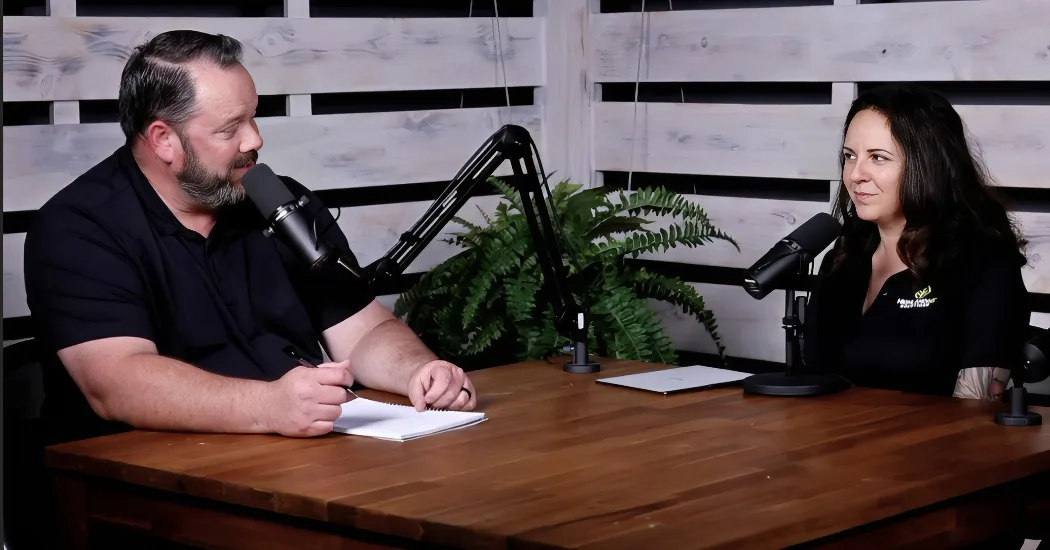
Highland AG: Office & Podcast Studio Soundproofing
In Mulberry, FL, Highland AG needed both office privacy & studio-grade acoustics. We used reinforced MLV barriers above ceilings to block flanking noise between offices, while pairing acoustic panels & ceiling clouds to retrofit a warehouse into a professional podcast studio.
👉 Dive into our podcast studio soundproofing case study featuring MLV.
Art District Flats: Multi-Family Floor Underlayment in Denver
Denver’s Art District Flats required a cost-effective underlayment to meet strict IIC ratings on thinner slabs. Our 6mm Floor Blokker—an EVA-MLV hybrid—was installed across 63,000 SF, reducing footfall & airborne noise while staying on budget for this eight-story multi-family project.
👉 See our Art District Flats multi-family soundproofing with MLV case study.

Conclusion: MLV as a Trusted Sound Barrier in Modern Construction
This material continues to be a practical, effective solution for blocking airborne noise in partition walls, ceilings, and floor systems. Its flexibility, ease of installation, and performance consistency make it a reliable choice when you’re looking to increase STC without major redesign.
That said, it’s best used as part of a larger acoustic strategy. It won’t address impact or structural noise, and certain installations may require reinforcement or supplemental materials. Understanding its role in the assembly—and using the right weight, backing, and fastening method—will help maximize performance.
If you’re weighing options for your next sound-sensitive project, reach out to our team at Commercial Acoustics for material comparisons, pricing, and technical guidance tailored to your assembly. You can also calculate performance estimates with our STC Calculator.
FAQs: Mass Loaded Vinyl & Sound Barrier Applications
What’s the best wall assembly for mass loaded vinyl?
MLV performs best in steel stud walls with batt insulation and decoupling (e.g., resilient channel or staggered studs). Installed correctly, it can raise STC ratings by 7–10 points.
How much does mass loaded vinyl cost per square foot?
Standard 1 lb MLV ranges from $1.00 to $2.00 per square foot. Lighter or thinner options can be as low as $0.50/sf, while high-performance or specialty versions may exceed $5.00/sf.
Can mass loaded vinyl be used in fire-rated assemblies?
Yes, but only if it has an ASTM E84 Class A fire rating. Always verify documentation if you’re including MLV in rated wall or ceiling assemblies.
Does MLV reduce impact noise like footsteps?
Not effectively. It blocks airborne sound, but for impact noise, you’ll need underlayments or floating floor systems designed for IIC improvement.
How is MLV different from Green Glue?
MLV adds mass to block sound. Green Glue adds damping to reduce vibration. They serve different functions and are often used together in high-STC wall systems.