Table of Contents
Project Overview: Acoustic Panels in a Community Center
- Project: Acoustic Wall Panel Installation
- Address: 1821 NW 21st Ave, Ocala, FL 34475
- Facility Type: Two-Story Community Center & Gym
- General Contractor: City of Ocala / Facilities & Recreation
- Objective: Reduce Reverb & Improve Acoustics in Event & Activity Areas
- Scope: Install Custom-Colored Cementitious Wood Fiber Panels Throughout
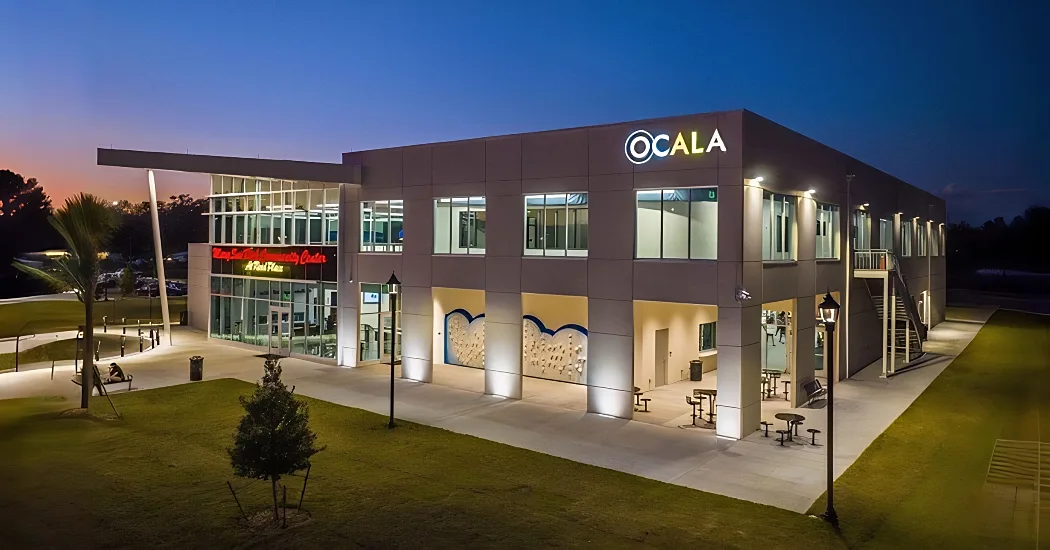
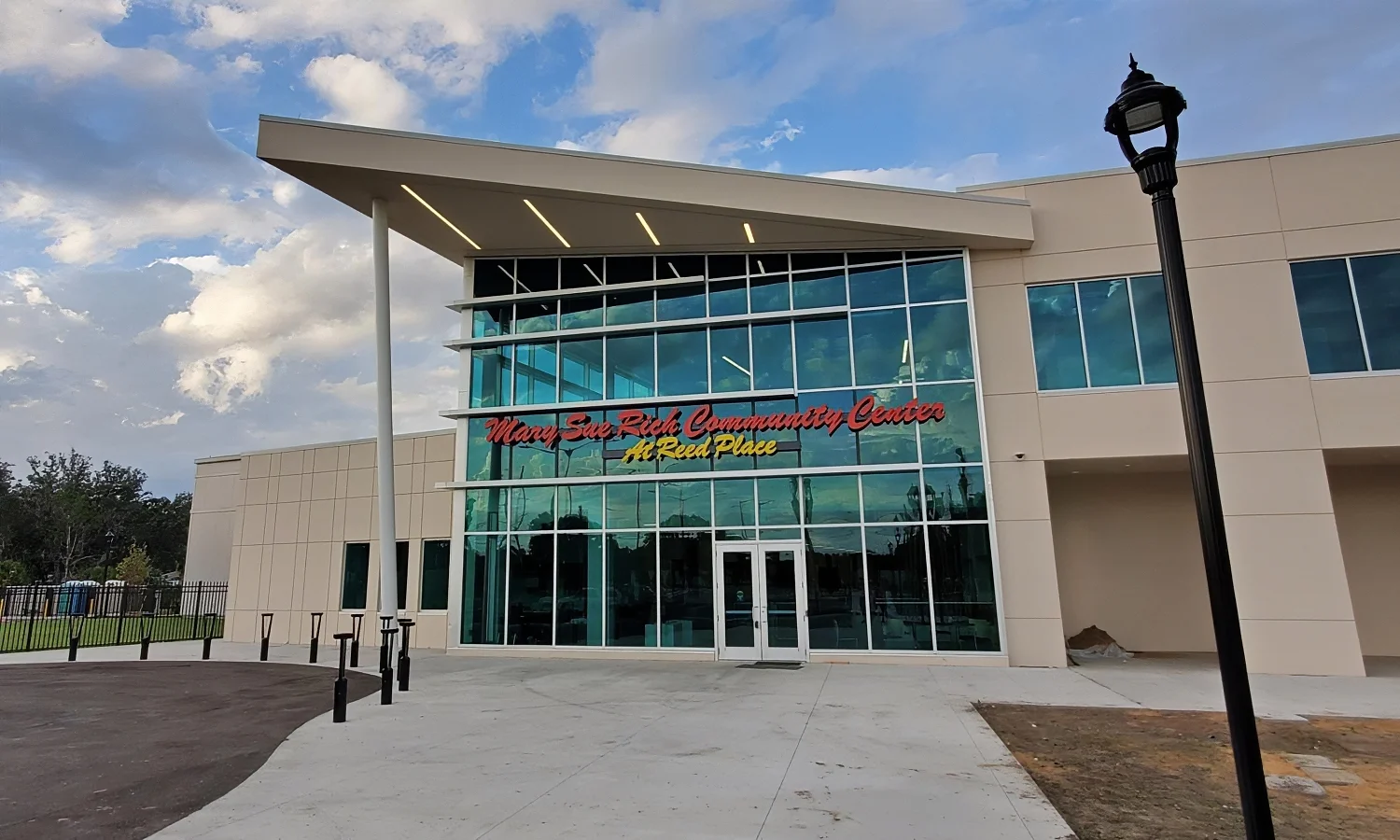
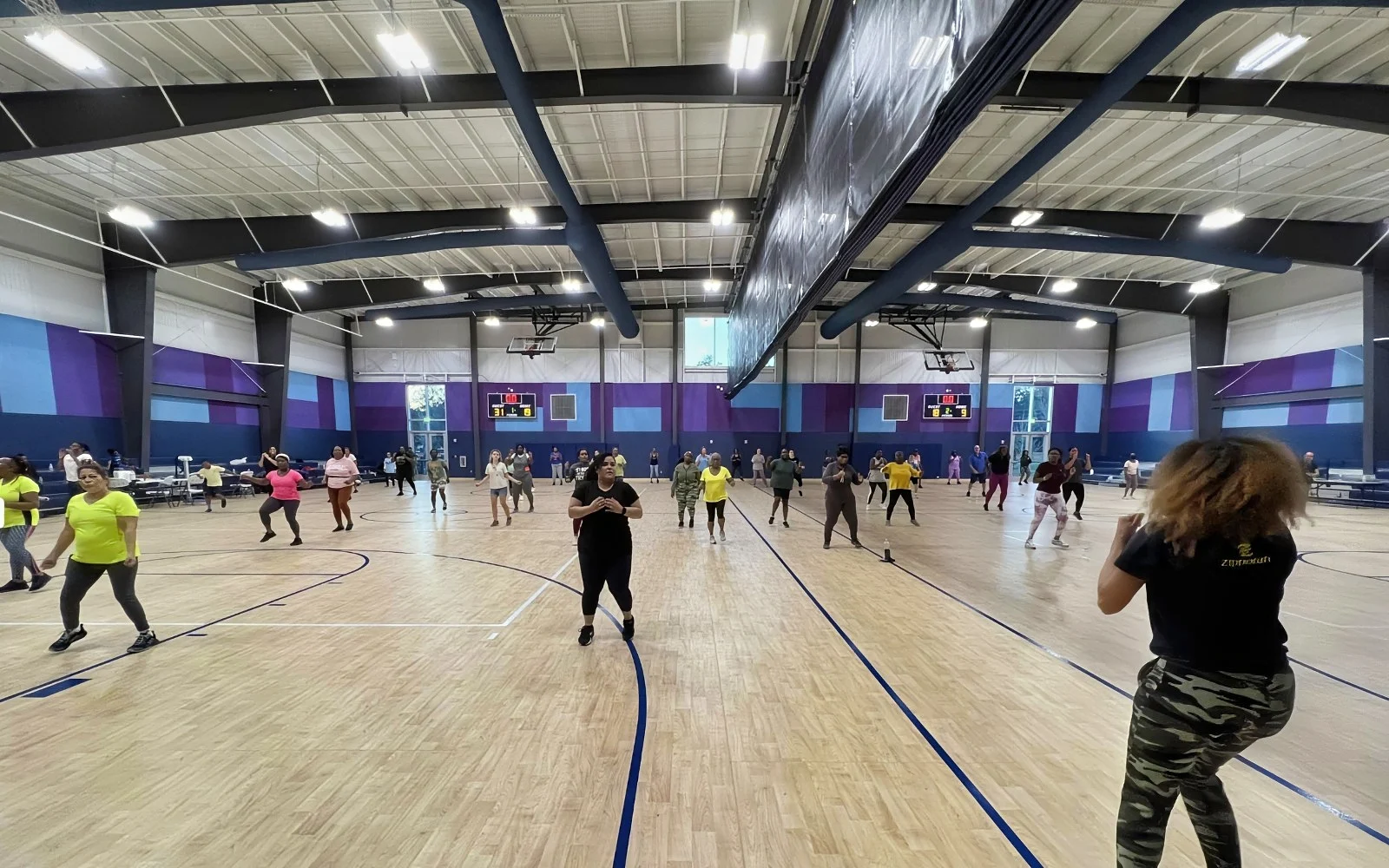
Located in the heart of Ocala, Florida, the Mary Sue Rich Community Center at Reed Place is a 41,750-square-foot, multi-use facility designed to serve residents of all ages. From youth programs to senior wellness, the space accommodates a wide variety of activities—including sports, banquets, meetings, and family gatherings. With this high volume of traffic and an abundance of reflective materials like metal walls, wood flooring, and rubber surfaces, the space demanded acoustic solutions that were both functional and durable.
The facility includes indoor spaces for recreational and educational programming, a public library, a banquet hall divisible into three rooms, fitness areas, and two full basketball courts. Given the broad community use, the architect prioritized both performance and cost-effectiveness when specifying acoustic treatments. The solution: custom-colored cementitious wood fiber panels installed across high-impact spaces.
Acoustic Challenges in a Modern Public Center
- Reflective Surfaces: Metal Walls & Wood Floors Amplified Echo
- Multi-Use Layout: Events & Sports Created Overlapping Sound Zones
- Speech Intelligibility: Clarity Was Reduced During Large Gatherings
The open layout of this facility, with its basketball courts, banquet space, and multipurpose rooms, created significant acoustic issues. Activities such as fitness classes or basketball games can generate high sound levels that bounce off reflective surfaces, leading to extended reverberation times. In the large event spaces—especially those divisible into smaller rooms—maintaining clarity for speech and conversation was a high priority.
To address these concerns, the architect specified wall-mounted acoustic panels as a core part of the design. The goal: introduce high-durability acoustic absorption without compromising budget or long-term maintenance.
Why Wood Fiber Panels Were the Right Fit
- High Durability: Tectum Panels Resist Impact & Scratches
- Budget-Friendly: Cost-Effective vs. Fabric-Wrapped Fiberglass
- Low Maintenance: Paintable Finish Allows for Quick Touch-Ups
Cementitious wood fiber panels were chosen for their unique combination of resilience and affordability. Unlike traditional fiberglass panels that may dent or tear when impacted, Tectum wood fiber panels hold up to daily wear-and-tear from sports equipment, foot traffic, and even occasional abuse. Their rugged texture is ideal for high-activity zones like gymnasiums and event halls.
Additionally, while fabric panels often require full replacement when damaged, Tectum’s painted surface can be quickly touched up with standard latex paint—saving both time and long-term maintenance costs. For municipal projects, especially in budget-conscious settings like community centers, this ease of upkeep is a major advantage.
Installation Process & Panel Configuration
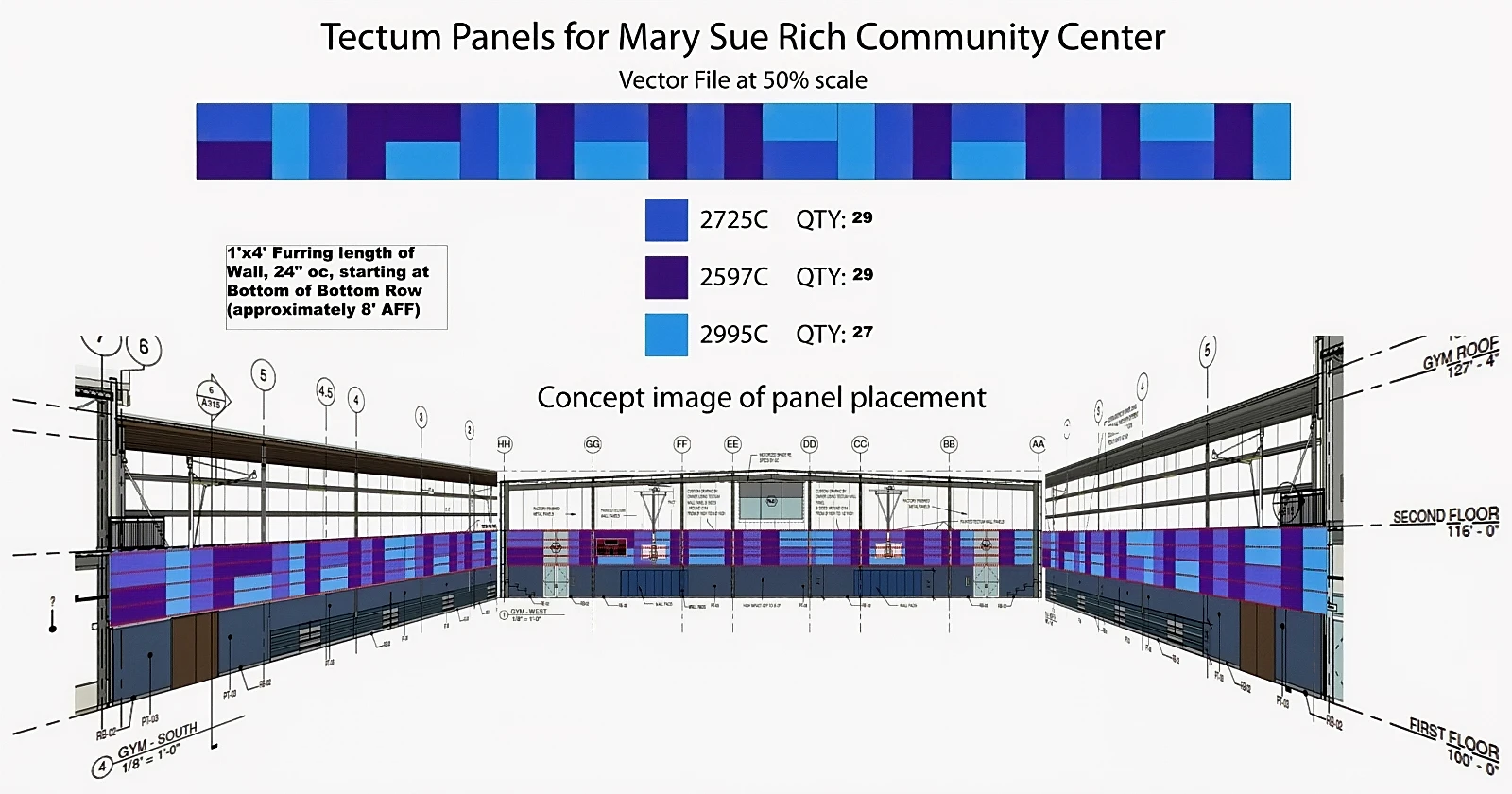
- Custom Layout: Architect-Designed Grid With Multiple Color Zones
- Direct Mount: Panels Installed Flush to Metal Walls (Type A)
- Precise Fit: Panels Notched Around Angle Irons & Obstructions
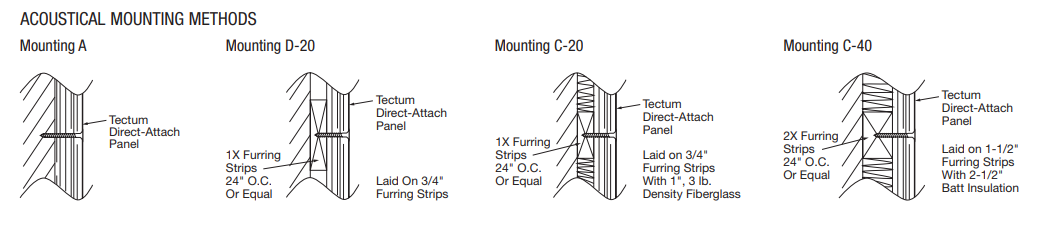
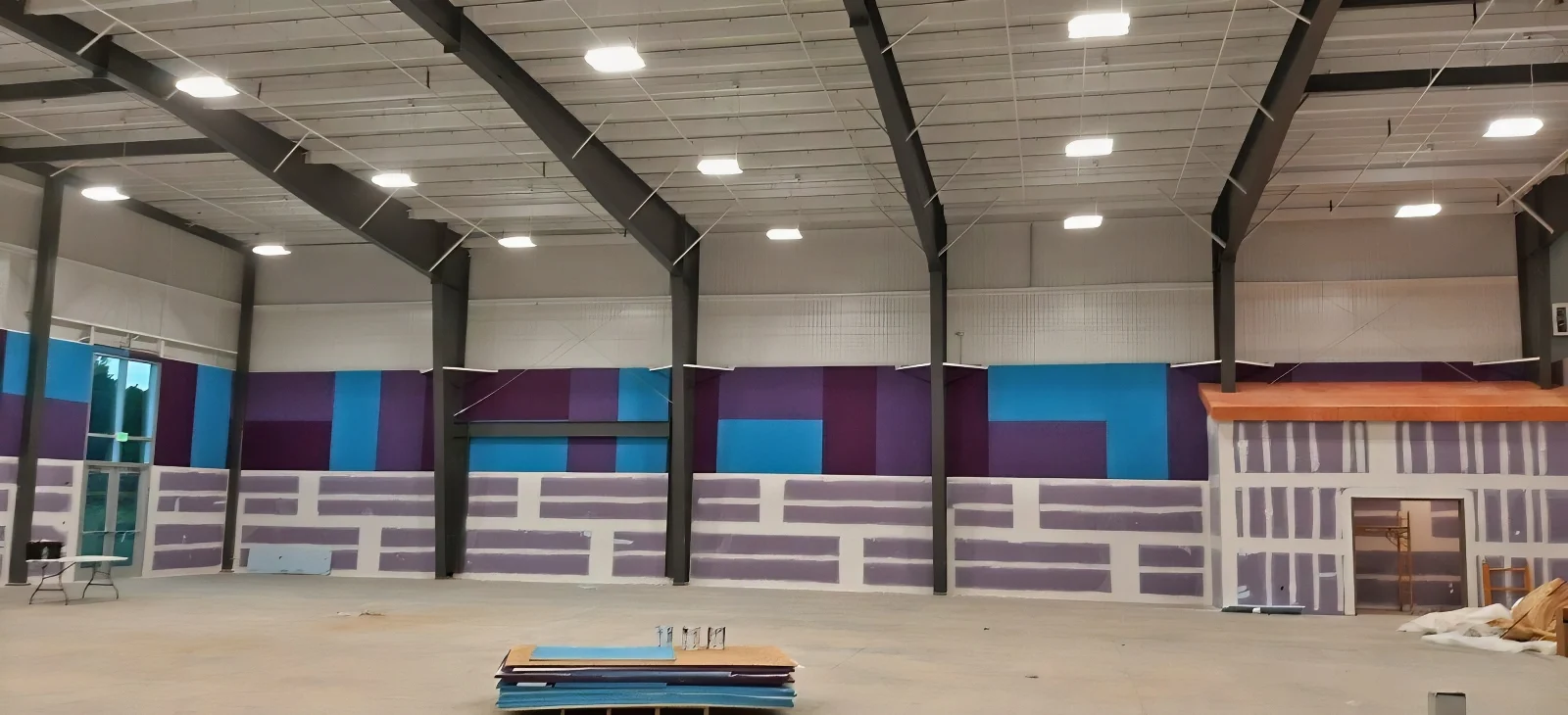
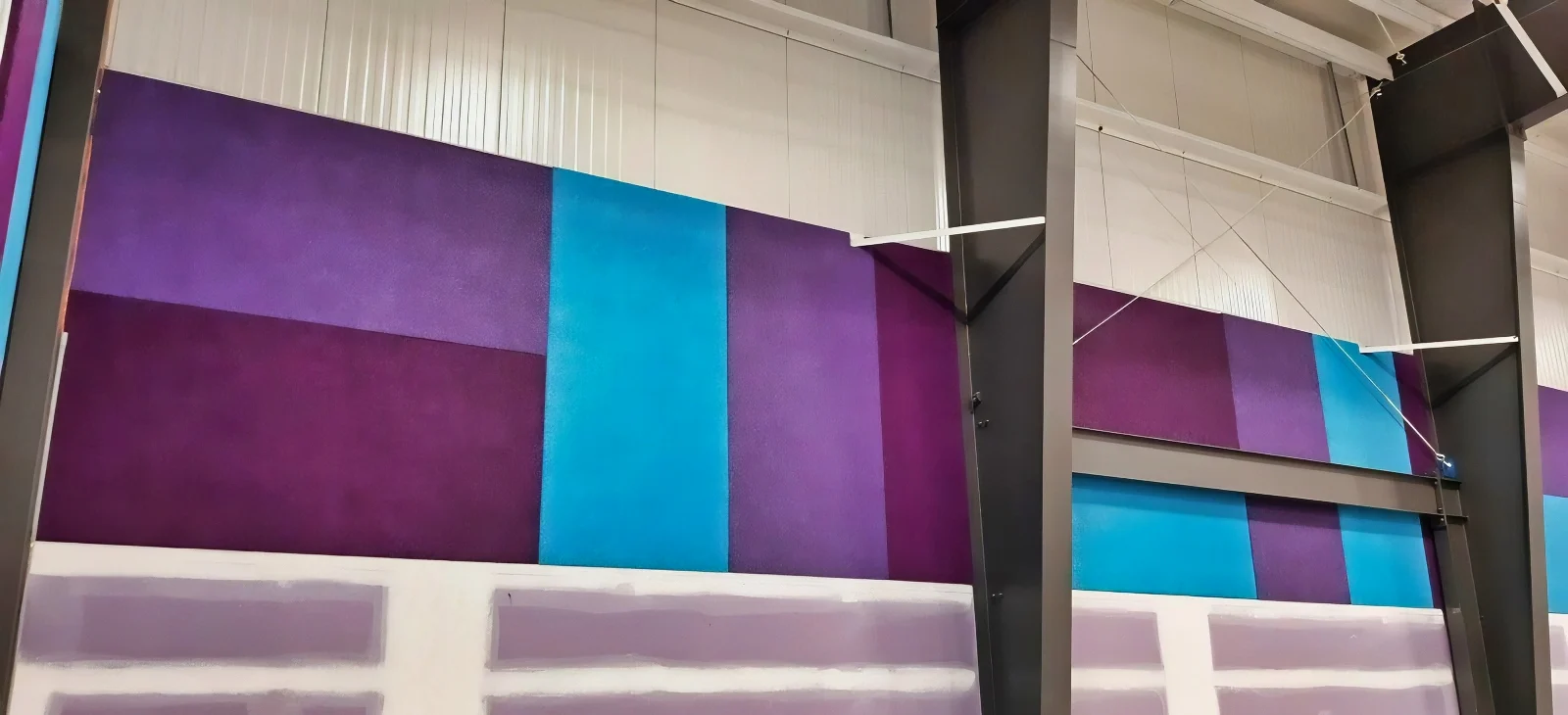
Following the architect’s layout, our team installed custom-painted Tectum Direct Attach Wall Panels in selected activity zones. These were mounted directly to the building’s metal surfaces—what’s known as a Type A installation—providing a base Noise Reduction Coefficient (NRC) of 0.40. While this mounting style offers the lowest NRC of the available methods, it still represents a significant acoustic improvement in such a large, hard-surfaced environment.
In some areas, angle irons and structural brackets required precision field modifications. Our installation team notched panels cleanly around these details, maintaining aesthetic alignment with the color-blocked design. The end result was a visually seamless acoustic treatment that blended naturally into the architecture of the space.
Performance of Wood Fiber Panels in Community Settings
- Baseline NRC: Direct Mount Offers NRC of 0.40
- Enhanced Options: Up to NRC 0.85 With Cavity & Fiberglass
- Design Flexibility: Mounting Method Can Match Acoustic Needs
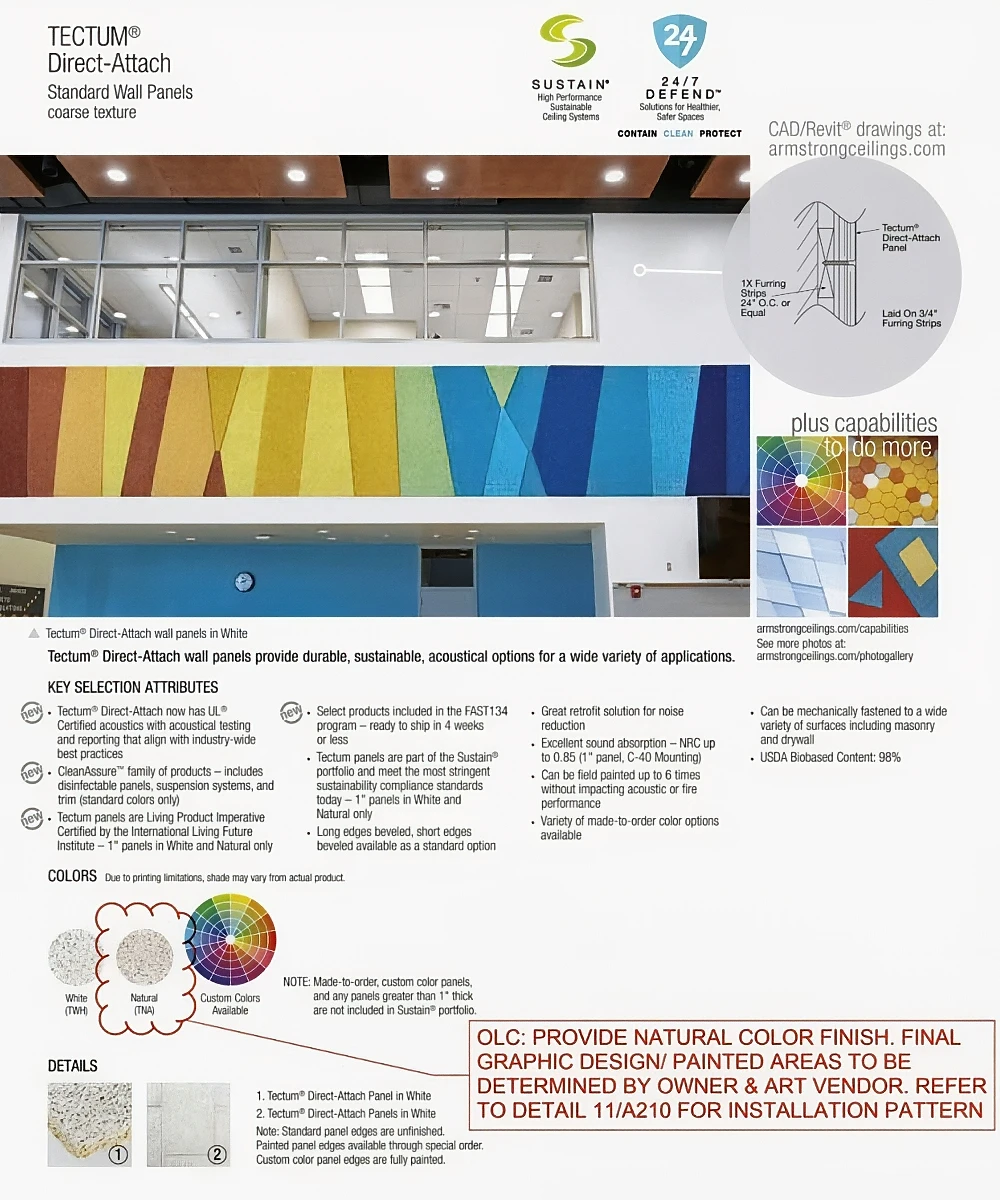
While wood panels don’t achieve the same NRC ratings as fabric-wrapped fiberglass, they still offer strong acoustic performance—especially when installed with air gaps or insulation. For future phases or additional rooms, the center can consider mounting panels on 1″ furring strips (NRC 0.45), or using fiberglass backing for ratings as high as NRC 0.85.
This adaptability makes fiber panels an excellent solution in spaces where sound control is needed, but architectural conditions vary. Whether flush-mounted in high-traffic gyms or layered for improved absorption in libraries or conference rooms, these panels can be tailored to meet both performance and durability goals.
Benefits for Municipal Projects & Public Facilities
- Low Maintenance: Easily Cleaned or Repainted When Needed
- High Traffic Ready: Perfect for Gymnasiums & Multi-Use Halls
- Code Compliant: Panels Meet Flame Spread & Durability Ratings
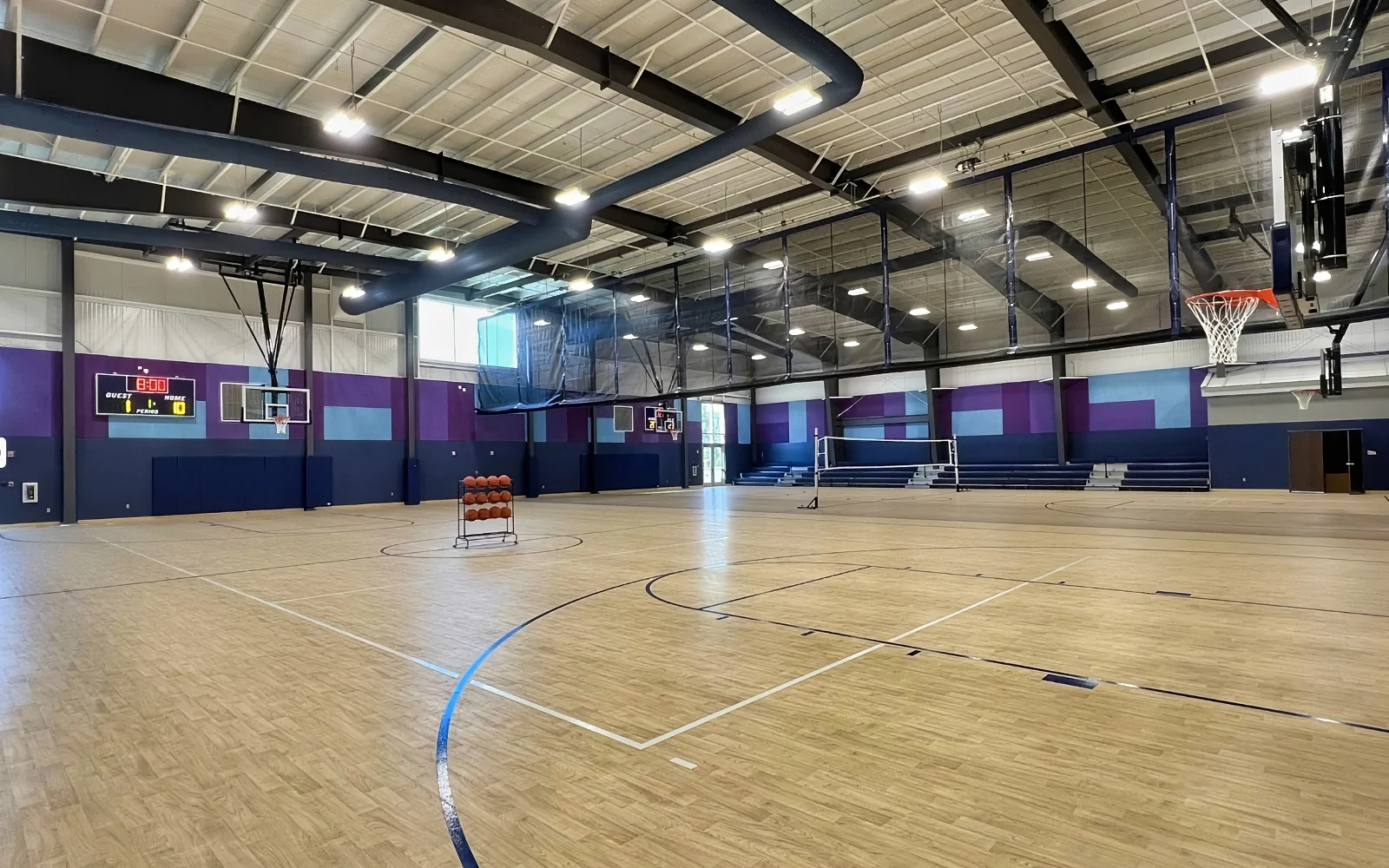
For cities and contractors managing civic facilities, wood fiber panels offer a durable and practical acoustic solution. Not only do they meet standard fire codes and impact requirements, but they’re also well-suited for installation in spaces where public use brings wear, tear, and unexpected damage.
The custom paint options also allowed the design team to complement the interior color palette, creating a lively and engaging atmosphere for the public without sacrificing function. From the basketball courts to the event halls, the final result enhances both the acoustic experience and the visual feel of the center.
Conclusion: Acoustic Solutions for Community Hubs
Designing effective acoustics for community spaces is about more than just reducing noise—it’s about shaping environments where residents of all ages feel comfortable, heard, and welcome. At the Mary Sue Rich Community Center, the use of cementitious wood fiber panels offered a smart, durable, and cost-conscious way to improve acoustic comfort without sacrificing aesthetic goals or long-term performance.
For architects & general contractors, selecting the right material means balancing many factors: budget, maintenance, code compliance, and occupant experience. This project proved that fiber panels can meet that balance—delivering dependable sound control in high-use, multi-purpose settings.
Your next civic center project deserves better sound—reach out to our team & let’s build something that resonates with the people who matter most.
FAQs: Wood Fiber Panels in Community Centers
How do wood fiber panels improve acoustics in multi-use facilities?
Our fiber panels help control reverberation in large, reflective environments like gyms and event halls. By reducing echo, they improve speech clarity during group activities, presentations, and sporting events—making spaces more functional for diverse programming.
Are these panels compliant with fire and building codes for public use?
Yes. Tectum wood fiber panels meet Class A flame spread requirements and are regularly specified in schools, municipal facilities, and other code-regulated environments.
What are the typical installation methods for wood fiber panels?
They can be directly mounted to solid surfaces (Type A), or installed over furring with optional fiberglass backing to increase sound absorption. These mounting variations allow teams to tailor NRC performance to each room’s needs.
When is it better to use wood fiber panels instead of fabric-wrapped panels?
In high-traffic or impact-prone areas—like gymnasiums, recreation centers, and youth facilities—these fiber panels are often a better choice due to their impact resistance and low maintenance requirements.
Can the panels be color-matched to architectural finishes?
Absolutely. Tectum panels can be field-painted or factory-finished in custom colors, allowing designers to align acoustic treatment with the interior palette without compromising durability or performance.