
Table of Contents
Project Overview: Wall Soundproofing for Remote Tribal Healthcare
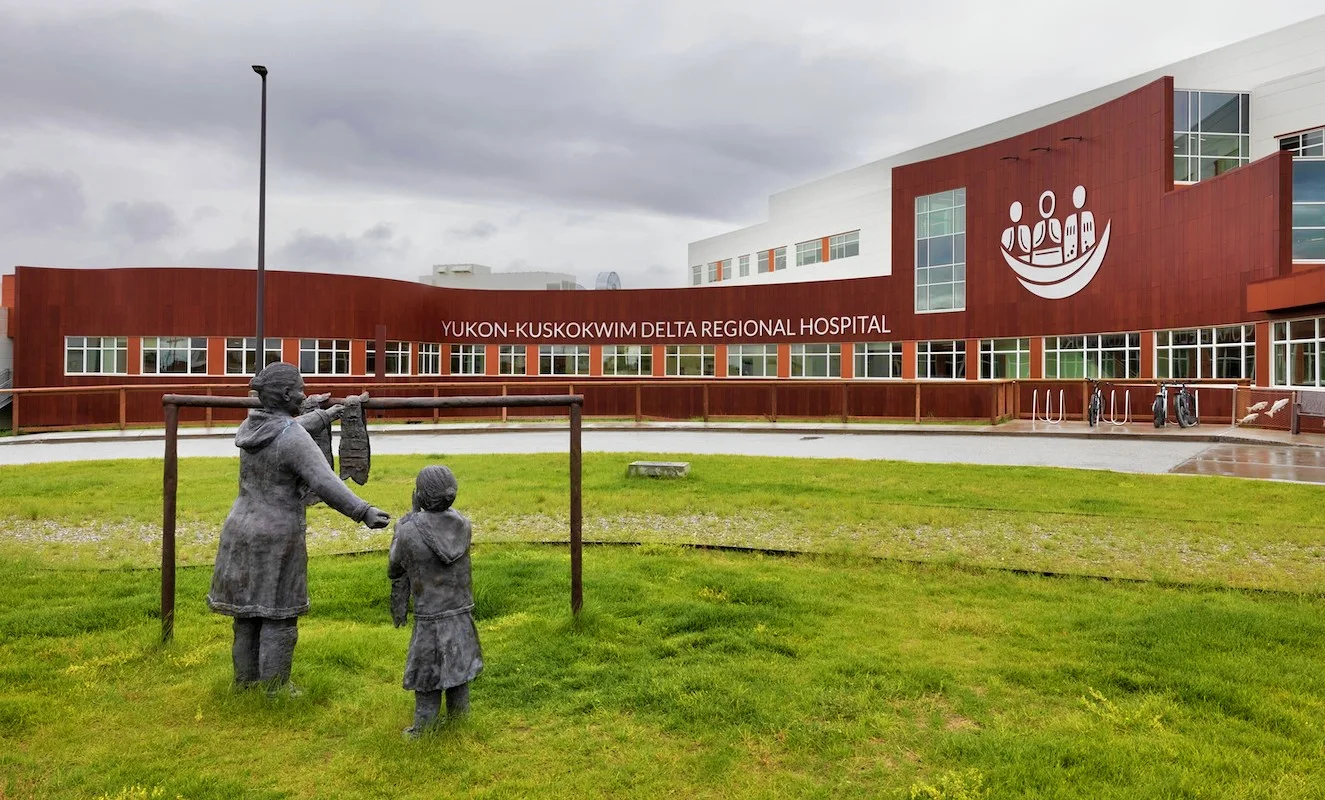
- Project: Yukon-Kuskokwim Health Corporation
- Address: 700 Chief Eddie Hoffman Hwy, Bethel, AK 99559
- Client: Davis Constructors & Engineers, Anchorage, Alaska
- Facility Type: Tribal healthcare center with inpatient & outpatient care
- Objective: Achieve high STC while reducing labor, weight & framing costs
- Scope: Wall assembly design for STC 54-rated soundproofing
Serving over 50 rural communities in Western Alaska, Yukon-Kuskokwim Health Corporation (YKHC) operates one of the most remote healthcare facilities in the U.S. When Davis Constructors took on a major expansion at YKHC, they faced a significant challenge—meeting high sound transmission class (STC) ratings within a cost-effective wall assembly.
To address this, the Davis team reached out to Commercial Acoustics to assist in designing a wall system capable of reaching STC 54 in critical areas, including patient rooms, ICUs, and administrative spaces. The solution needed to be lightweight, efficient to install, and meet strict shipping requirements for remote Alaska delivery.

Acoustic Design Requirements for Modern Healthcare Facilities
- Privacy Compliance: Supports HIPAA standards & safeguards patient conversations
- Healing Environments: Boosts HCAHPS scores & reduces sleep disruption
- Lightweight Design: Minimizes construction weight for remote airlifting
In modern healthcare environments, soundproofing is not just about comfort—it’s about care quality and operational excellence. Poor acoustic design can result in interrupted sleep cycles, elevated stress, and even compromised patient confidentiality.
For YKHC, the target was STC 54—a demanding acoustic benchmark, especially given the site logistics. Our team collaborated with the architects and GC through multiple design iterations to balance acoustic performance with weight and material constraints. By selecting Wall Blokker® as the core mass-enhancing component, the team reduced both material complexity and structural demands.
Selected Wall Assembly and Installation Benefits
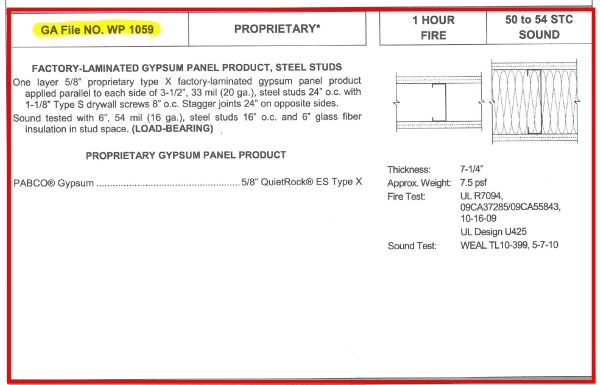
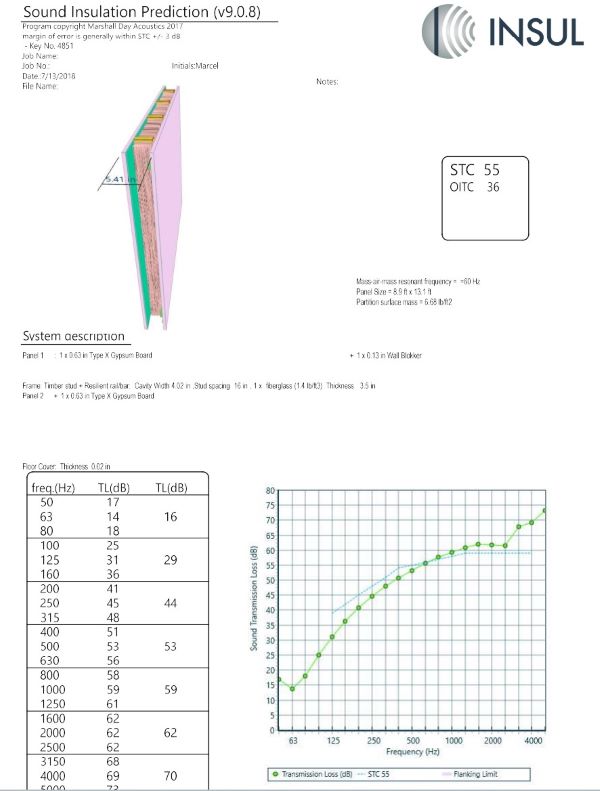
- STC Rating: Achieved STC 54 using high-performance layered design
- Framing: 20-gauge metal studs at 24″ on center for reduced labor & material
- Wall Layers: Dual ⅝” Type X drywall with Wall Blokker membrane between
- Insulation: Mineral wool in cavity to improve absorption & thermal value
This wall system outperformed traditional designs while cutting labor hours significantly. Using 24” stud spacing allowed for fewer studs and faster layout, while the membrane boosted low-frequency performance where speech intelligibility is most critical.
For remote facilities like YKHC—where every pound of material adds cost and time—lighter framing and fewer deliveries translate into real savings. Despite the logistical challenges, the product was shipped from our North Carolina plant to the Port of Seattle, then airlifted to Bethel.
Why STC Ratings Matter in Healthcare Soundproofing
Not all spaces in a healthcare facility require the same level of acoustic isolation. Understanding STC (Sound Transmission Class) values allows architects and contractors to design smarter—and build more efficiently. Here’s how:
- STC 35–40: Suitable for storage rooms & utility spaces
- STC 45–50: Appropriate for exam rooms, administrative offices, & corridors
- STC 50–60+: Required for patient recovery rooms, ICUs, & procedure rooms
According to the Facility Guidelines Institute (FGI), minimum STC ratings are defined based on function. For example, any wall adjoining a patient room and a public corridor must meet STC 50 or higher. In high-performance environments like surgery wings or intensive care, STC 60+ is preferred to block medical equipment noise, hallway activity, and other operational sound disturbances.
Strategic Use of Sound Masking in Open-Access Units
- Open Access Challenges: Doors left ajar limit the effectiveness of wall-only soundproofing
- Masking Advantage: Adds consistent background noise to improve perceived privacy
- Layered Strategy: Complements soundproof walls with ceilings & electronic masking systems
In healthcare settings like ICUs, nurse stations, & semi-private patient rooms, true sound isolation is difficult to achieve with wall construction alone—especially when doors remain partially open for observation or quick access. In these scenarios, sound masking plays a critical role by introducing low-level, ambient noise that makes conversations less intelligible at a distance.
This added layer of acoustic control not only reduces disruption but also elevates patient satisfaction, as reflected in HCAHPS sleep & comfort scores. When used alongside STC-rated partitions & ceiling treatments, masking systems complete a holistic approach to healthcare acoustics—ensuring privacy, reducing distraction, & enhancing the therapeutic quality of the environment.
Design Flexibility and Cost Savings for Remote Construction
Projects in Alaska are especially sensitive to both cost and weight. The selected assembly at YKHC delivered several key advantages:
- Reduced Labor: Faster install with fewer studs
- Lower Freight Cost: Lighter framing and optimized material packaging
- Improved Schedule: Simplified logistics from factory to final install
- Improved STC: Superior performance, especially in the low-frequency range
Once installed, the assembly not only met but exceeded the acoustic goals of the design team. So effective was the solution that the general contractor specified the same Wall Blokker assembly in another Bethel-area facility just a year later.
Conclusion: Elevating Acoustic Performance in Healthcare Facilities
This project at Yukon-Kuskokwim Health Corporation (YKHC) demonstrates how intelligent acoustic planning, paired with practical execution, can deliver high-performance soundproofing in even the most remote healthcare facilities. Achieving an STC 54 rating without overbuilding or overloading the structure shows that with the right materials and coordination, acoustic excellence doesn’t have to come at the cost of budget or timeline.
For healthcare environments, soundproofing isn’t just a design detail—it’s a foundational element that impacts patient healing, staff concentration, and regulatory compliance. In areas where medical staff manage sensitive information or patients need uninterrupted rest, proper wall assemblies make a measurable difference in outcomes and satisfaction scores.
Whether you’re working on a tribal clinic, outpatient facility, surgical wing, or a new hospital tower, our team is here to help you balance acoustic performance with constructability. We collaborate with architects and GCs across all phases—from submittals and detailing to freight logistics and install coordination—especially on projects where remote delivery or material efficiency is critical.
Whether you’re designing a cutting-edge hospital or navigating the challenges of remote healthcare construction, we’ll help you deliver acoustic performance without compromise. Our soundproofing solutions are engineered to meet strict healthcare standards—without overcomplicating the build. If you’re looking for a partner who understands both the science and the schedule, contact our team here. Let’s build quieter, smarter spaces—together.
FAQs: Soundproofing and Wall Assemblies in Healthcare Facilities
What STC rating is typically required in healthcare walls?
FGI guidelines require STC 50+ for patient rooms adjacent to corridors, and STC 60+ for rooms next to mechanical or service areas.
How can I achieve high STC ratings without increasing construction weight?
Use mass-loaded acoustic membranes like Wall Blokker, which add soundproofing performance without additional framing or double studs.
What’s the difference between soundproofing and sound absorption in a hospital setting?
Soundproofing blocks sound from passing through walls or ceilings (e.g., STC-rated partitions), while absorption reduces echo within a space. Both are critical in healthcare design.
How do remote projects like those in Alaska affect acoustic material selection?
Weight and delivery logistics become major constraints. Lightweight, high-performance materials that reduce the need for extra framing are essential.
Can I use sound masking instead of soundproofing?
In some areas like ICUs or semi-private rooms, sound masking can complement wall assemblies by improving patient satisfaction scores and perceived privacy, but it should not replace STC-rated barriers where code requires them.