
Table of Contents
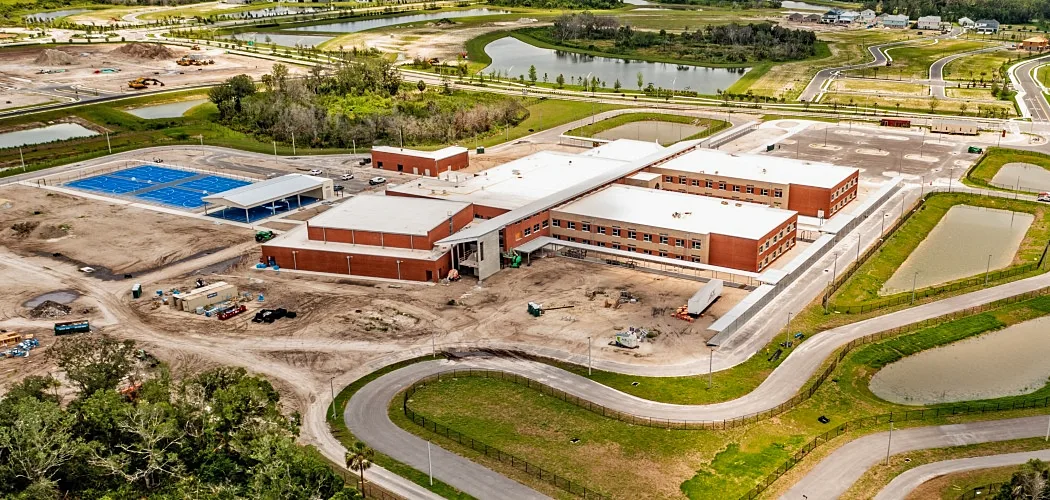
Project Overview: Acoustic Planning for New School Construction
- Project: North River Middle School in Manatee County, FL
- Address: 11620 North River Ranch Trail, Ruskin, FL 34219
- Client: Willis A. Smith Construction
- Facility Type: Ground-Up Middle School Build
- Objective: Reduce reverberation & improve speech clarity to meet ANSI S12.60
- Scope: 105,647 sq ft of acoustic ceiling tile + 6,000 sq ft of wall panels
As part of a new middle school construction project in Manatee County, the design team was tasked with implementing acoustic measures early in the build process for reducing echo. The district aimed to meet ANSI S12.60 standards for classroom acoustics, minimize reverberation, and avoid the need for future retrofits. Commercial Acoustics was brought in to design and install a scalable system that aligned with the contractor’s schedule while delivering measurable noise reduction and improved speech clarity.
Existing Conditions: Echo Challenges in New School Design
- Hard Surfaces: CMU walls, tile floors, & drywall ceilings created reverberation.
- No Absorption: No soft finishes or acoustic treatments during construction.
- Early Planning: Proactive sound control helped avoid retrofit costs.
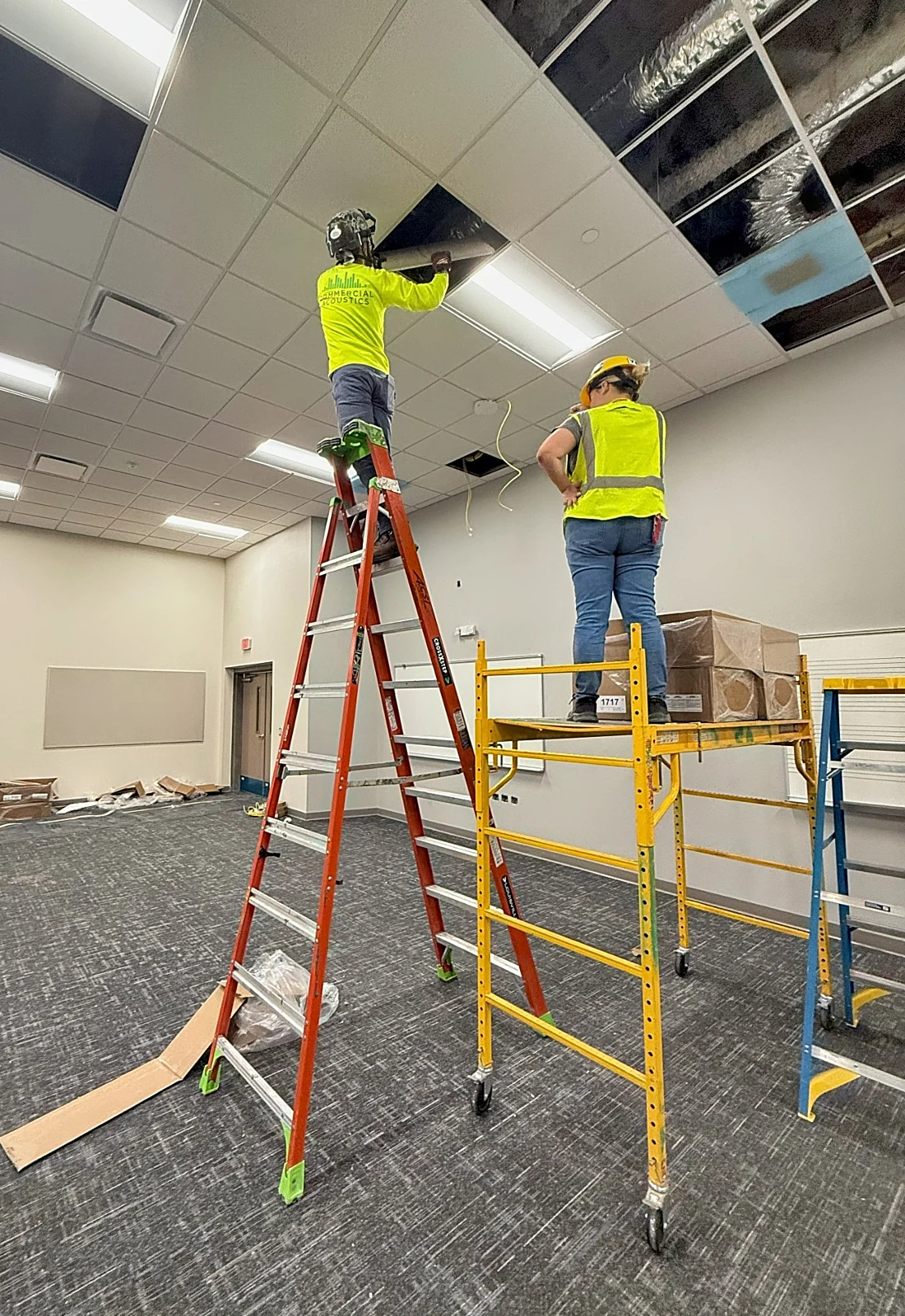
Though the facility was still under construction, the project team anticipated acoustic issues common in hard-surface learning environments. Classrooms, corridors, and administrative areas were being built with CMU block walls, tile floors, drywall ceilings, and open volumes—conditions that typically lead to excessive reverberation, sound reflection, and poor speech intelligibility.
With no soft finishes or passive noise control in place, these large, open spaces risked becoming echo-prone environments, making it harder for students to concentrate and for teachers to be heard clearly. Proactively addressing echo at this stage was critical to avoid later disruption or additional cost.
Ceiling Tile Installation for Echo Reduction
- NRC Rating: 0.90
- Material: High-density mineral fiber
- Mounting: 15/16″ ceiling grid
- Light Reflectance: >85%
- Lead Time: 1–2 weeks
- Install Coordination: Phased behind MEP trades & ceiling grid
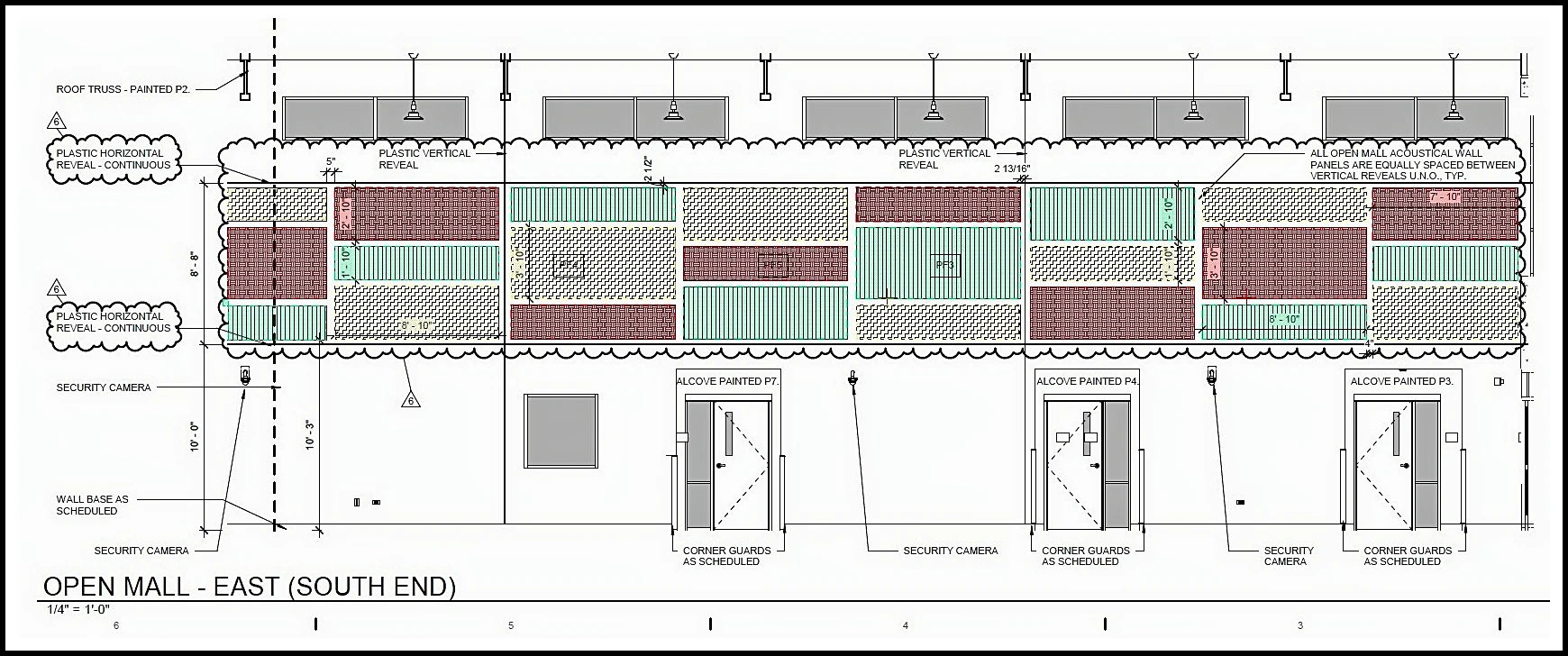
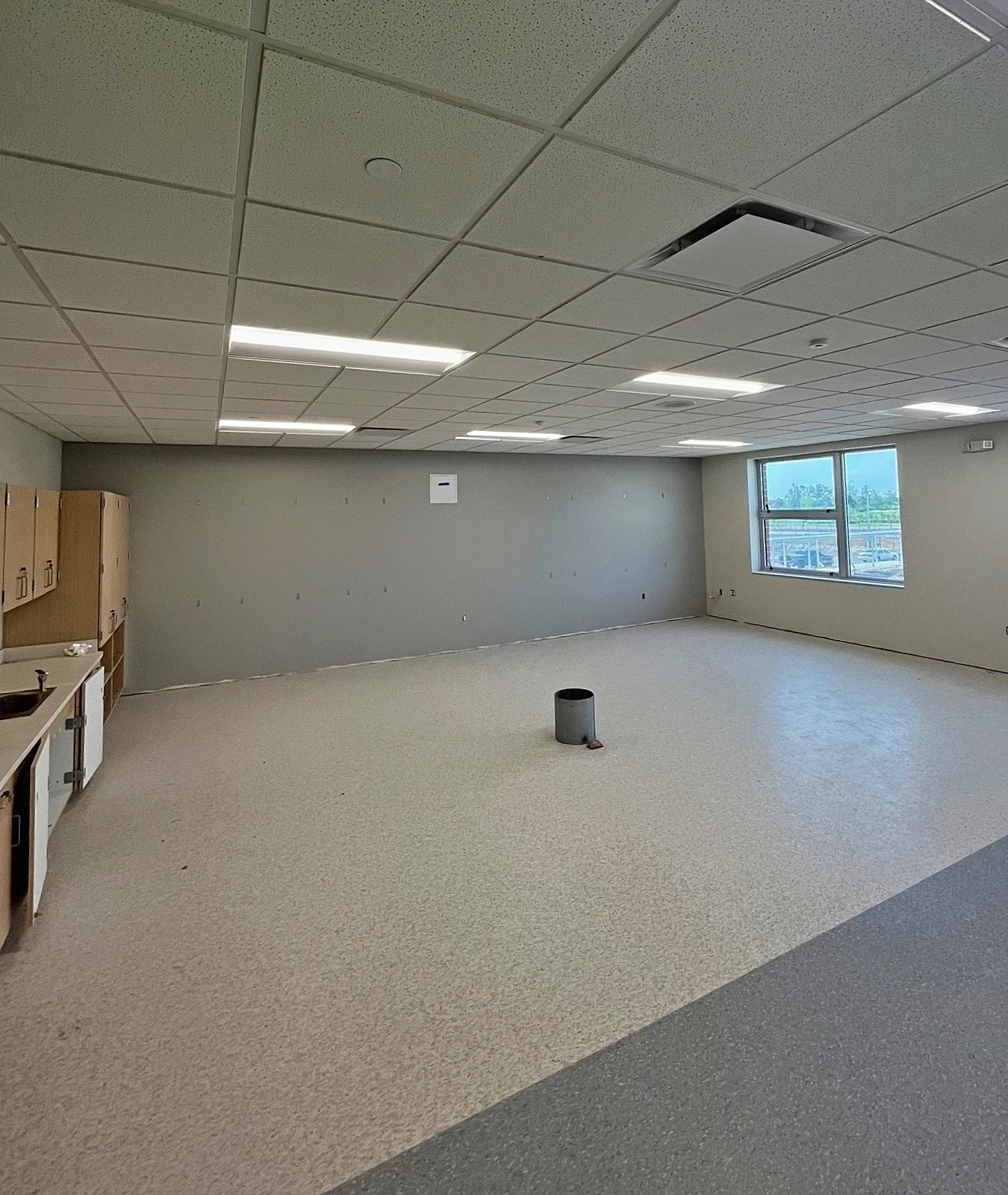
As part of the district’s approach to reducing echo in learning spaces, acoustic ceiling tiles were installed across 105,647 sq ft of classrooms, corridors, and administrative offices. These tiles were selected for their high NRC rating and consistent performance in absorbing mid- and high-frequency noise that interferes with speech intelligibility.
In alignment with acoustic goals for new school construction, the tiles were specified to help maintain reverberation times below 0.6 seconds, in compliance with ANSI S12.60 standards. Their compatibility with ceiling-mounted systems like HVAC, lighting, and sprinklers allowed for efficient integration during construction sequencing. The white tile finish provided clean visual continuity while delivering effective acoustic treatment across every occupied space.
Wall Panel Installation at Reflection Points
- Panel Thickness: 2″
- Core Material: Fiberglass
- NRC Rating: 1.05
- Finish: Custom fabric, wrapped
- Mounting System: Mechanical Z-clips
- Lead Time: 4–6 weeks from fabric approval
- Install Duration: 3 days
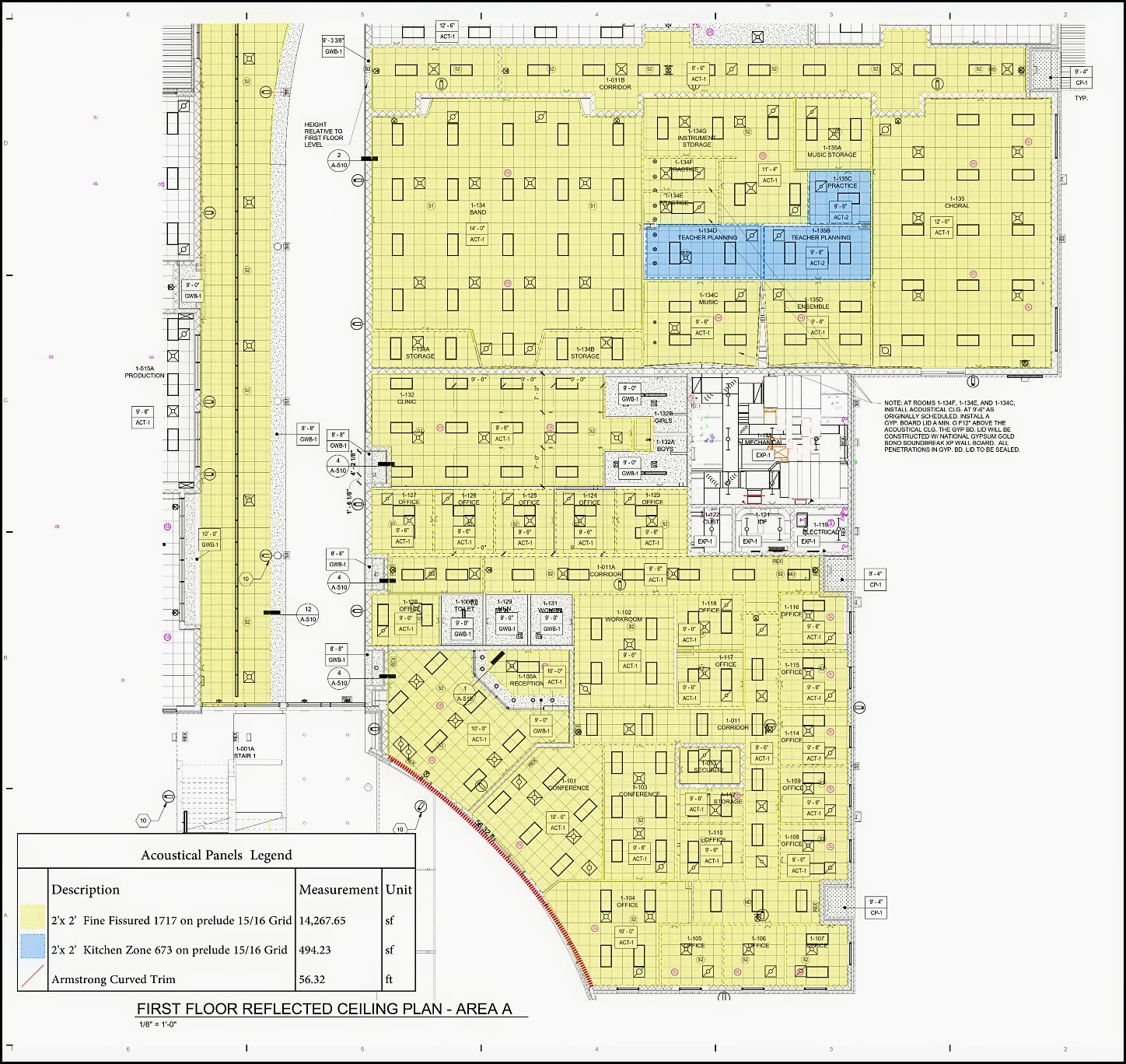
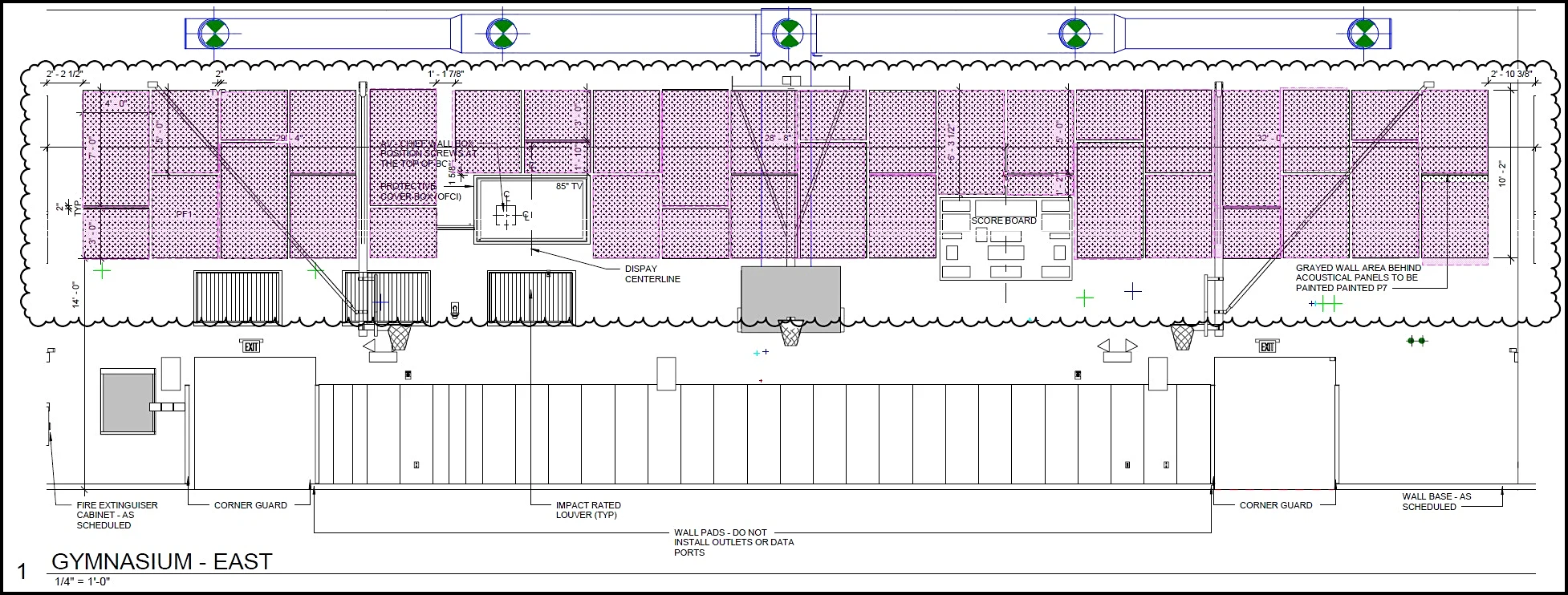
To complement the ceiling treatment and further support echo reduction, 6,000 sq ft of fabric-wrapped wall panels were installed at critical sound reflection points. These included teaching walls, breakout areas, and shared spaces where reverberation and flutter echo were anticipated.
With an NRC rating of 1.05, the wall panels absorbed sound more effectively than reflective surfaces, helping create balanced acoustic conditions throughout the facility. Their beveled edges and fabric finish were chosen to provide both performance and visual cohesion within the overall interior design. The mechanical Z-clip system allowed for precise, secure installation on wall surfaces without impacting other finish trades.

Construction Coordination in a New School Environment
- Scheduling: Acoustic install sequenced with grid, MEP, & finish phases.
- Submittals: Specs, fire ratings, & CAD files submitted early.
- Trade Coordination: Walkthroughs & reviews avoided system clashes.
During the timeline of this new school construction, Commercial Acoustics coordinated closely with the general contractor to align delivery, staging, and installation of acoustic materials with the project’s critical path schedule.
Ceiling tile installation was sequenced behind ceiling grid placement and MEP inspections. Wall panels were installed in the final stages of the interior finish phase. All materials were provided with the required submittals, spec sheets, fire ratings, and CAD/Revit files to support early approvals and construction documentation.
Trade coordination included on-site walkthroughs and pre-install reviews to avoid conflicts with HVAC diffusers, light fixtures, and wall-mounted equipment. No rework or delays occurred due to acoustic scope.
Measured Acoustic Results After Installation
- Reverberation Time (RT60): Under 0.6 seconds in instructional areas
- Speech Intelligibility (STI): Improved from ~0.50 to >0.75
- Compliance: Met ANSI S12.60 for classrooms & corridors
- Uniformity: Balanced acoustic performance across all learning zones
The ceiling and wall-mounted treatments effectively achieved the project’s goals of reducing echo and improving speech clarity. Acoustic targets were met across every instructional space prior to occupancy, ensuring the facility was delivered with a pre-certified sound environment.
Because these systems were integrated during construction, there was no need for costly retrofits, adjustments, or post-install troubleshooting. This proactive approach aligned with the overall project delivery strategy and eliminated common acoustic pitfalls in school environments.
These results align with ANSI S12.60 guidance—keeping RT60 below 0.6 seconds is essential for reducing echo and ensuring clear speech intelligibility in K–12 environments. For more information on classroom acoustic benchmarks and testing protocols, see the ANSI Standards for Classroom Acoustics by Larson Davis.
Summary: Reducing Echo in a New Middle School
By integrating high-performance acoustic ceiling tiles and wall-mounted panels during the construction phase, North River Middle School achieved measurable noise reduction and speech intelligibility across all learning zones before occupancy. The installed systems met ANSI S12.60 classroom acoustics standards, satisfied district requirements, and aligned seamlessly with the general contractor’s build schedule.
Because these solutions were incorporated during construction—not after—there were no delays, no retrofit costs, and no compromises in acoustic performance. This proactive approach delivered a future-ready learning environment built for clarity, comfort, and compliance. For architects, general contractors, and district planners involved in school facility design, this project demonstrates the value of early-stage planning for reducing echo and controlling reverberation in education-focused buildings.
For product specifications, lead time guidance, or acoustic integration support on your next K–12 or institutional project, contact the team at Commercial Acoustics!
FAQs: Reducing Echo in a New School
How long does it take to receive acoustic ceiling tiles for school projects?
Most acoustic tiles ship in 1–2 weeks. Large jobs (10,000+ sq ft) use phased deliveries tied to grid install & ceiling inspections. Early GC coordination ensures just-in-time arrival during interior buildout.
What’s the NRC rating required to meet ANSI S12.60 in new classrooms?
To hit the ANSI RT60 target of <0.6 seconds, ceilings need NRC 0.90+; walls should use panels NRC 1.00+. These specs reduce echo & boost speech clarity in instructional areas.
Can the acoustic panels be installed after lighting, HVAC, and ceiling grid?
Yes—panels are sequenced after grid and MEP rough-in, avoiding trade conflicts or finish rework.
What submittals are provided for design approval?
We deliver cut sheets, fire ratings, CAD/Revit blocks, and acoustic modeling to support design documentation and preconstruction submittals. Samples and shop drawings are also part of our standard submittal package.
How do you avoid rework or punch list items during acoustic install?
We conduct site walkthroughs, coordinate with other trades, and finalize install after above-ceiling inspections to minimize disruption.
What types of ceilings are most commonly used?
New school construction often uses 2–3 tile types: Fine Fissured in classrooms, KitchenZone in food areas, and Calla or similar in band rooms needing stronger acoustic control.
