
Table of Contents
Project Overview: Pizzeria Acoustic Treatment at Mellow Mushroom
- Project: Wall Panel Acoustic Treatment for High-Ceiling Dining Space and Patio
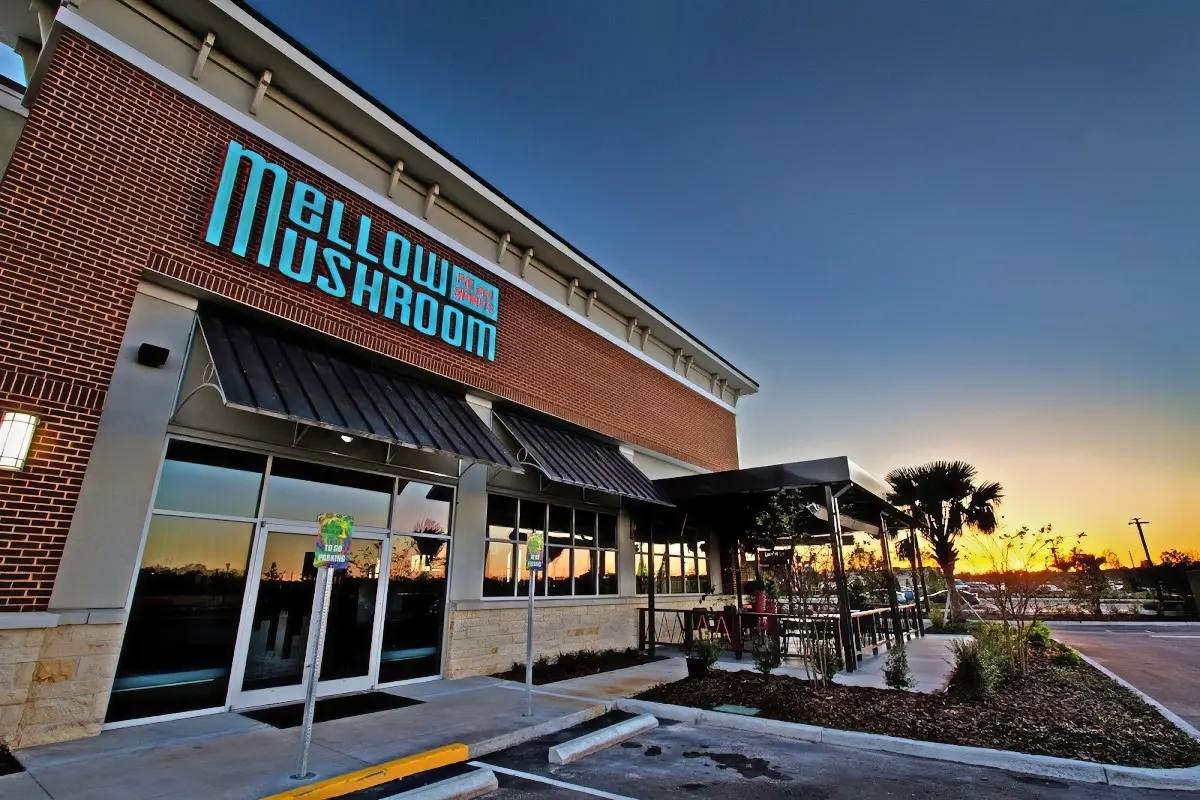
- Location: 25662 Sierra Center Blvd, Lutz, FL 33559
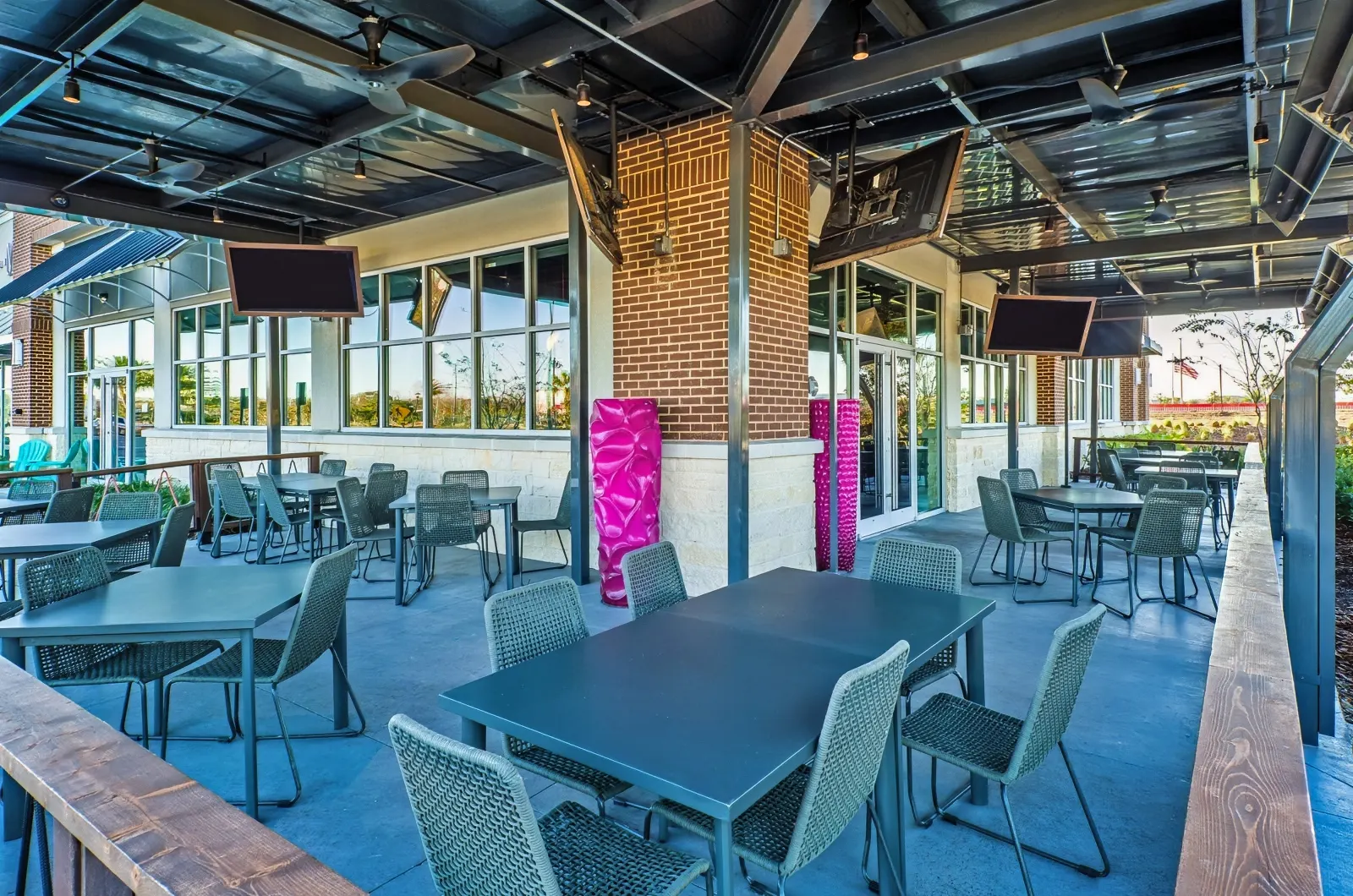
- Facility Type: National Pizzeria Chain Location, Inside Dining + Enclosed Patio
- Client: Mellow Mushroom Pizzeria
- Pre-Treatment RT60: 1.3 to 1.5 seconds across dining spaces
- Scope: RT60 Testing, Beveled Wall Panel Design, Two-Tone Fabric Layout
The Pizzeria Acoustic Problem
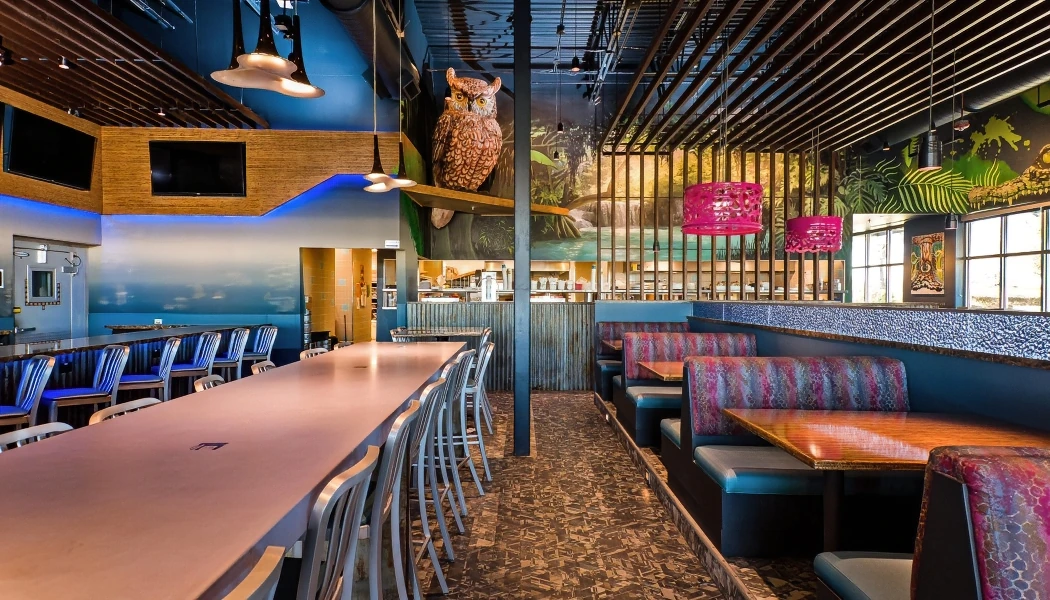
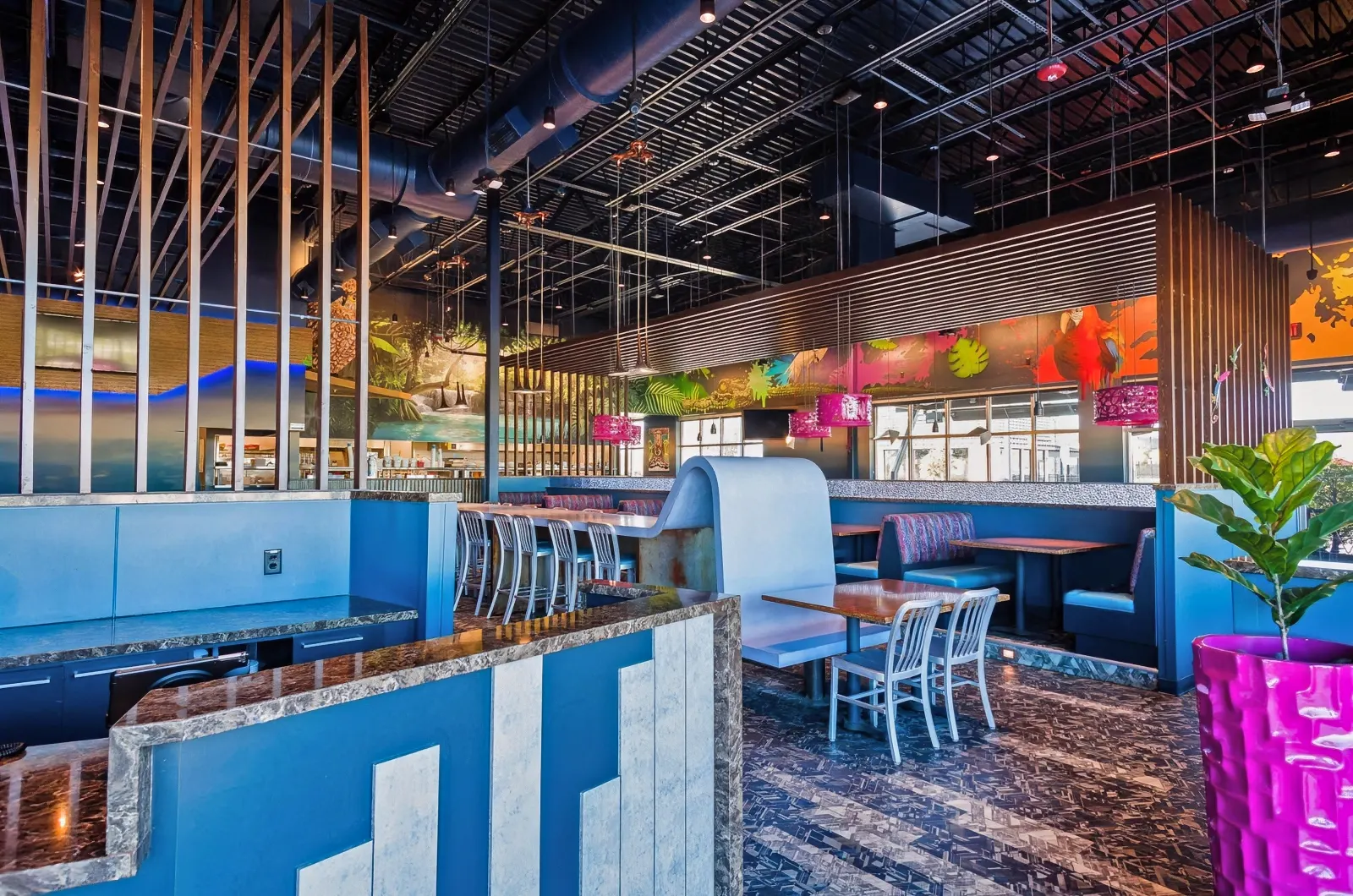
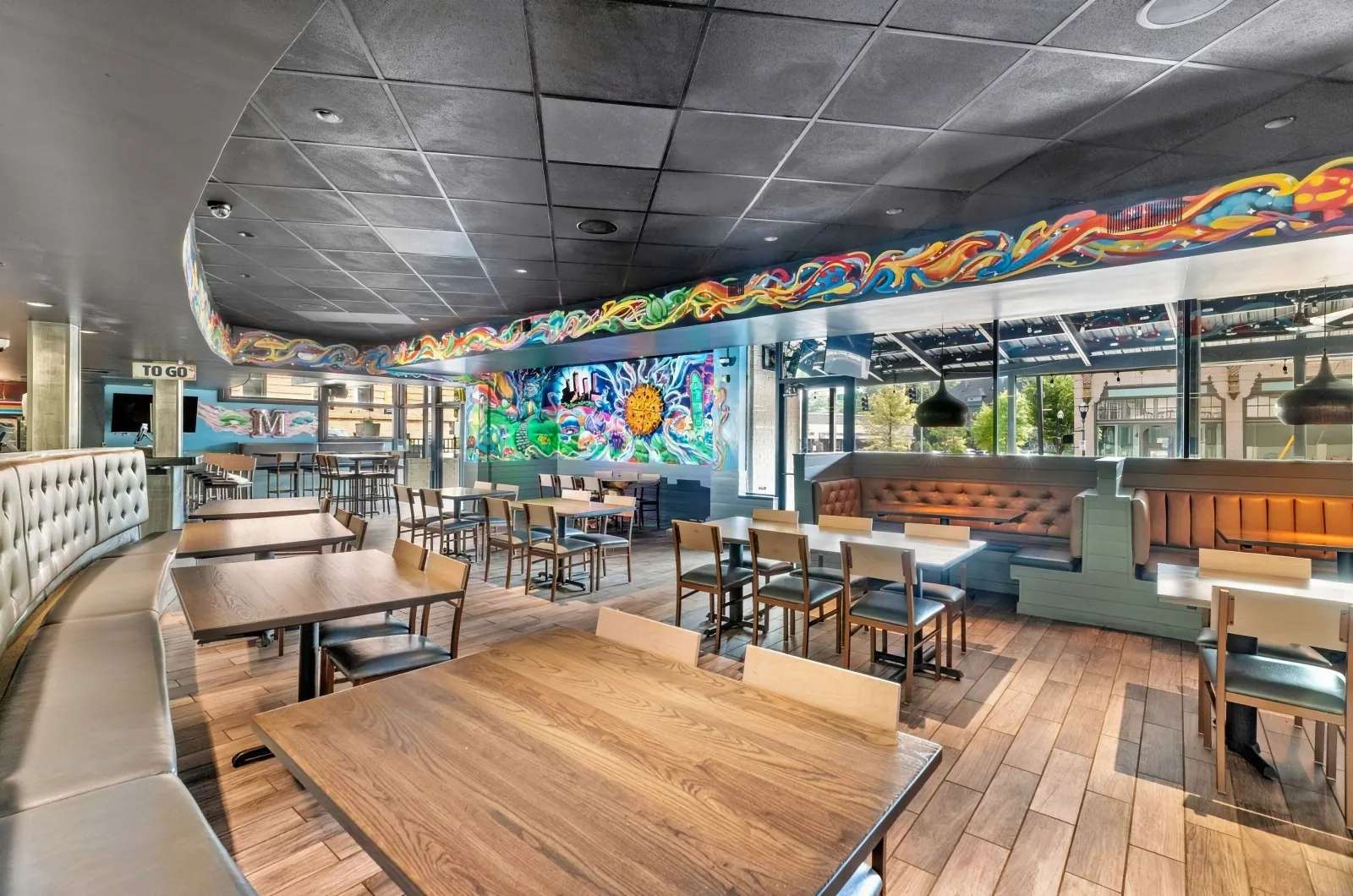
The Mellow Mushroom national pizzeria chain leans into a hip, all-ages dining environment, and the Lutz location was built like most of their stores: high ceilings, hard reflective surfaces, lots of glass and exposed structure. Those finishes look great in a brand mood board and read terribly on the sound side. Conversation across the dining room becomes a competition with itself, every voice bouncing off three planes before it lands.
The general manager called us in once it was clear that turning the music down would not fix the room. The problem was reverberation, not source volume. The acoustic baseline measured between 1.3 and 1.5 seconds RT60 across the dining spaces — well above the 0.8-second working window where a “lively” restaurant stays lively without crossing into the territory where guests start asking to sit somewhere quieter.
RT60 Test and Acoustic Modeling
- Pre-Treatment RT60: 1.3 to 1.5 seconds, broadband
- Target RT60: ~0.8 seconds, “lively” restaurant range
- Method: Position-by-position broadband testing across dining and patio
- Modeling: Sabin-formula calculation for required absorption square footage
Restaurants live in a tighter RT60 band than most building types because the program is so consistent: people talking over each other while eating, with a music bed underneath. Above 1.0 seconds, the room loses the conversational privacy that keeps guests from feeling like they are dining in public. Below 0.6 seconds, the room sounds dead and the energy drops with it. The 0.8-second target is the working middle.
Wall Panel Specification: Beveled Edges and Two-Tone Fabric
- Thickness: 2 inches, beveled edges for visible depth
- Fabric (Outside): Green acoustically-transparent fabric on ~2/3 of panels
- Fabric (Inside): Dark orange to match the inside dining decor
- Mount: Wall-mounted high, above the dining-room transition line
Beveled-edge panels read as architectural detail rather than acoustic gear. The 2-inch thickness gives a visible shadow line at every panel edge, which lets the panels function as a deliberate design feature against the otherwise-flat walls. That mattered to Mellow Mushroom — they wanted treatment that blended into the brand identity instead of looking like an obvious retrofit. The beveled acoustic absorption panel line in 2-inch profile delivered both the NRC and the look.
Two fabric tones split the visual story between zones. Green dominated the outside enclosed patio (~2/3 of total panels) where the brand mood leans into the natural-outdoor feel. Dark orange picked up the inside dining decor and warmed up the back-of-house feel. Acoustically the two fabrics perform identically — the choice is entirely visual — but the two-tone layout reads as intentional design rather than panels stamped onto a wall.
Panel Layout: Horizontal vs. Vertical for Mounting Constraints
- East-West Walls: Horizontal panel orientation, height-constrained
- North-South Walls: Vertical panel orientation, full-height layout
- Conduits: Several electrical runs traced and worked around in the layout
- Pattern: No broken rhythm — every wall reads consistent within itself
The mixed orientation came directly from the building. East-west walls had height limitations from existing fixtures and signage that made vertical panels impossible to lay out cleanly. North-south walls had open vertical real estate, so vertical panels worked there. Acoustically the orientation is irrelevant — a 2’x4′ panel absorbs the same energy whether it hangs horizontal or vertical — but the visual cohesion matters because each wall reads as one composition from a single sightline.
Existing electrical conduit runs got drawn into the layout rather than chased around. A few panels were cut or repositioned to avoid breaking the panel rhythm at conduit intersections. That kind of detail is the difference between a layout that reads as designed and one that reads as patched in. For a comparable restaurant where the design integration was the priority, see the Zasu custom-color acoustic panels case study.
Results: 55 Percent Reverberation Reduction
- Pre-Treatment RT60: 1.3 to 1.5 seconds across dining spaces
- Post-Treatment RT60: ~0.8 seconds, lively restaurant range
- Patio Reduction: 55 percent drop on the outside enclosed patio
- Owner Feedback: Easier to hear conversations, not “overly dead”
Post-install testing returned a 55 percent RT60 drop on the outside enclosed patio — the area that had carried the worst pre-treatment reverberation because of the half-enclosed geometry. Inside dining landed in the same lively-restaurant working window. The owner’s qualitative read: easier to hear conversations across the table, but not so absorbed that the room felt dead, which is the line every restaurant operator walks when scoping acoustic treatment.
Restaurant Acoustic Design Principles: Live But Not Loud
- Intimate Restaurant: 0.6 to 0.7 seconds RT60
- Lively Restaurant: 0.8 to 1.1 seconds RT60
- Bar / Sports Lounge: 1.0 to 1.3 seconds RT60
- Untreated Hard-Surface Room: 1.3 seconds and up — too long
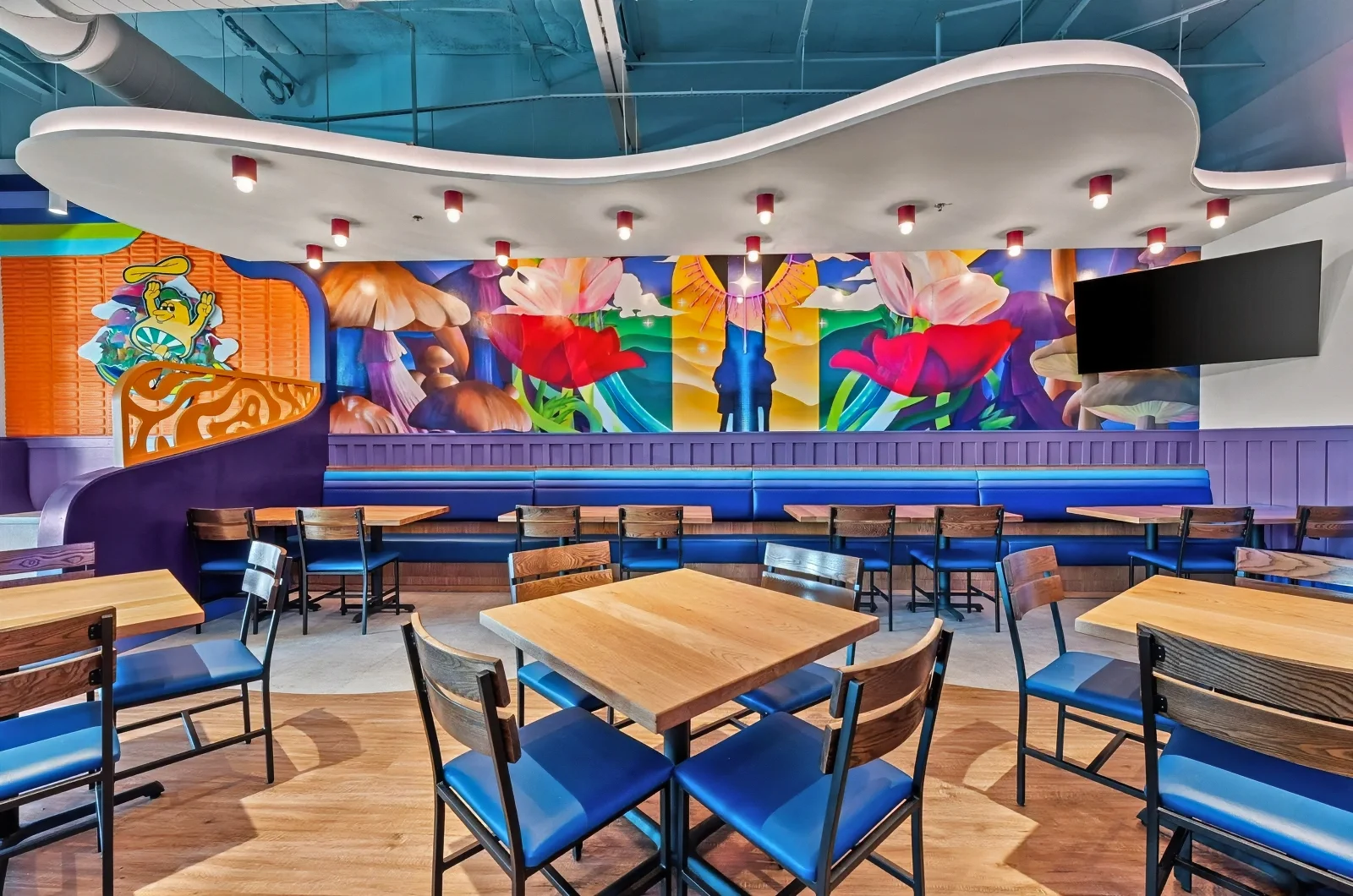
The right RT60 for a restaurant depends entirely on what kind of room the operator wants. An intimate dining room aims for 0.6 to 0.7 seconds — quiet enough that conversation feels private, every footstep audible. A lively casual restaurant like Mellow Mushroom aims for 0.8 to 1.1 seconds — energetic enough to feel alive, contained enough that conversation works. Bars and sports lounges run higher at 1.0 to 1.3 seconds, leaning into the noise as part of the experience.
Above 1.3 seconds, every restaurant program type breaks. Speech intelligibility falls apart, guests start cupping their ears, and the noise complaints arrive within the first month of opening. For a sister restaurant project that landed in the lively-casual band, see the Luv Child restaurant acoustics case study. For a sports-lounge build that targeted the higher RT60 end of the working window, see the Top Shelf sports lounge acoustics case study.
Conclusion: Pizzeria Acoustic Treatment at Mellow Mushroom
The Mellow Mushroom Lutz acoustic install paired beveled-edge wall panels in two-tone fabric (green outside, dark orange inside) with mixed-orientation layouts that worked around the building’s height and conduit constraints. The patio came in at a 55 percent RT60 reduction, the inside dining landed in the lively-restaurant working window, and the room reads as designed rather than retrofit. More on the team that runs restaurant acoustic projects for operators scoping similar work.
FAQs: Pizzeria Acoustic Treatment
What RT60 should a pizzeria or casual restaurant target?
Lively casual restaurants target 0.8 to 1.1 seconds RT60. Intimate fine-dining rooms aim tighter at 0.6 to 0.7 seconds; bars and sports lounges run higher at 1.0 to 1.3 seconds. Above 1.3 seconds the room loses speech intelligibility and guests start asking to be moved. The Mellow Mushroom Lutz install landed at the 0.8-second working anchor.
What is the difference between a lively and an intimate restaurant acoustically?
The gap is roughly 0.2 to 0.3 seconds of RT60. Intimate dining rooms feel quieter, every conversation feels private, footsteps register clearly. Lively rooms have more energy, conversations feel collective rather than overheard, and a music bed sits naturally underneath. Both can work; the wrong target for the brand is what hurts.
Can acoustic wall panels match the restaurant decor?
Yes. Acoustically-transparent fabric comes in dozens of colors and textures, and the panel cores are independent of the fabric face. The Mellow Mushroom install used green fabric on roughly two-thirds of the panels (outside enclosed patio) and dark orange on the rest (inside dining), letting the treatment read as deliberate brand design rather than acoustic gear bolted to the walls.
How do beveled-edge panels affect the look of an acoustic install?
Beveled edges create a visible shadow line at every panel perimeter, which lets the panels read as deliberate architectural detail against an otherwise-flat wall. The 2-inch thickness adds enough depth that the panels feel intentional. Beveled-edge panels are the standard pick when the operator wants the treatment to function as a design feature rather than an invisible afterthought.

Walker Peek|Founder & CEO, Commercial Acoustics
Walker founded Commercial Acoustics in 2013 to bring aerospace-grade engineering discipline to soundproofing, and runs the firm as CEO from its 12,000 sq ft Tampa production facility. The company designs custom acoustic panels, sound membranes, and masking systems for multi-family, hospitality, healthcare, and commercial projects across the US — built around Walker’s invention, Wall Blokker, an EVA-based sound barrier that hits STC 50-plus at roughly $1 per square foot installed.
A Jacksonville native, Walker spent five years at Kennedy Space Center with Craig Technologies before founding Commercial Acoustics — certifying aerospace manufacturing to the AS9100 standard and leading Six Sigma Black Belt process-improvement teams on NASA programs. He is a certified Industrial Noise Control Engineer and the author of Architectural Acoustics: A Practical Handbook.
