
Table of Contents
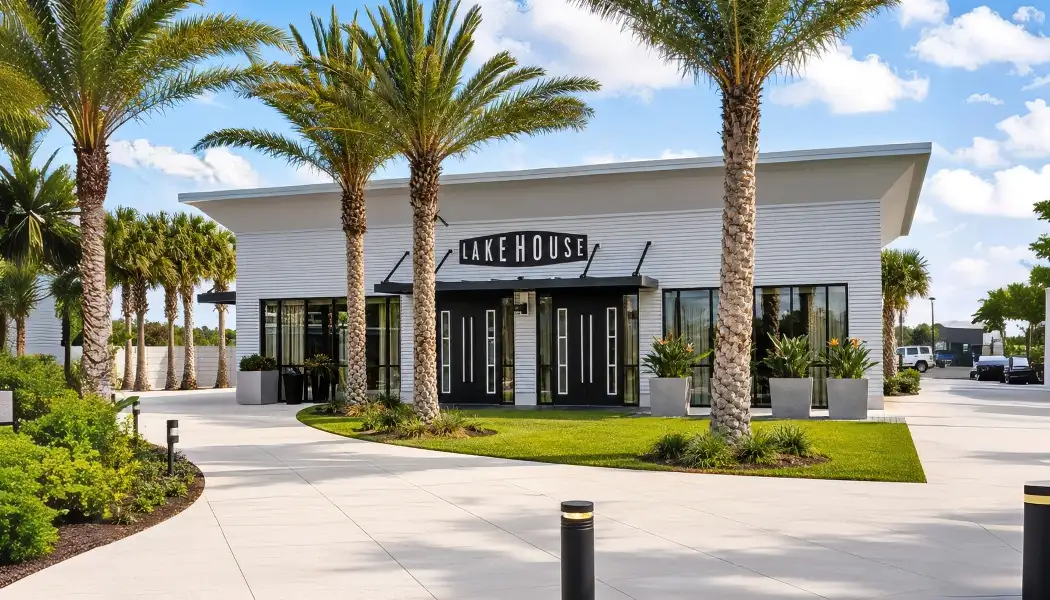
Project Overview: Lake Nona Community Clubhouse
- Project: Acoustic absorption panel install into an exposed corrugated metal deck ceiling
- Client: Master-planned community clubhouse, Lake Nona, FL
- Existing Finishes: Floor-to-ceiling glass, charred hardwood floor, exposed metal deck ceiling
- Use Cases: Resident meetings, fitness and yoga classes, community events
- Treatment: 100 absorption panels, 2 ft × 4 ft × 2 in, fabric-wrapped
- RT60 Result: 1.5 seconds — 0.58 seconds (61 percent reduction)
- Cost / Timeline: Under $11,000 turn-key, 3 weeks fabrication plus install
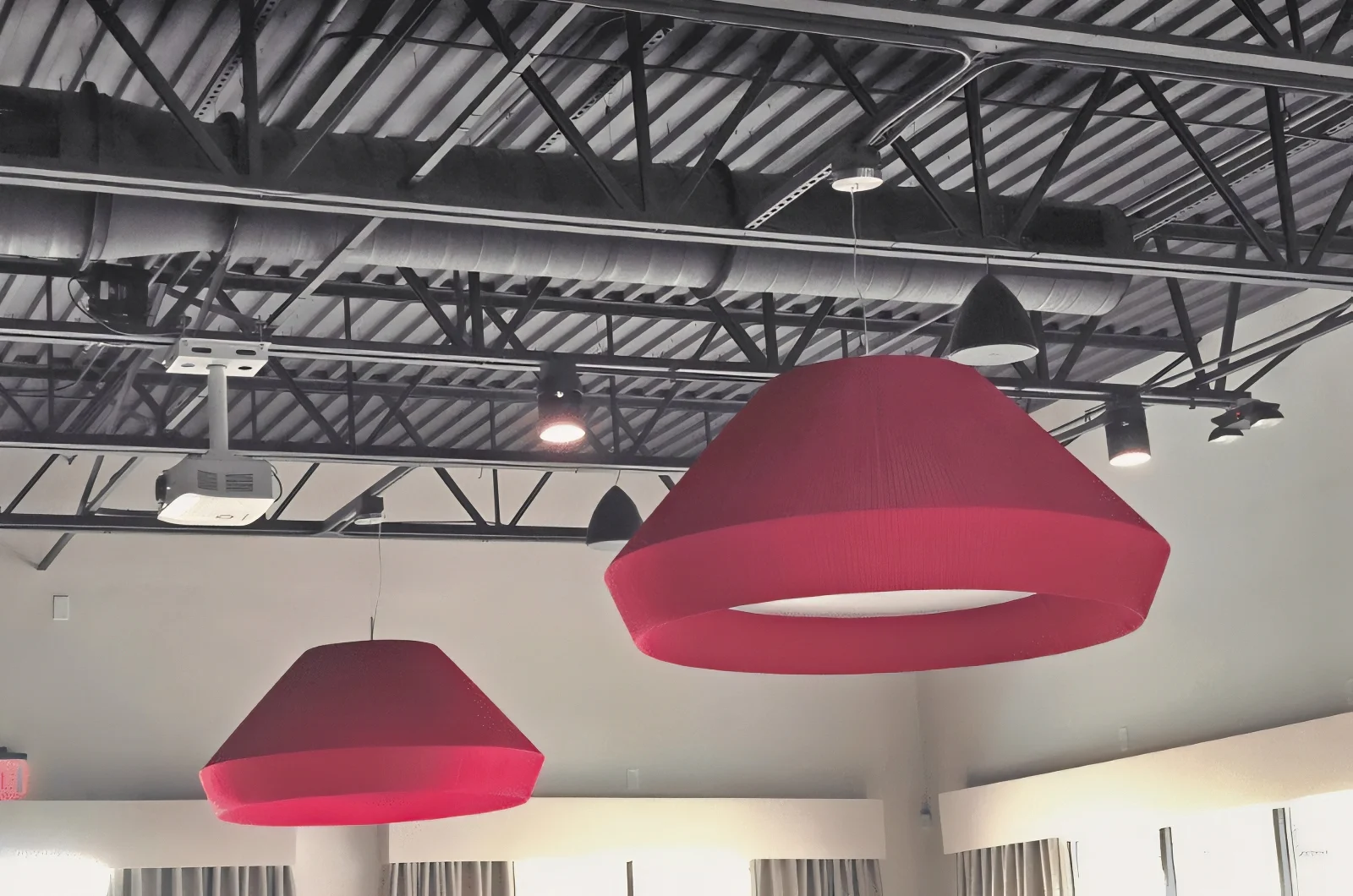
The clubhouse was finished beautifully and acoustically broken. Floor-to-ceiling glass on three sides, a charred-and-sandblasted hardwood floor, custom chandeliers, and an exposed corrugated metal deck overhead. Every reflective surface modern design loves. During the first community meeting, speech intelligibility collapsed. During the first yoga class, the instructor needed a microphone for a room that should have been intimate. The room looked finished and felt unusable.
Commercial Acoustics was retained to drop the reverberation without compromising the design. The fix lived where most modern interior acoustic problems live: in the ceiling. Specifically, in the corrugated metal deck that nobody had treated.
Why Corrugated Metal Deck Ceilings Wreck Room Acoustics
Modern industrial-style interiors use exposed structural ceilings on purpose, and the same reflective finish package often drives showroom noise control needs in auto dealerships. The corrugated metal deck reads as authentic, raw, premium. Acoustically it is a mirror. The painted steel surface absorbs essentially zero sound, and the corrugations themselves are a curved reflector that scatters energy back into the room at high efficiency.
A drywall ceiling at the same height absorbs more sound than corrugated metal because gypsum has at least a small amount of give. Bare metal deck has none. The reverberation time in a metal-deck room of any meaningful size lands in the 1.2 to 1.8 second range by default, which is two to three times what speech intelligibility actually needs.
That is why metal-deck buildings sound the way they do. It is not a mystery, it is the geometry plus the material.
The Panel Install: 100 Panels into Exposed Deck
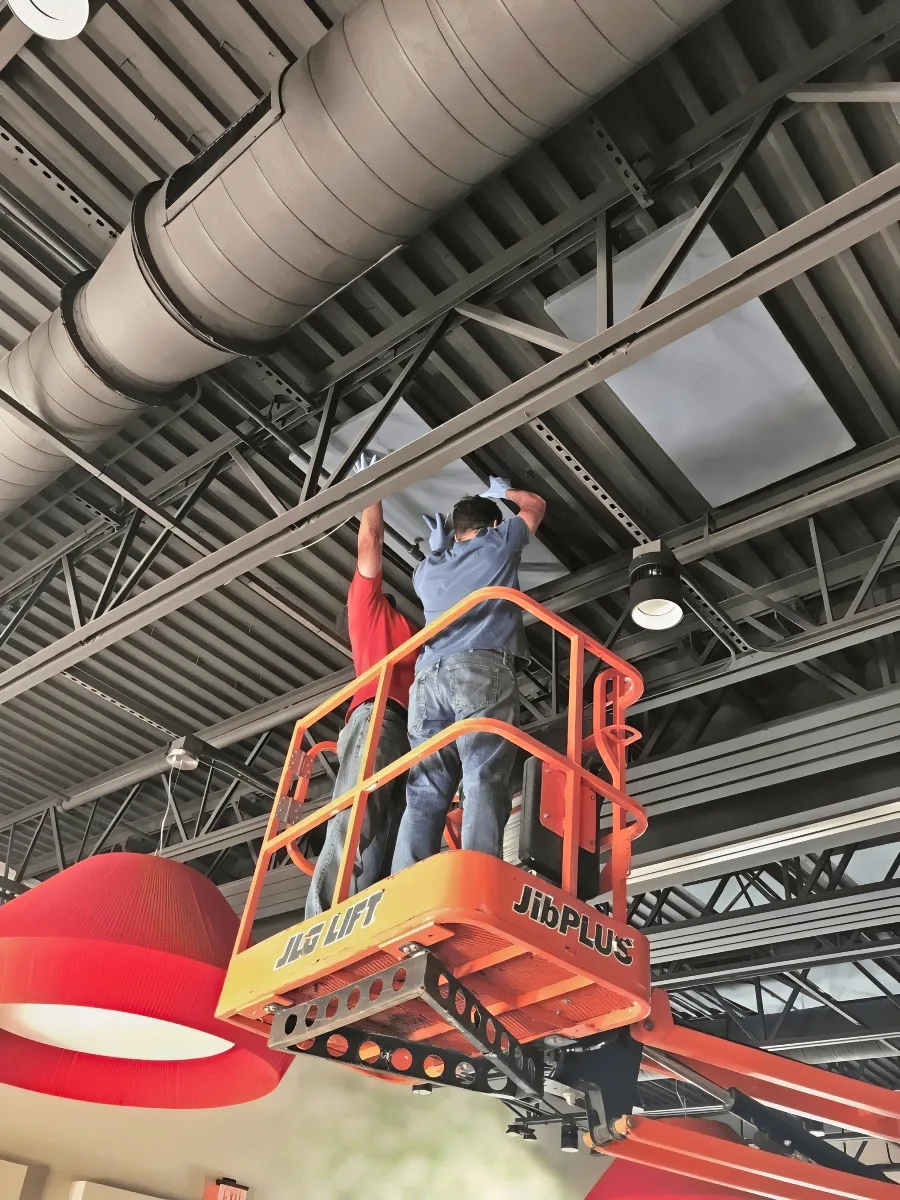
- Quantity: 100 panels, distributed across the deck in a grid that respected the lighting layout
- Size: 2 ft × 4 ft × 2 in fiberglass core, fabric-wrapped face
- Mounting: Direct-mount into the flat sections of the deck pan, fasteners hidden behind the fabric edge
- NRC: 0.95 plus per panel, top-tier absorption performance
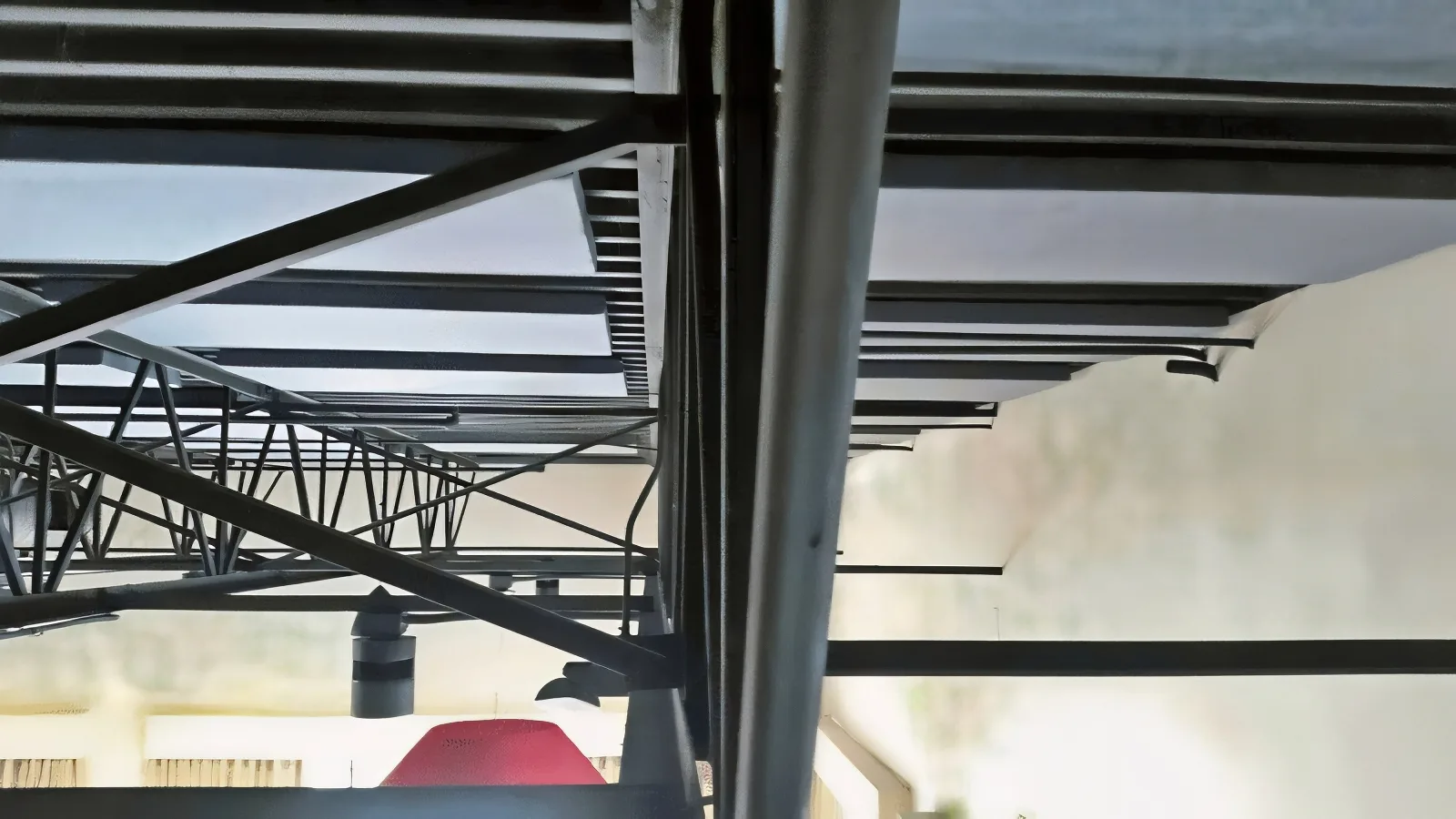
- Coverage: Roughly 30 percent of total ceiling area, sufficient to drop RT60 by 60 percent
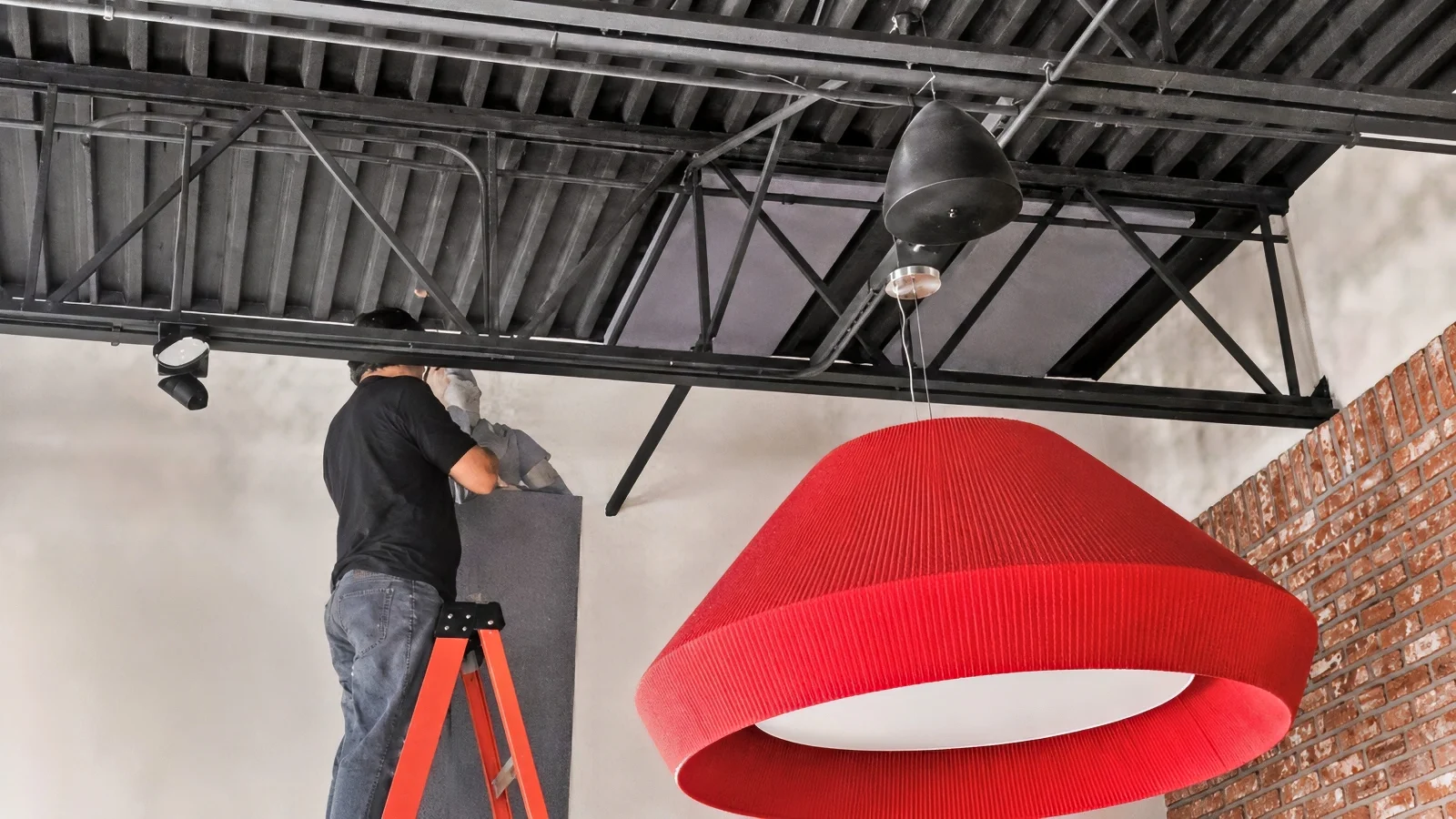
The deck’s flat pan sections between the corrugations are where the panels mount cleanly. The corrugated peaks and valleys make a continuous mounting plane impossible. Each panel attaches to the flat pan with fasteners hidden behind the fabric wrap edge so the install reads as intentional design rather than a retrofit patch.
The product line used here is the same acoustic absorption panel family that solves echo problems in restaurants, offices, gymnasiums, and any room where the ceiling is the dominant reflective surface.
Result: RT60 from 1.5s to 0.58s
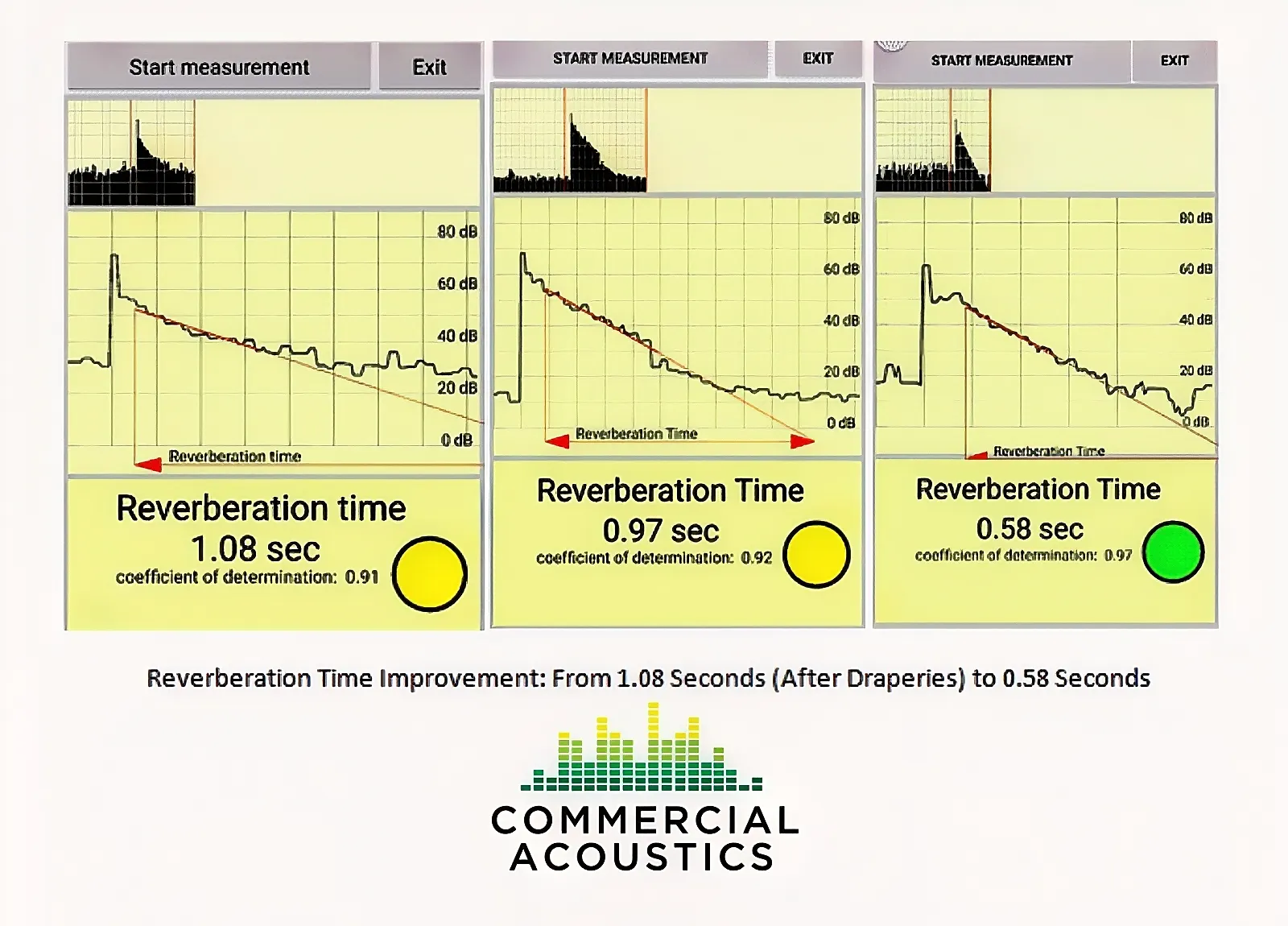
The before measurement clocked the clubhouse at RT60 1.5 seconds across the speech band. After the panel install, the same room measured 0.58 seconds. A 61 percent reduction.
That number is meaningful because it moves the room past two acoustic thresholds at once. At 1.5 seconds the room smears speech, conversations across a 20-foot span feel exhausting, and any amplified voice doubles itself in echo. At 0.58 seconds the room sounds intimate. Speech is clean. A yoga instructor can run a class at conversational volume. A community meeting can hold a Q&A without a sound system.
To model how RT60 changes with added absorption surface area for different room volumes, run the room acoustics calculator.
Where Else Corrugated Metal Deck Ceilings Show Up
The Lake Nona project is a community clubhouse, but corrugated metal deck ceilings show up in dozens of building types. The acoustic problem is the same in every case. The fix scales.
Mounting Methods for Acoustic Panels in Metal Deck
- Direct Mount to Flat Pan: Fasteners into the flat sections between corrugations, fastest install, lowest cost
- Hanging Baffles: Suspended vertically below the deck, work better in tall-volume rooms (16 ft plus)
- Ceiling Clouds: Horizontal panels suspended a few inches below the deck, both faces absorbing
- Inset into Corrugations: Custom-shaped panels fitted to the corrugation profile, premium finish look
Direct-mount to the flat pan was the right call for the Lake Nona clubhouse. The ceiling height was moderate, the budget was tight, and the design intent kept the metal deck visible. The panels sit flush against the flat sections and the deck reads through between them. For taller rooms where ceiling space is available, ceiling clouds or hanging baffles add more absorbing surface per panel.
Cost Per Square Foot and Project Timeline
The Lake Nona scope was 100 panels at 2 ft by 4 ft, fully turn-key including fabrication, fabric, fasteners, and install labor. Total cost under $11,000. Fabrication ran two weeks, install ran one week, total three weeks from contract to commissioning.
That works out to roughly $1.25 to $1.50 per square foot of treated ceiling area for the panels and install. For a budget-driven HOA or community board, the number lands inside operating budget rather than capital. The same per-square-foot range scales to restaurants, breweries, and modern offices with similar metal deck ceilings.
What Architects and GCs Should Spec
- Coverage: 25 to 35 percent of total ceiling area for speech-intelligibility-driven rooms
- NRC: 0.85 minimum, 0.95 plus for high-traffic or critical-listening rooms
- Panel Thickness: 2 inches for full-spectrum absorption, 1 inch only for mid-high frequency control
- Mounting: Plan for flat-pan direct-mount unless ceiling height supports baffles or clouds
- Layout Coordination: Confirm panel grid against lighting, sprinkler, and HVAC drops before fabrication
Conclusion: Metal Deck Ceiling Acoustics Done Right
Exposed corrugated metal deck is one of the dominant acoustic problems in modern interior design. The look is intentional. The echo is not. Direct-mount absorption panels into the flat sections of the deck pan close the problem without changing the architectural read of the space, and the math works at roughly $1.25 to $1.50 per square foot. The Lake Nona community clubhouse moved from unusable to usable in three weeks, and the same approach scales to restaurants, breweries, modern offices, and warehouses with the same ceiling type.
If your project has an exposed metal deck and the room is starting to feel acoustically broken, Commercial Acoustics handles the spec, the panel fabrication, and the install as a single scope across Florida and the Southeast.
FAQs: Corrugated Metal Deck Ceiling Acoustic Treatment
Why do corrugated metal deck ceilings cause echo problems?
Painted steel absorbs essentially zero sound, and the corrugations themselves act as curved reflectors that scatter energy back into the room. A drywall ceiling at the same height absorbs more sound because gypsum has at least some give. Metal deck has none. RT60 in a typical metal-deck room lands two to three times above the speech intelligibility target.
How do you install acoustic panels on a corrugated metal deck?
The flat pan sections between the corrugations are the mounting surface. Panels attach directly with fasteners that hide behind the fabric wrap edge. For taller rooms, hanging baffles or ceiling clouds suspended a few inches below the deck add more absorbing surface per panel and work better for tall volumes.
What ceiling coverage percentage do you need for echo reduction?
25 to 35 percent of the total ceiling area is the working range for speech-intelligibility-driven rooms. The Lake Nona project landed around 30 percent coverage with 100 panels and dropped RT60 from 1.5 to 0.58 seconds. Lower coverage works for less demanding rooms; higher coverage is needed for music or critical listening.
What does corrugated metal deck acoustic treatment cost per square foot?
Roughly $1.25 to $1.50 per square foot of treated ceiling area, fully turn-key including fabrication, fabric, fasteners, and install labor. That keeps the project inside operating budget rather than capital for most community, restaurant, and modern office applications.

Walker Peek|Founder & CEO, Commercial Acoustics
Walker founded Commercial Acoustics in 2013 to bring aerospace-grade engineering discipline to soundproofing, and runs the firm as CEO from its 12,000 sq ft Tampa production facility. The company designs custom acoustic panels, sound membranes, and masking systems for multi-family, hospitality, healthcare, and commercial projects across the US — built around Walker’s invention, Wall Blokker, an EVA-based sound barrier that hits STC 50-plus at roughly $1 per square foot installed.
A Jacksonville native, Walker spent five years at Kennedy Space Center with Craig Technologies before founding Commercial Acoustics — certifying aerospace manufacturing to the AS9100 standard and leading Six Sigma Black Belt process-improvement teams on NASA programs. He is a certified Industrial Noise Control Engineer and the author of Architectural Acoustics: A Practical Handbook.
