
Table of Contents
Project Overview: Yeoman’s Cask & Lion Ceiling Panels
- Project: Restaurant Acoustic Ceiling Panel Installation
- Location: 202 N 11th St, Tampa, FL 33602
- Facility Type: British-Style Pub and Restaurant (high-volume dining)
- Client: Yeoman’s Cask & Lion ownership group
- Issue: Hard-surface echo and conversation buildup at peak service
- Scope: Acoustic Ceiling Panel Selection, Layout, and Installation Spec
Why British Pubs Are Acoustically Loud
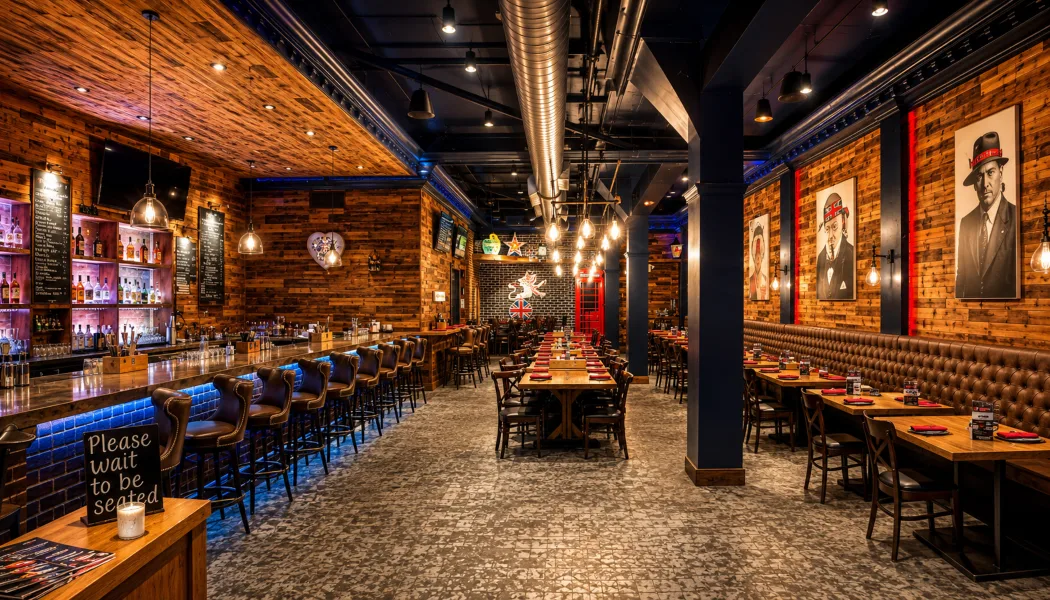
British pubs and gastropubs are built around materials that look great and sound terrible. Exposed brick, dark wood paneling, tile floors, tin ceilings, and large flat windows are the visual language of the category. Every one of those finishes reflects sound instead of absorbing it.
Add a packed dining room and the room hits the Lombard effect fast. Diners raise their voices to be heard over neighboring tables. Neighboring tables raise their voices in response. Within twenty minutes the whole room is louder than any single conversation needs it to be.
The fix is absorption — surface area inside the room dedicated to soaking up sound energy instead of bouncing it. The walls and floors of a pub are usually locked in by the brand aesthetic. The ceiling is the one large surface left, which is why restaurant acoustics design almost always lands there.

The Echo Diagnosis
- Symptom: Diners reporting fatigue and shouting at peak service
- Reverberation Time: Estimated above 1.5 seconds at full occupancy
- Target RT60: 0.6 to 0.8 seconds for conversational dining
- Hard Surfaces: Tin ceiling, wood paneling, brick walls, tile floor
Reverberation time is the metric that matters for restaurant comfort. RT60 measures how long it takes a sound to drop by 60 decibels after the source stops. Anything above 1.0 seconds in a dining room produces overlap between speech sounds and forces diners to work harder to follow a table conversation.
The Yeoman’s room read well above the comfort window. The ceiling alone — pressed-tin tile across the full footprint — reflected most of the high-frequency energy that drives speech intelligibility loss. The walls and floor added their share. The room was loud by design before the first diner walked in.

Why Ceiling Panels Were the Right Call
- Largest Available Surface: Ceiling area was the biggest single absorber footprint
- Aesthetic Preservation: Walls and floor stayed untouched
- NRC Range: Class A panels at NRC 0.85 to 1.00 chosen
- Mounting: Direct-attach above bar and dining zones
Ceiling treatment beats wall treatment in most restaurants for one reason. The ceiling is rarely a styling priority, which means it carries less aesthetic risk when something gets added to it. Walls are full of artwork, signage, brand language, and tile patterns. The ceiling is usually a plain surface that nobody looks up at.
Class A absorption (NRC 0.85 and above) is the right specification window for a high-volume dining room. Lower NRC panels still help, but the panel count needed to hit the target reverberation time grows quickly as NRC drops. The deeper math on panel coverage runs through our how many acoustic panels do I need calculator.
The product line behind the install lives at the sound-absorbing acoustic panels page, with NRC ratings, sizes, and finish options on the spec sheet.

Installation and Layout
- Coverage Target: 25 to 35 percent of ceiling area in absorption
- Priority Zones: Above the bar and the densest dining seating
- Layout Pattern: Distributed array, not a single concentrated cluster
- Sightlines: Panel finish chosen to read as part of the ceiling, not contrast against it
Distributed coverage matters more than total square footage. A clump of panels above one corner of a room handles that corner and leaves the rest reverberant. Spacing the panels across the dining footprint pulls energy out of the air everywhere a diner is sitting.
The bar zone earned the highest panel density because it is where conversation volume runs hottest. Bar service has more standing diners, more crossover talk, and more glassware noise than any seated table area. Treating that zone first delivers the largest perceived improvement per panel.
For a sister project that ran the same coverage logic on a fabric wall instead of a ceiling, see the restaurant fabric wall acoustic upgrade case study.

Restaurant Acoustic Ceiling Targets by Type
Restaurant acoustic ceiling targets shift with the dining format and the noise floor each room is built around. High-volume gastropubs need the most absorption. Quiet fine-dining rooms need the least. The table below maps the working windows across four common formats.
| Restaurant Type | Ceiling Coverage | Target NRC | Target RT60 |
|---|---|---|---|
| British Pub / Gastropub (High Volume) | 25 to 35 percent | 0.85 to 1.00 | 0.6 to 0.8 sec |
| Casual Family Restaurant | 15 to 25 percent | 0.75 to 0.90 | 0.7 to 0.9 sec |
| Fine Dining | 10 to 20 percent | 0.70 to 0.85 | 0.8 to 1.0 sec |
| Cafe / Quick Service | 15 to 20 percent | 0.70 to 0.85 | 0.7 to 0.9 sec |
Yeoman’s landed in the gastropub row with 25 to 35 percent ceiling coverage and Class A absorption. That gave the room enough headroom to drop reverberation time into the conversational window without wrapping the whole ceiling in panels.

Conclusion: Restaurant Acoustic Ceiling Panels
Acoustic ceiling panels are the highest-leverage acoustic move available to a restaurant operator who wants to keep the dining-room aesthetic intact. The Yeoman’s Cask & Lion install dropped reverberation into the conversational window without touching the brick, the wood, or the tile that defined the brand. Contact Us for a coverage estimate scoped to a specific room.
FAQs: Restaurant Acoustic Ceiling Panels
How much ceiling coverage does a restaurant need?
High-volume gastropubs need 25 to 35 percent of ceiling area in Class A absorption. Casual restaurants need 15 to 25 percent. Fine dining and quick-service rooms can hold reverberation in the conversational window with 10 to 20 percent ceiling coverage.
What NRC should restaurant ceiling panels target?
Class A panels at NRC 0.85 to 1.00 are the right spec for high-volume dining rooms. Lower NRC panels work but require more square footage to hit the same reverberation target. Most restaurant ceiling installs land at NRC 0.90 or above.
Should restaurant acoustic panels go on walls or ceilings?
Ceilings first in most cases. The ceiling is usually the largest available surface and carries the lowest aesthetic risk. Walls fill up with artwork, signage, and tile patterns that the brand needs to keep. Ceilings give the absorption math the most room to work.
What reverberation time should a restaurant target?
RT60 of 0.6 to 0.8 seconds is the comfort window for conversational dining. Above 1.0 seconds the room overlaps speech sounds and triggers the Lombard effect. Below 0.5 seconds the room sounds dead and energy drops.


Walker Peek|Founder & CEO, Commercial Acoustics
Walker founded Commercial Acoustics in 2013 to bring aerospace-grade engineering discipline to soundproofing, and runs the firm as CEO from its 12,000 sq ft Tampa production facility. The company designs custom acoustic panels, sound membranes, and masking systems for multi-family, hospitality, healthcare, and commercial projects across the US — built around Walker’s invention, Wall Blokker, an EVA-based sound barrier that hits STC 50-plus at roughly $1 per square foot installed.
A Jacksonville native, Walker spent five years at Kennedy Space Center with Craig Technologies before founding Commercial Acoustics — certifying aerospace manufacturing to the AS9100 standard and leading Six Sigma Black Belt process-improvement teams on NASA programs. He is a certified Industrial Noise Control Engineer and the author of Architectural Acoustics: A Practical Handbook.
