

Table of Contents
Project Overview: Acoustic Treatment at a Navy Engineering Hub
- Project: NAVFAC Facility at Camp Lejeune
- Address: 1401 West Road, Jacksonville, NC 28547
- Client: Naval Facilities Engineering Systems Command (NAVFAC)
- Facility Type: Government Engineering & Operations Campus
- Objective: Improve speech clarity & reduce echo in open-plan Navy workspaces
- Scope: Acoustic ceiling tiles, ceiling clouds, and wall panels
NAVFAC, the Naval Facilities Engineering Systems Command, oversees a massive network of critical infrastructure for the Navy and Marine Corps. From office buildings and airfields to command centers and training facilities, NAVFAC plays a central role in ensuring these spaces remain functional, efficient, and comfortable. When acoustic performance became a top priority at their Camp Lejeune facility, they selected Commercial Acoustics to deliver an integrated solution tailored to reduce reverb and improve speech clarity across large, open environments.
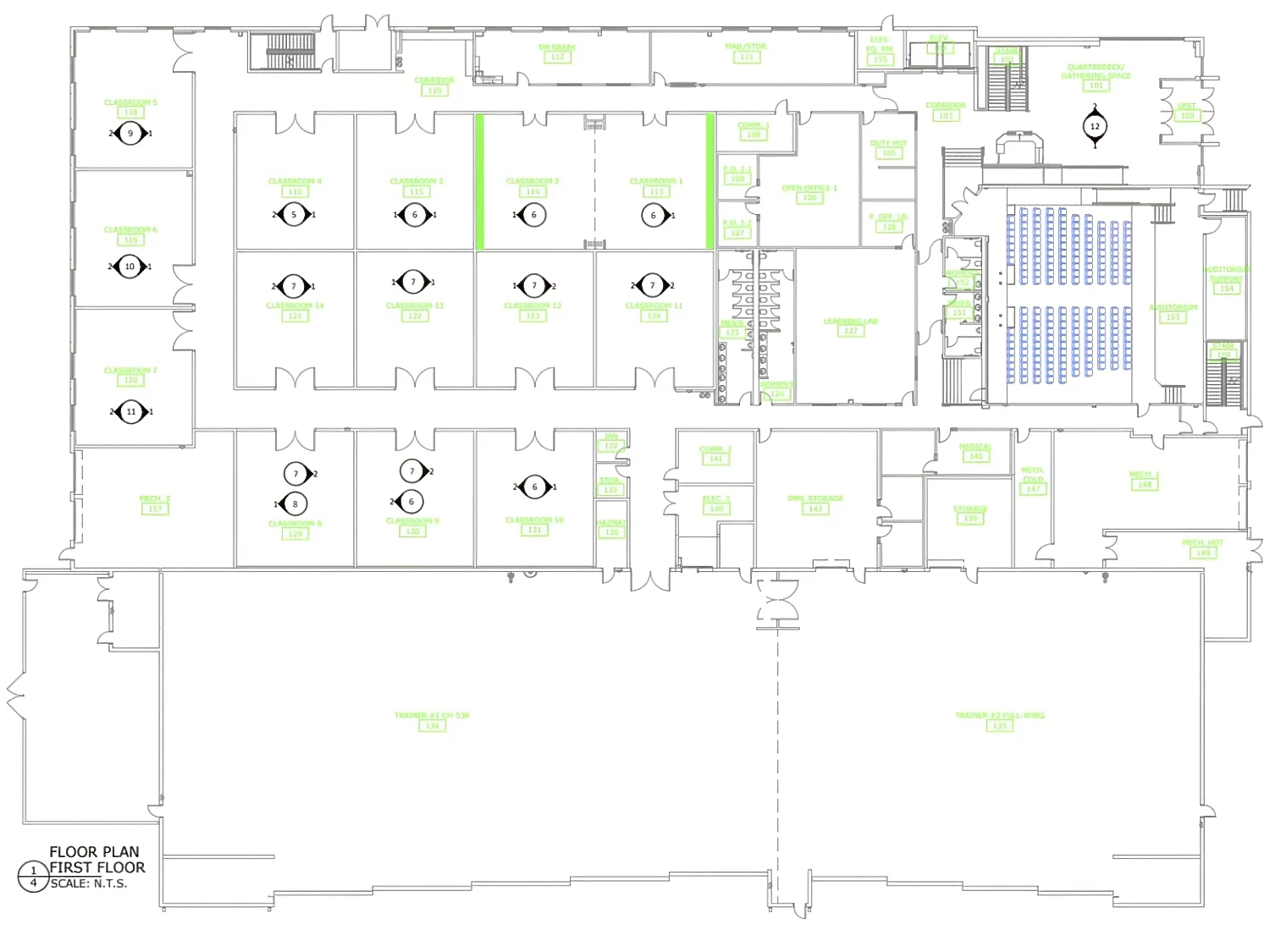
About Camp Lejeune: Acoustic Challenges in a High-Intensity Military Hub
- Massive Scale: 156,000-acre training & operations base
- High Activity: 170,000+ people & nonstop operations
- Extreme Noise: Aircraft, gunfire & amphibious drills
Marine Corps Base Camp Lejeune is one of the largest and most operationally active military installations in the U.S. Located on the North Carolina coast, it supports amphibious warfare readiness for the Navy and Marine Corps across 156,000 acres of terrain—from beaches to urban training zones.
The base is home to more than 63,000 active-duty personnel and 11,000 civilian staff. When including families and contractors, the on-base population exceeds 170,000. Operations run around the clock, with 80+ live-fire ranges, numerous helicopter landing zones, and full-scale tactical drills across varied spaces.
Adding to the complexity is Marine Corps Air Station New River, just nearby, with more than 90,000 aircraft movements each year. That constant activity creates an environment filled with high-decibel noise—making clear, uninterrupted communication inside buildings a real challenge.
For NAVFAC and base leadership, effective acoustic control isn’t just about comfort—it’s about supporting real-time, intelligible communication in mission-critical spaces. That’s why Commercial Acoustics was chosen: to deliver noise reduction systems that meet military demands while improving clarity in high-traffic, open-plan work zones.
Challenges: Large, Reflective Spaces with Poor Sound Clarity
- Ceiling Height: High-volume ceilings & expansive open floor plans
- Acoustic Overlap: Simultaneous conversations & operational noise
- Critical Zones: Echo issues in speech-focused Navy environments
In large government facilities like Camp Lejeune, especially those supporting mission-critical Navy operations, poor sound quality can hinder productivity and clarity. Echoes bounce off hard surfaces, speech becomes unintelligible, and team communication suffers—especially in shared offices, auditoriums, or logistics areas.
NAVFAC needed a comprehensive noise reduction strategy that balanced performance, durability, and visual integration with existing finishes. Our team conducted an in-depth site assessment and coordinated with facility managers and engineers to design a layered acoustic solution.
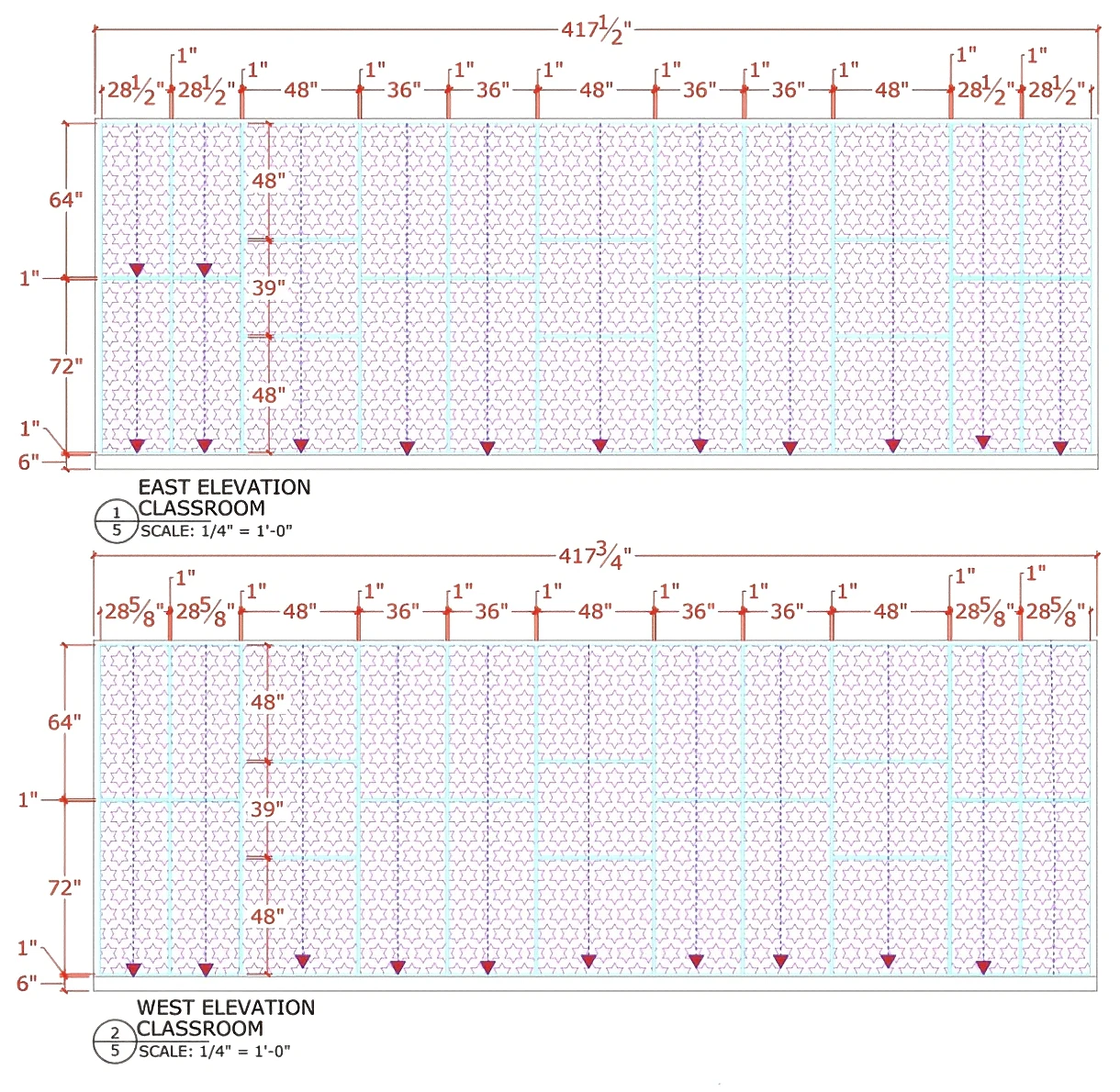
Acoustic Ceiling Tiles: Optimizing Reverb and Intelligibility
- Product & Grid: Armstrong Ultima tiles on 9/16″ Suprafine grid
- Coverage: 55,825 sq ft installed across multiple zones
- Performance: NRC rating of 0.75 for speech clarity & reverb control
We installed over 55,000 square feet of Ultima acoustic ceiling tiles, a high-density ACT product designed for noise reduction in expansive spaces. These tiles reduce reverb time, improve speech intelligibility, and maintain a clean aesthetic with their beveled tegular edges.
Their Noise Reduction Coefficient (NRC) of 0.75 makes them ideal for high-traffic environments like Navy offices, meeting rooms, and corridors. Installation was phased to minimize operational disruption, and Armstrong’s ProjectWorks tool was used to ensure optimal layout across multiple ceiling heights and configurations.
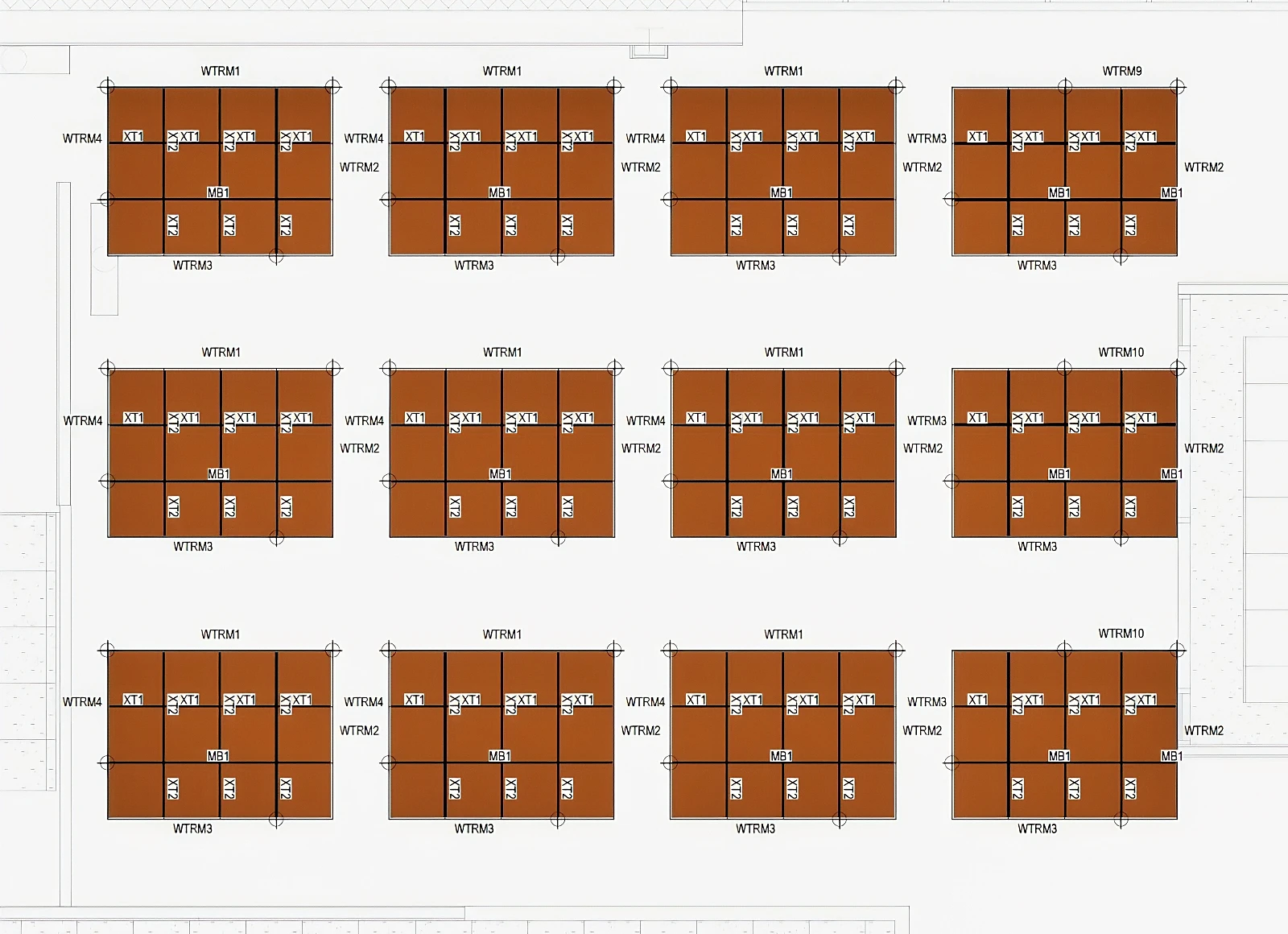
Acoustic Ceiling Clouds: Functional Design with Visual Appeal
- Product: Armstrong WoodWorks Ceiling Clouds
- Sizes: 6′ x 8′, 6′ x 14′ & 24″ x 24″ x ¾″ panels
- Finish: Light cherry veneer for visual warmth
- Grid Type: Suprafine 15/16″ suspension system
- Trim Detail: 4″ tegular edge for clean transitions
To supplement the ceiling tiles and enhance the architectural appeal of the space, we installed a series of suspended WoodWorks acoustic ceiling clouds. These clouds not only diffuse and absorb sound but also contribute to the warmth and identity of the facility’s interior design.
The chosen light cherry finish complemented NAVFAC’s desired aesthetic and helped unify the ceiling design throughout the open-plan zones. This was particularly useful in bridging the gap between acoustical performance and the high design expectations of modern federal facilities.
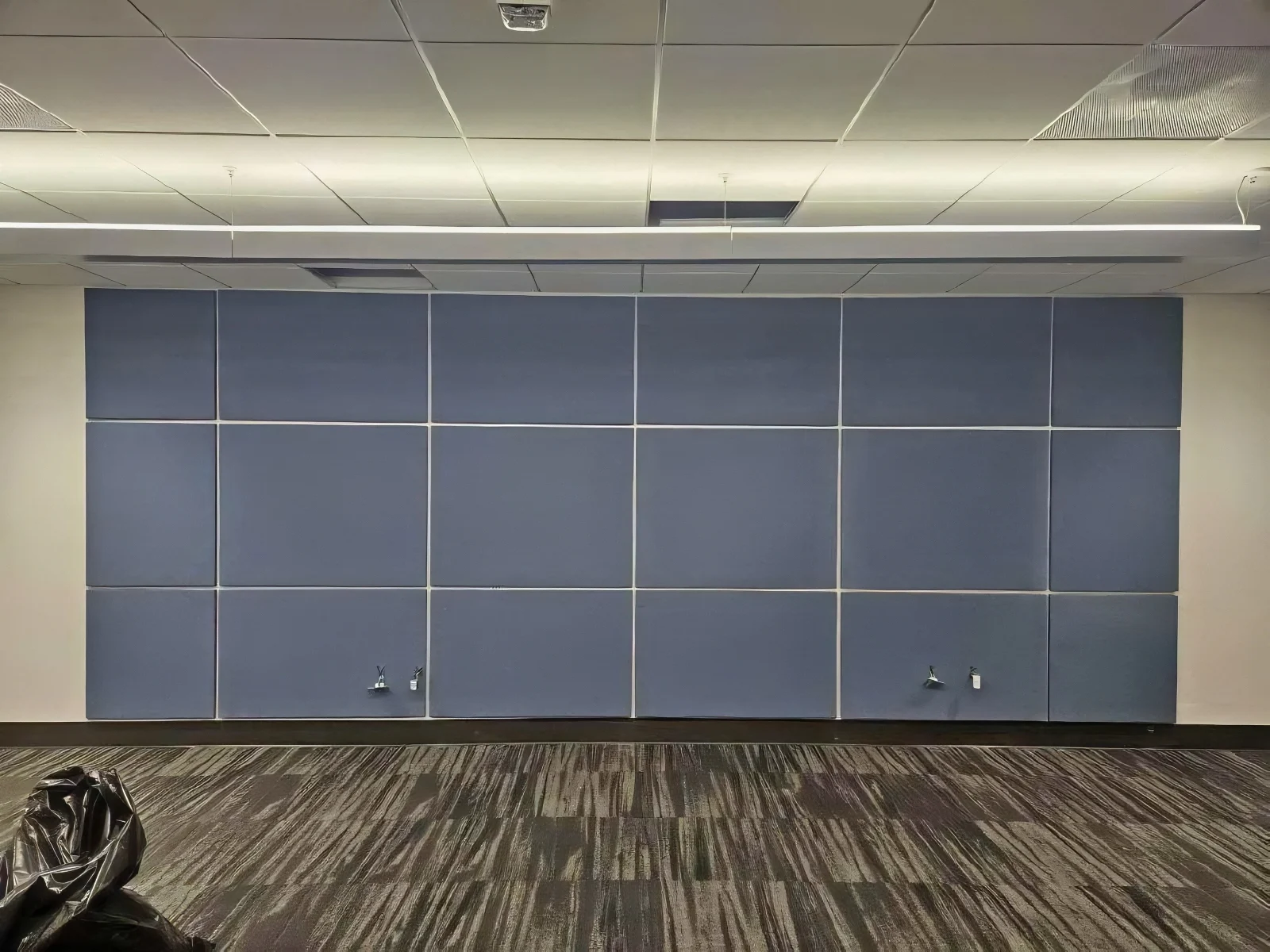
Wall Panels: Tackling Lateral Reflections and Echo
- Products: Ekko Eraser Fabric-Wrapped & Armstrong Wood Panels
- Coverage: 2,755 sq ft of wall paneling installed
- NRC Rating: Up to 0.85 for effective echo control
- Fabric Color: Guilford of Maine Quarry Blue
- Wood Finish: Light cherry veneer with NWE perforation pattern
Wall treatments were key to managing sound reflections in large areas with tall walls and limited soft finishes. Our dual-system approach included both fabric-wrapped and wood-faced panels.
The Ekko Eraser panels, custom fabricated with a durable core and Quarry Blue fabric, were strategically placed to reduce echo and improve focus in shared workspaces. For continuity, Armstrong’s perforated wood panels were chosen in the same light cherry finish as the ceiling clouds. This combination of tone, texture, and NRC rating (up to 0.85) offered both visual cohesion and substantial noise control benefits.
Together, these treatments minimized lateral reflections and enhanced overall noise reduction, particularly in large-volume zones with open communication requirements.
Installed Noise Reduction Materials at Camp Lejeune
- Ceiling Tiles: Ultima ACT with 0.75 NRC for broad reverb control
- Ceiling Clouds: Armstrong WoodWorks in light cherry finish
- Fabric Panels: Custom Ekko Eraser wall panels in Quarry Blue
- Wood Panels: Armstrong perforated wood panels (up to 0.85 NRC)
Each of these components played a specific role in achieving a balanced acoustic environment tailored to NAVFAC’s operational needs. The ceiling tiles reduced broad-spectrum reverberation, while the clouds added visual warmth and vertical sound diffusion. The wall panels tackled lateral reflections, bringing clarity and focus to areas where clear communication is critical. Together, these systems now support daily Navy operations at Camp Lejeune—minimizing acoustic fatigue, improving team coordination, and enhancing overall work quality in this high-performance facility.
Coordinated Acoustic Installation for Military Infrastructure
The entire system—from tile layout to wall panel mounting—was delivered with precision. Coordinating with NAVFAC’s facility team, we accounted for:
- Minimal Disruption: Phased installation during active facility operations
- System Integration: Coordinated with lighting, fire protection & HVAC trades
- Procurement Strategy: Sequenced deliveries to align with lead times
- Field Execution: Surface prep, layout checks & precise adjustments
Government projects require disciplined project management and adaptability. Our team ensured that all materials met spec and were installed to manufacturer guidelines, which was essential for both performance and warranty adherence.
Summary: Proven Noise Reduction Strategy for Navy Facilities
With over 55,000 square feet of NRC-rated ceiling tiles, suspended wood ceiling clouds, and high-efficiency wall panels, Commercial Acoustics delivered a comprehensive, performance-driven solution for NAVFAC’s Camp Lejeune facility. This was more than just a product install—it was a carefully coordinated acoustic strategy tailored to support the complex daily demands of a Navy engineering and operations campus.
From design coordination to product procurement to on-site installation, every aspect of the project was executed to meet strict military standards for durability, visual consistency, and acoustic control. The result is a more intelligible, comfortable, and productive environment—whether personnel are conducting briefings, collaborating in shared spaces, or working in quiet zones that require focused concentration.
For architects and general contractors working in federal, defense, or high-security projects, effective noise control isn’t just a feature—it’s a functional necessity. Commercial Acoustics specializes in delivering turnkey acoustic solutions that perform under pressure and integrate seamlessly into your project schedule.
If you’re designing or renovating a military, aviation, or government facility where clear communication and acoustic control are mission-critical, contact Commercial Acoustics to discuss how we can support your next project.
FAQs: Acoustic Solutions for Navy Projects
What are the best acoustic ceiling tiles for military or government buildings?
Armstrong Ultima tiles are a strong choice due to their durability, clean appearance, and NRC of 0.75. They’re widely accepted in institutional specs and meet noise reduction needs in open and office settings.
How do you ensure acoustic treatments meet Navy facility standards?
We follow manufacturer guidelines, coordinate with NAVFAC engineers, and ensure all materials meet performance specs, including fire rating, NRC, and durability standards relevant to Navy spaces.
Can ceiling clouds and wall panels be visually coordinated?
Yes, as shown in this project, the light cherry wood finish was used across both ceiling clouds and wall panels to maintain visual cohesion while delivering effective noise control.
Why does NRC matter in Navy facilities?
NRC (Noise Reduction Coefficient) measures a material’s ability to absorb sound. In command centers, offices, and open plan areas, higher NRC ratings reduce distracting reverb and improve intelligibility.
What role do wall panels play in noise reduction?
Wall panels absorb sound that reflects laterally off vertical surfaces. They’re essential in large-volume rooms where ceiling tiles alone can’t manage all echo or mid-frequency reverberation.
