
Table of Contents
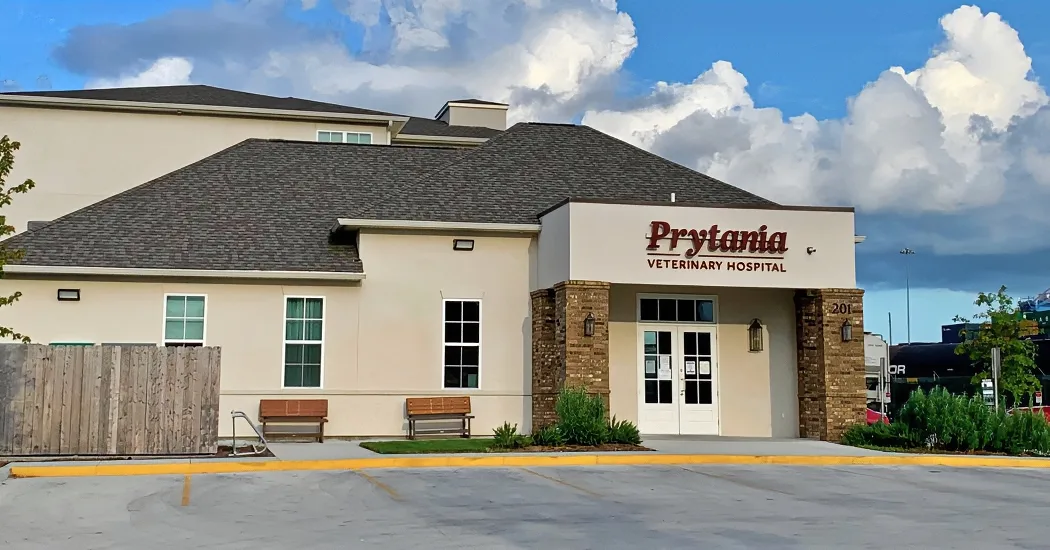
Project Overview: Noise Control at Prytania Veterinary Hospital
- Project: Interior Acoustic Treatment for Veterinary Office
- Address: 201 Nashville Ave, New Orleans, LA 70115
- Facility Type: Full-Service Animal Hospital
- Client: Prytania Veterinary Hospital
- Objective: Improve speech clarity & reduce noise stress for staff & animals
- Scope: Acoustic ceiling & wall upgrades in lobby & kennel areas
Located in Uptown New Orleans, Prytania Veterinary Hospital is a modern, high-traffic animal care facility serving local pet owners with a full suite of veterinary services. With the constant presence of barking dogs, clattering claws, and daily foot traffic, the hospital experienced excessive reverberation and sound transmission throughout its lobby and kennel zones.
To address these challenges, Commercial Acoustics was brought in to design & install a suite of targeted acoustic solutions, enhancing both client experience and staff performance. Our focus was clear: effective noise control without compromising the facility’s sleek aesthetic or daily operations.
Challenges of Noise in Veterinary Offices
- High Decibel Levels: Dog barks exceed 100 dB & often echo in hard surfaces
- Stress Response: Loud, unpredictable sounds increase anxiety in animals
- Poor Speech Clarity: Reverberation affects staff communication & phone calls
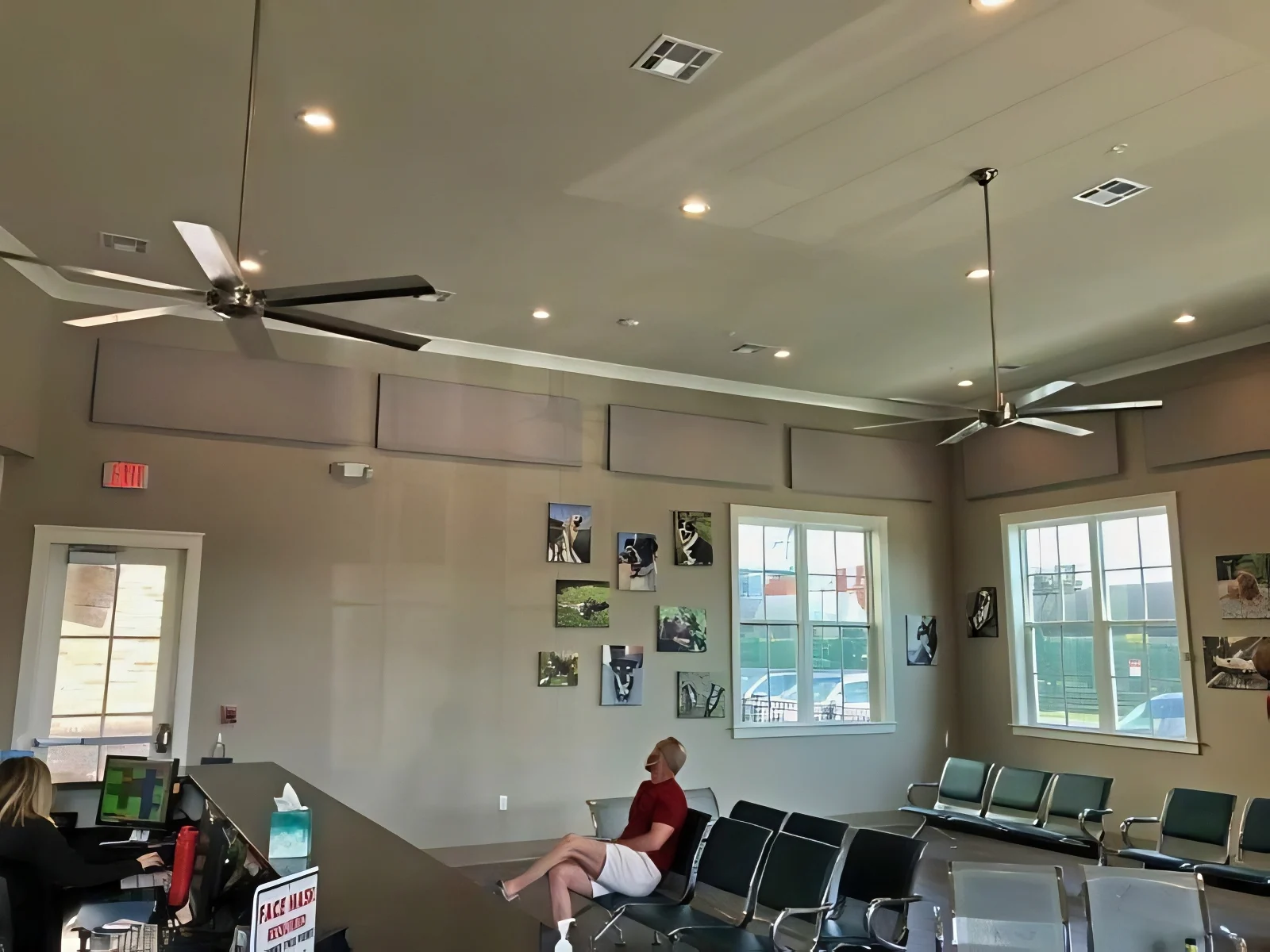
Veterinary offices face a unique acoustic challenge—noise isn’t just a nuisance; it can directly affect patient well-being. When multiple animals vocalize at once, sound builds up rapidly. In this facility, the combination of drywall surfaces, tile flooring, and glass elements created a perfect storm of reflective surfaces. Even routine conversations between staff and pet owners were difficult, and phone calls at the front desk were frequently disrupted.
More critically, pets under stress become more vocal—amplifying the cycle of noise. In spaces like kennels and lobbies, noise buildup can elevate cortisol levels in animals and contribute to behavioral issues. For veterinary architects and GCs designing animal care facilities, incorporating acoustic treatment isn’t a luxury—it’s a requirement for function, safety, and comfort.
Lobby Echo Control with Acoustic Panels
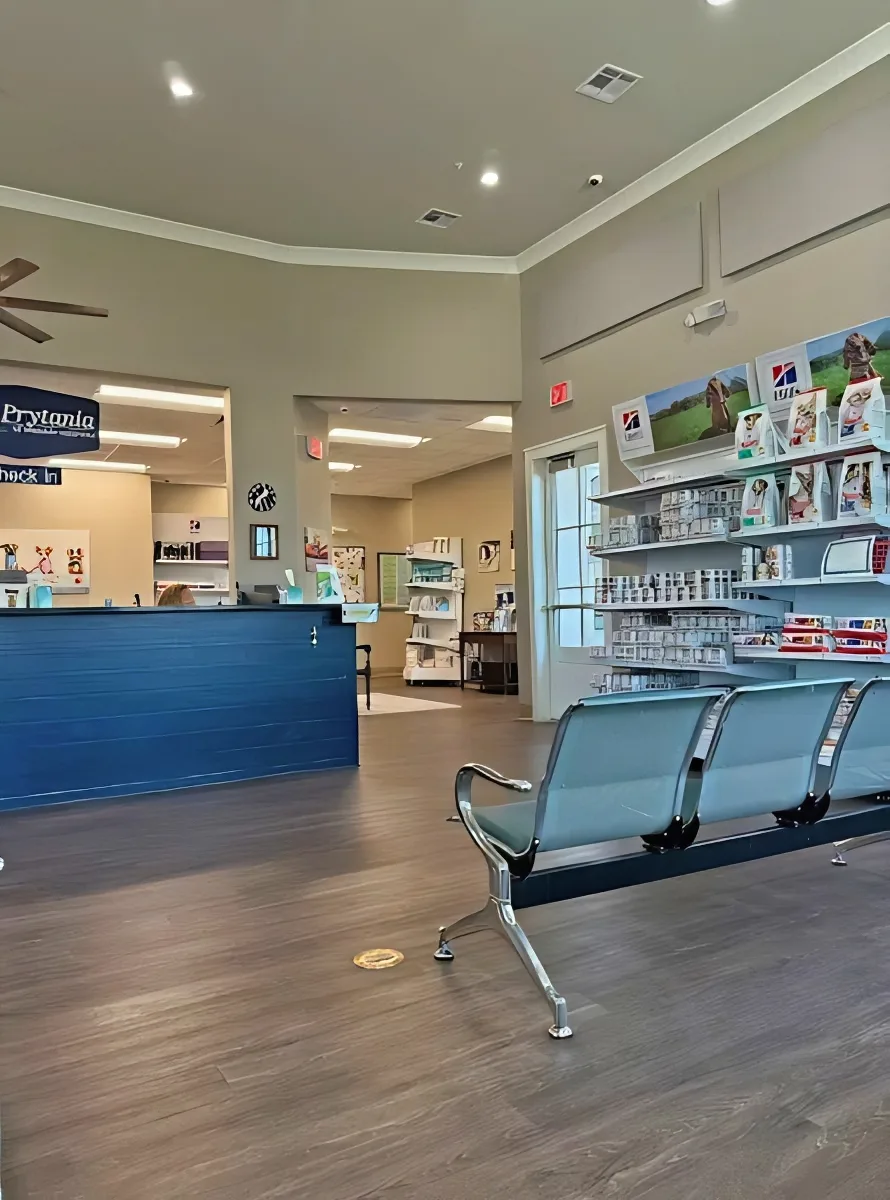
- Acoustic Panels: 2″ wall panels with NRC of 1.05 installed in key lobby zones
- Reflective Surfaces: Treatment reduced sound bouncing off drywall & glass
- Reception Clarity: Improved intelligibility for phone calls & in-person chats
In the main lobby, noise was intensified by hard surfaces and high ceilings. Our team installed custom-fabricated 2” thick acoustic wall panels, which feature a Noise Reduction Coefficient (NRC) of 1.05—meaning they absorb nearly all incident sound energy. These panels were strategically placed to target first reflection points across the drywall and glass surfaces.
The result was a dramatic improvement in speech clarity for front desk staff and a more calming environment for pet owners and animals waiting for care. Reduced echo allowed for clearer communication across the front desk and decreased overall noise levels in this high-traffic space.
Kennel Sound Absorption Upgrade
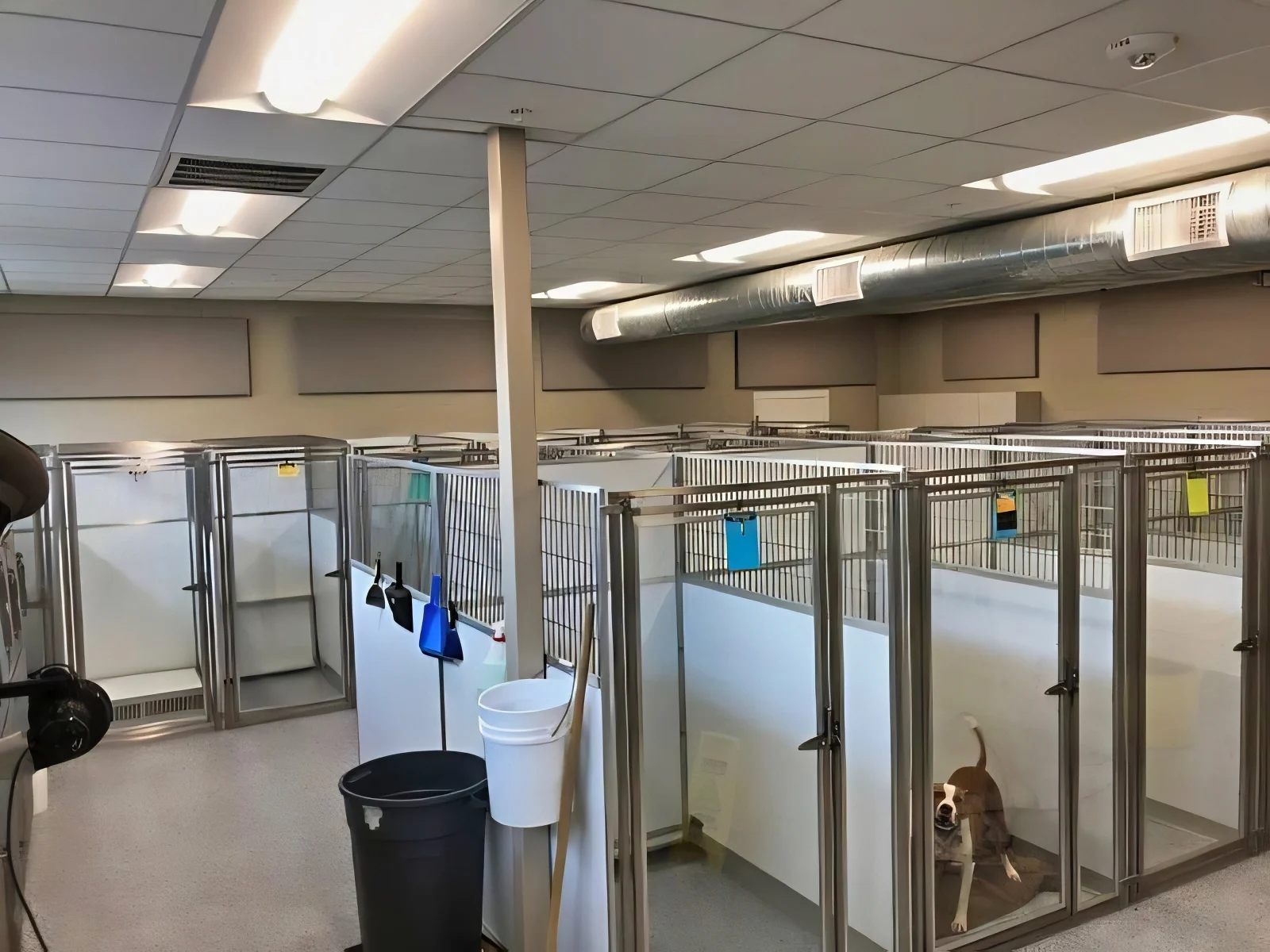
- Ceiling Tiles: Armstrong Optima (0.90 NRC) replaced standard ACT (0.50 NRC)
- CMU Wall Panels: Durable panels added along kennel perimeter walls
- Balanced Treatment: Ceiling & wall products worked together to cut reverb
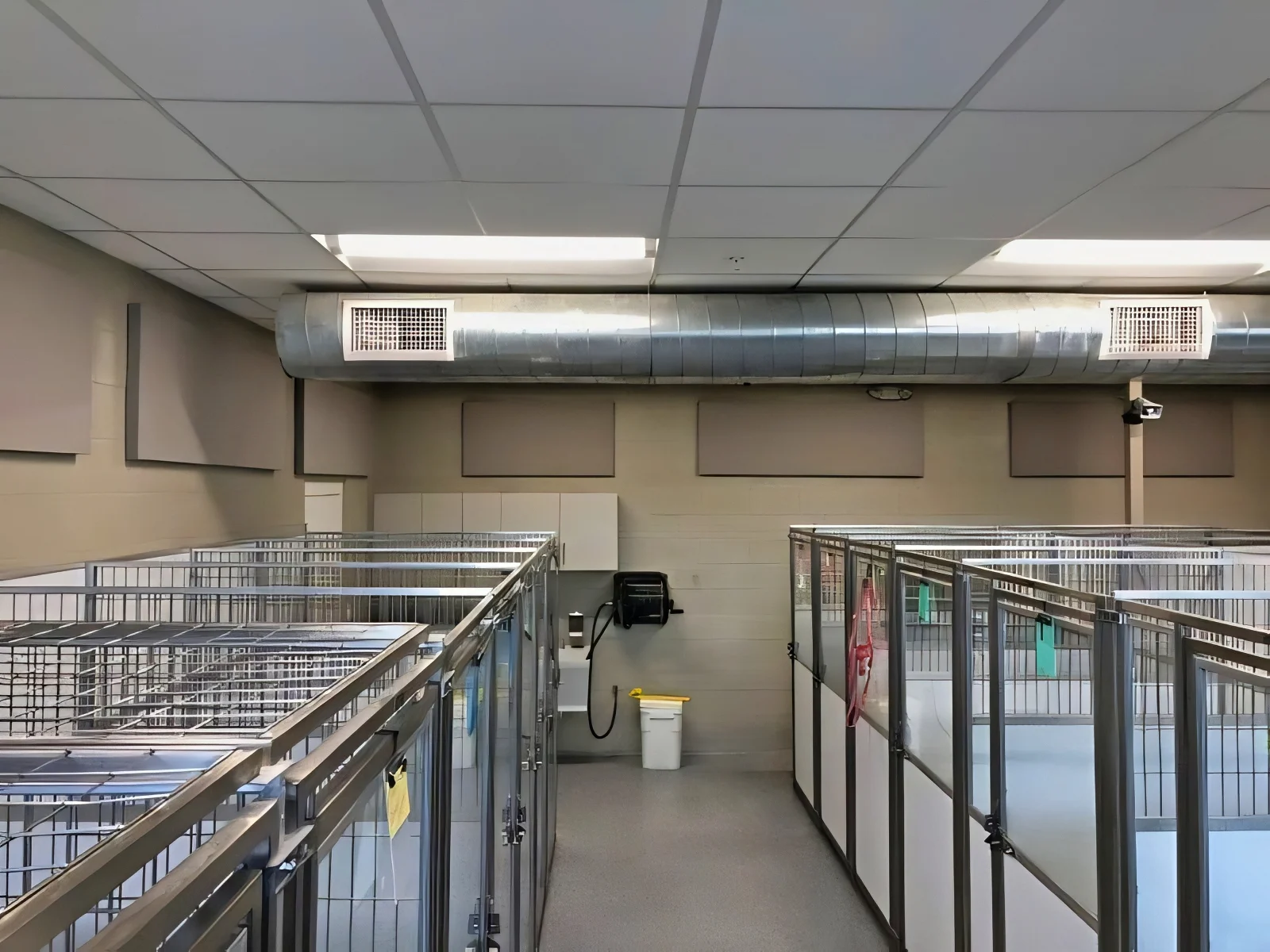
The kennel area of Prytania Vet had unique acoustic concerns. While the ceilings already had a suspended ACT grid, the original tiles had an NRC of just 0.50—not enough to handle the intense barking and movement sounds generated by active dogs.
Our team replaced these tiles with high-performance Armstrong Optima panels, featuring an NRC of 0.90. Along the painted CMU block walls, we added equally spaced acoustic panels to absorb lateral sound reflections. Together, these ceiling and wall treatments created a layered system that effectively reduced reverberation and prevented sound buildup across the space.
The end result was a quieter, more manageable acoustic environment that benefited both the pets and the staff tasked with caring for them.
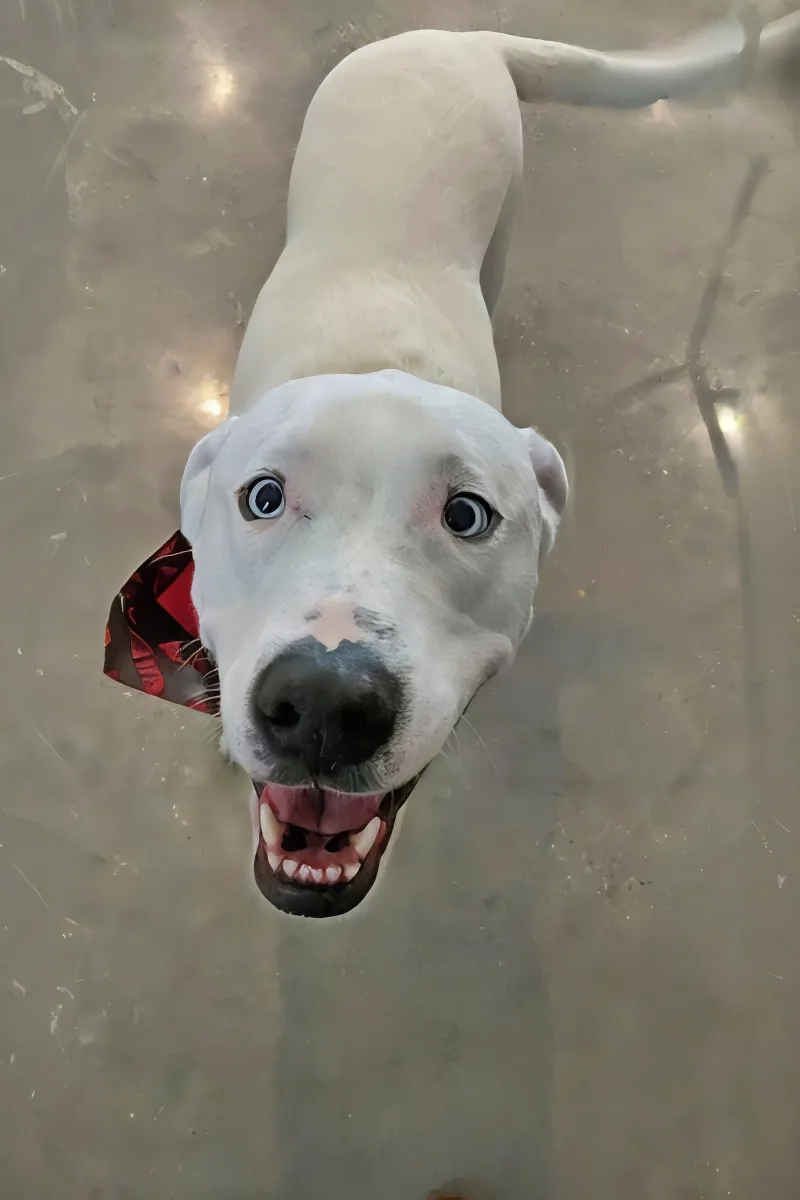
Why Noise Mitigation Matters in Veterinary Design
- Staff Efficiency: Acoustic upgrades reduce auditory fatigue & improve focus
- Patient Comfort: Lower noise levels support animal health & behavior
- Client Experience: Calmer environments build trust & satisfaction
Veterinary clinics are increasingly being designed with the total sensory experience in mind. That includes not just visual aesthetics, but the sound environment as well. Loud spaces lead to poor communication, added stress for staff, and even longer recovery times for post-op animals.
By incorporating both acoustic wall panels and high-NRC ceiling tiles, our team gave Prytania Veterinary Hospital an effective, low-maintenance solution. The materials we used were selected not only for their performance but also for their clean, modern finish that blends with the existing architectural palette.
If you’re an architect or GC working on an animal care facility, integrating noise mitigation should be a central part of your design approach. Without it, even the most beautiful space can become chaotic and uncomfortable.
Dog Kennel & Vet Facility Soundproofing in the South
- Alabama: Kennel soundproofing projects improving comfort for pets & staff.
- Louisiana: Vet office soundproofing tailored for clinics & kennels.
- Texas: Dog kennel upgrades designed for large animal facilities.
- Georgia: Animal care solutions enhancing wellness & efficiency.
From vet clinics in Louisiana to kennels in Alabama and Texas, we’ve delivered soundproofing strategies that reduce barking noise, control echo, and create calmer environments. These Southern projects show how the right acoustic treatments can make animal care facilities more comfortable for pets, staff, and visitors alike. By addressing noise at the source, our dog kennel soundproofing solutions also support better long-term facility performance and resident satisfaction.
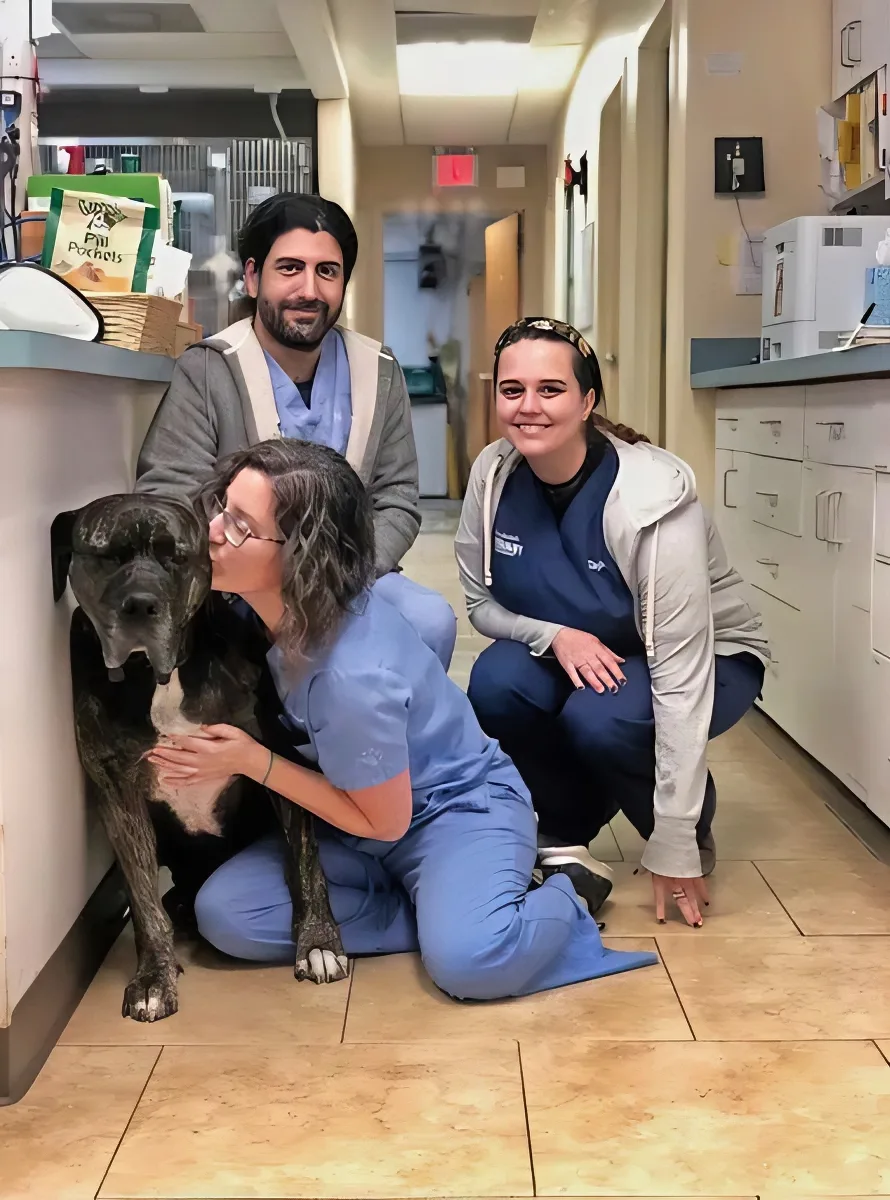
Conclusion: A Sound-Smart Upgrade for Prytania Vet
Prytania Veterinary Hospital is more than just a place for checkups and shots—it’s a healing space for animals and a workplace for dedicated professionals. Through a thoughtful combination of high-NRC ceiling tiles and strategically placed acoustic wall panels, we helped this facility turn down the volume and dial up the comfort.
Our noise control solutions didn’t just reduce decibel levels—they improved communication, lowered stress, and allowed staff to focus on what really matters: delivering top-tier veterinary care.
If you’re planning or renovating a veterinary hospital or pet-care facility, don’t let acoustics be an afterthought. Reach out to our team to design an acoustic solution that speaks volumes—without making a sound.
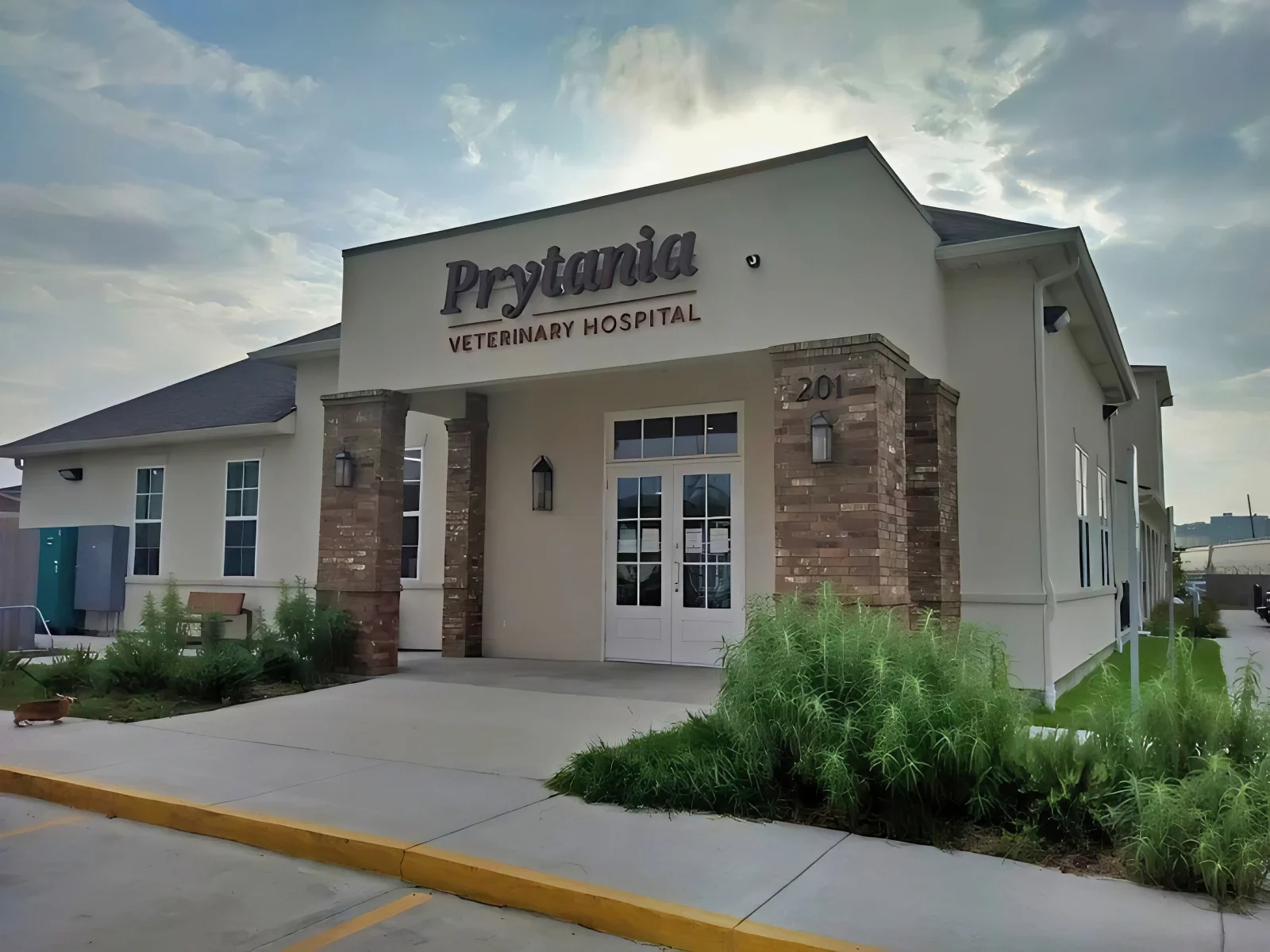
FAQs: Noise Control for Veterinary Hospitals
What are the best noise control options for a veterinary hospital?
Wall-mounted acoustic panels and high-NRC ceiling tiles are the most effective. Together, they reduce reverberation and help manage barking and equipment noise.
Do acoustic panels hold up in pet-care environments?
Yes. Our panels are built with durable, cleanable finishes that withstand high traffic, fur, and even light impacts from animals or equipment.
Can noise control improve animal health?
Absolutely. Reducing environmental noise helps lower animal stress levels, which can aid recovery and minimize behavioral issues, especially in kennels and treatment rooms.
Are these products compatible with veterinary hygiene standards?
Yes. All materials used are moisture-resistant, fire-rated, and meet healthcare facility guidelines for cleanliness and maintenance.
