Table of Contents
Project Overview: Sound Control Strategy for a Premier Hotel Venue
- Project: Pier Sixty-Six Hotel Ballrooms
- Address: 2301 SE 17th St, Fort Lauderdale, FL 33316
- Client: Tavistock Development Company
- Facility Type: Luxury Waterfront Hotel & Event Venue
- Objective: Improve ballroom & corridor acoustics with high-NRC fabric walls
- Scope: Over 10,000 sq. ft. of custom stretched fabric wall systems
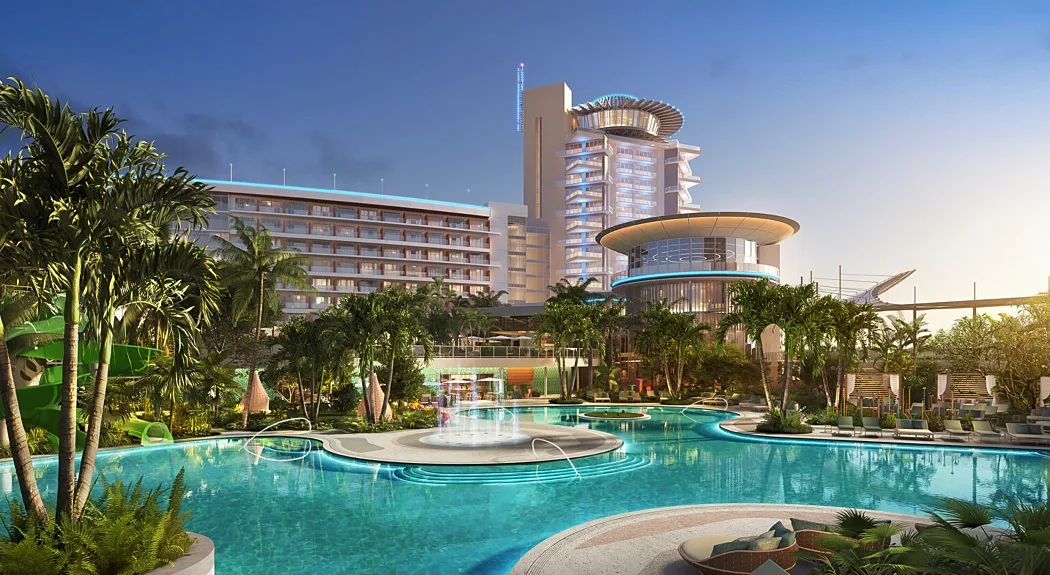
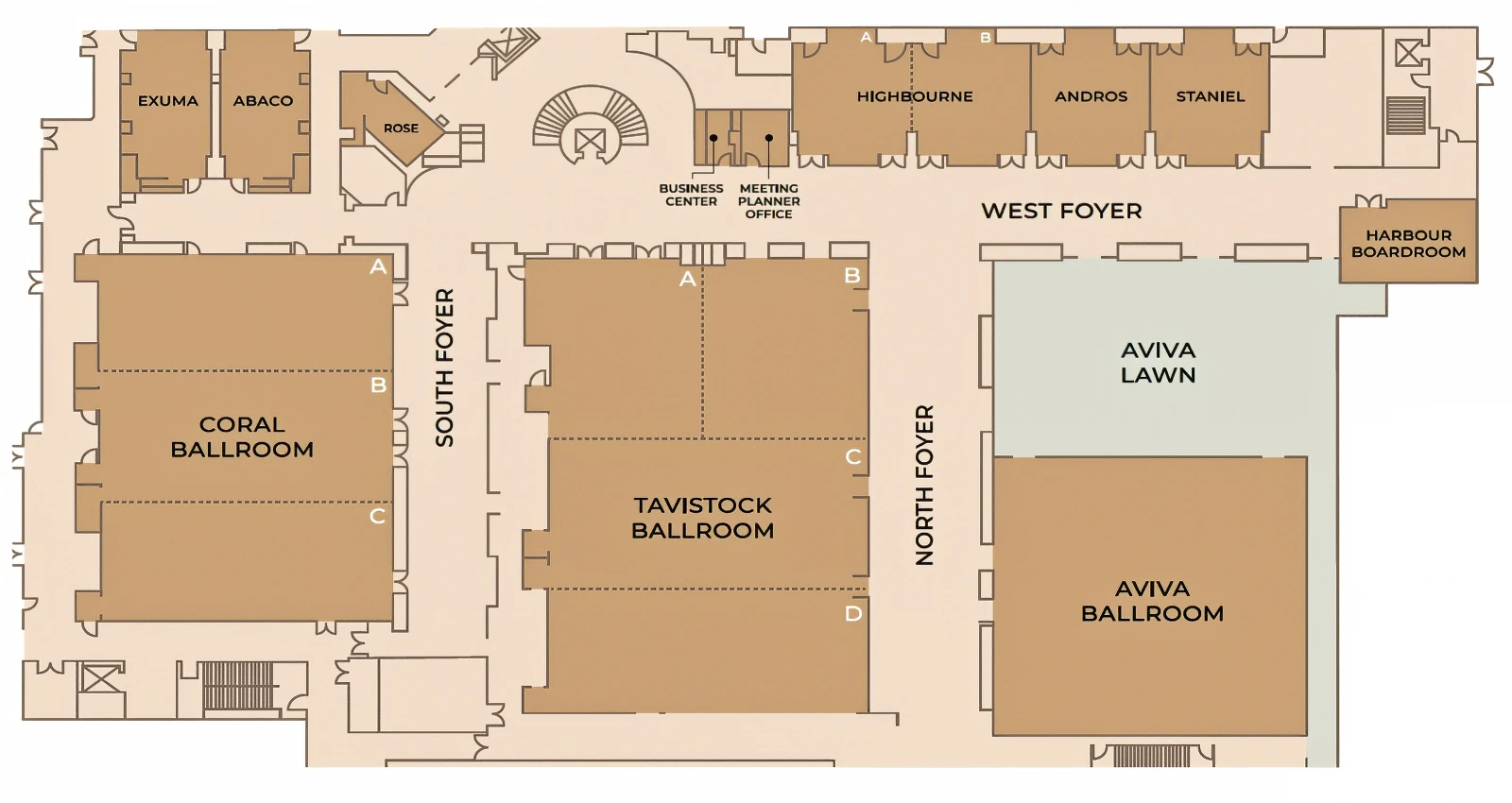
Pier Sixty-Six Hotel is a well-known luxury destination on the waterfront of Fort Lauderdale, offering a marina, fine dining, and high-end event spaces. As part of a high-profile renovation, the hotel prioritized acoustic performance in its most prestigious gathering spaces: the grand ballrooms and their pre-function corridors.
Commercial Acoustics served as the project’s acoustic consultant, advising on design strategies that would both complement the hotel’s aesthetic vision and deliver exceptional sound control. Because we specialize in helping hospitality venues create comfortable, versatile environments, our team was also selected as the subcontractor to implement the solution. We designed and installed custom treatments that eliminated echo, enhanced speech clarity, and ensured the space could transition seamlessly between weddings, conferences, and corporate events—all while maintaining the property’s brand standards.
Pre-Renovation Sound Issues at Pier Sixty-Six Hotel
- Volume: Large open rooms prone to reverberation
- Surfaces: Hard, reflective finishes amplified echo
- Geometry: Curved & beveled walls complicated treatment
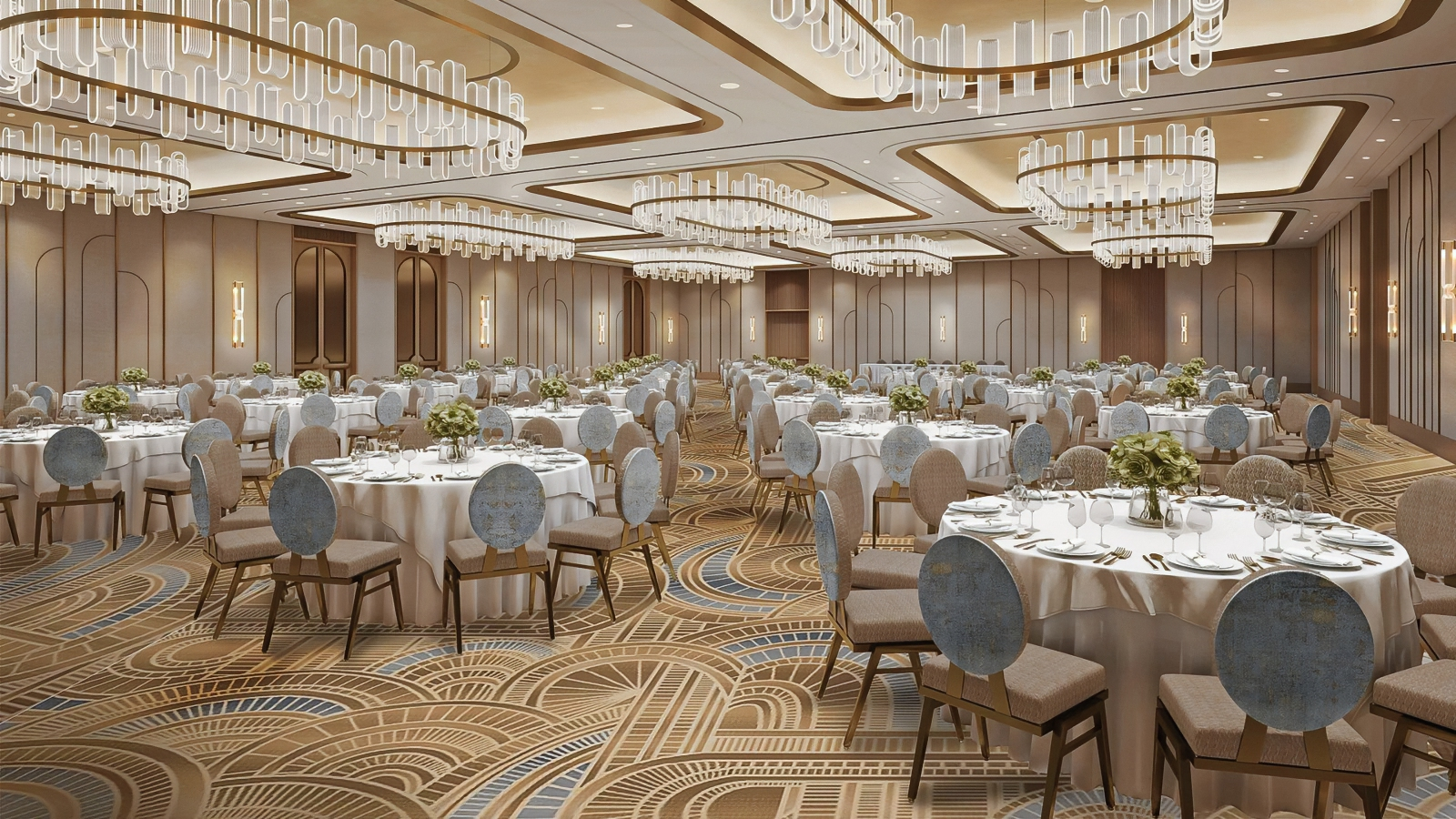
Like many large hospitality venues, the ballrooms at Pier Sixty-Six originally had high ceilings and flat, reflective wall surfaces. These architectural features, while visually dramatic, caused problematic reverberation. Voices and music bounced throughout the space, making it difficult to understand speech or enjoy clear sound during presentations.
The pre-function corridors experienced similar issues. As transitional spaces, they required better sound control to accommodate pre-event mingling, cocktail hours, and networking without excessive background noise or harsh echo. These challenges later informed our design guides for treating hospitality venues with complex layouts.

Custom-Fit Acoustic Wall System for Ballrooms
- System: Stretched fabric walls with beveled-edge track
- Core Options: 1″ & 2″ fiberglass for tailored absorption
- Integration: Curved panels & furring for layered design
To address these challenges, the design team selected a stretched fabric wall system—a preferred solution for high-end, acoustically demanding environments like hotel ballrooms. This system combines high-performance acoustic absorption with custom finishes that integrate seamlessly into architectural features.
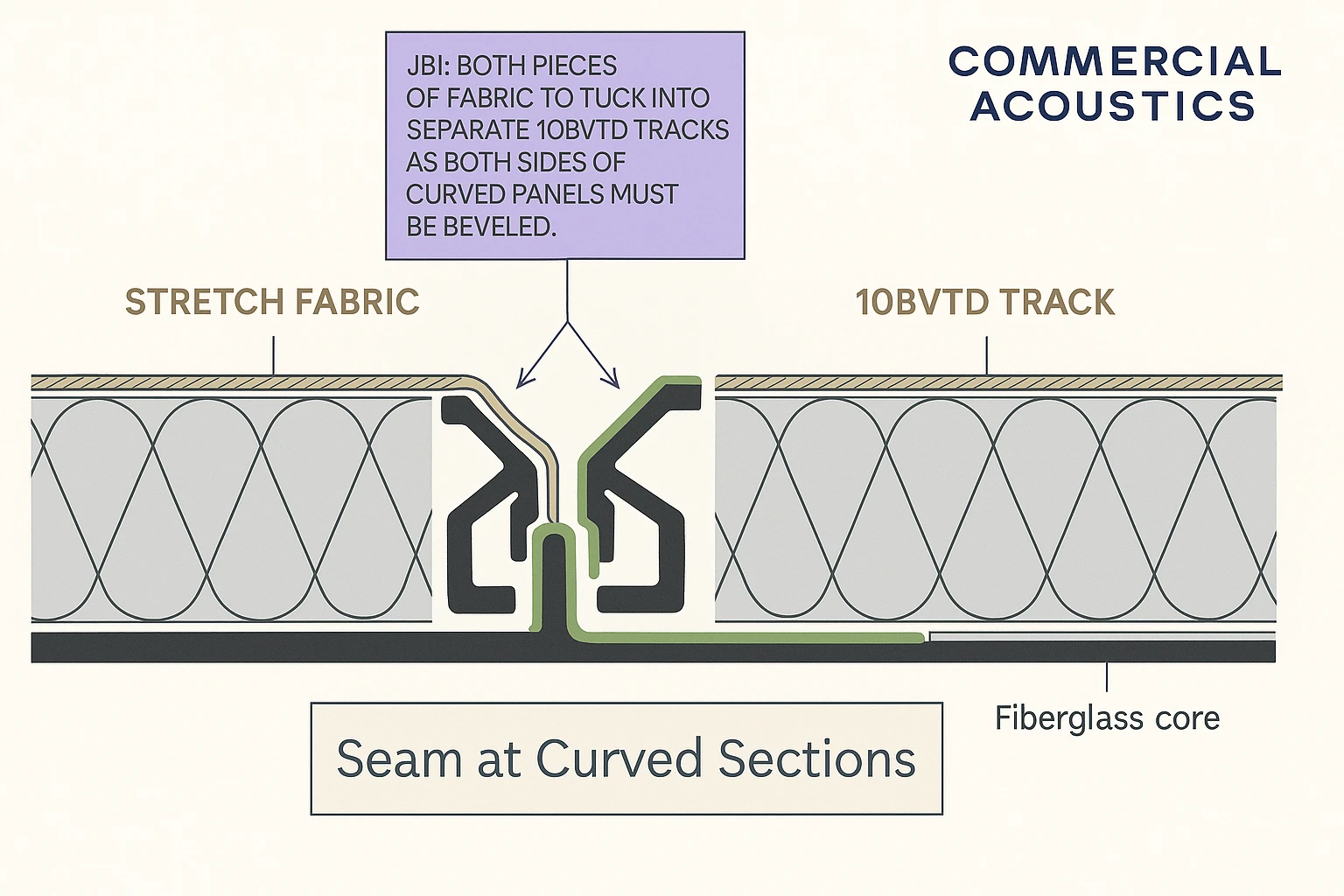
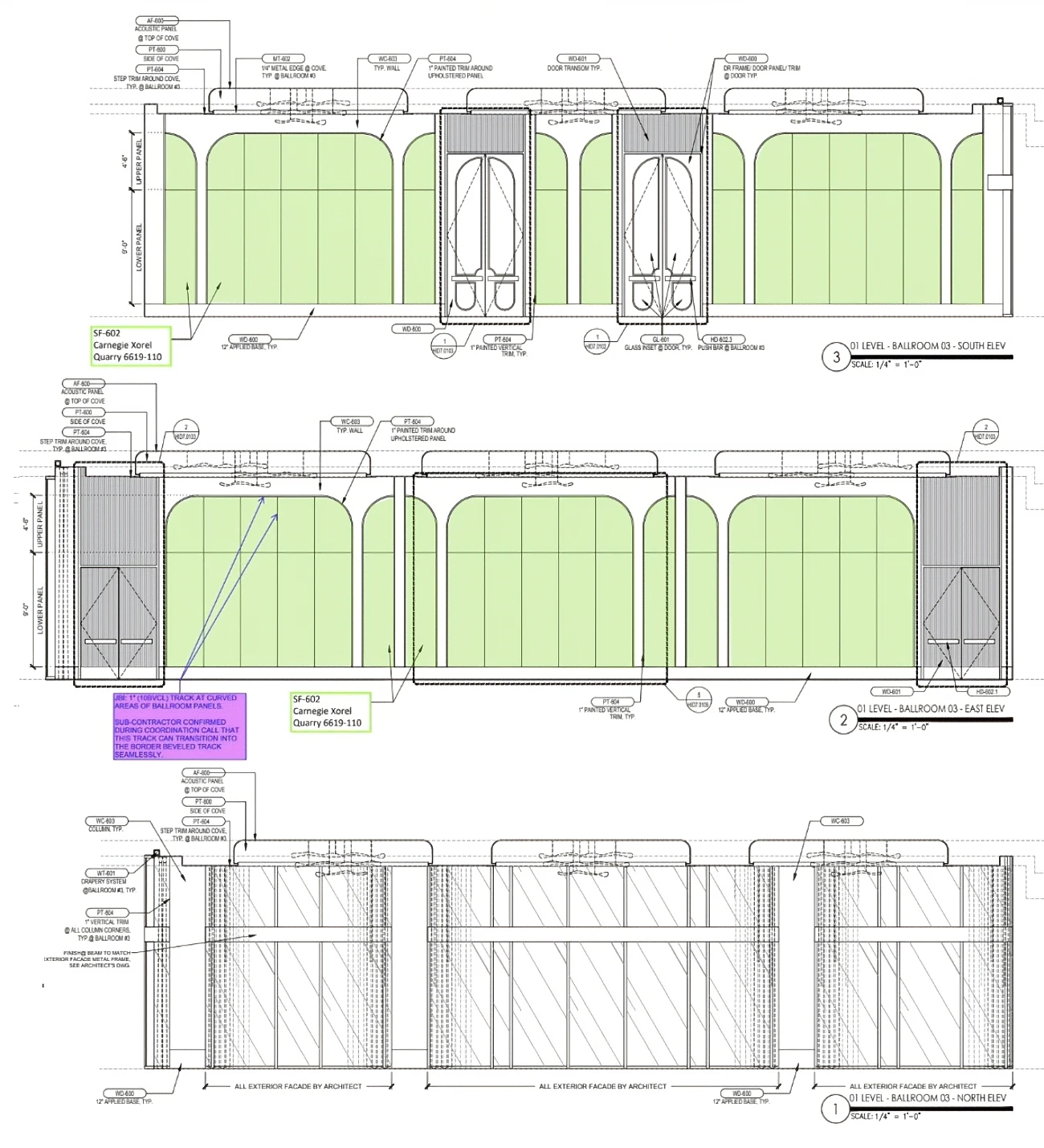
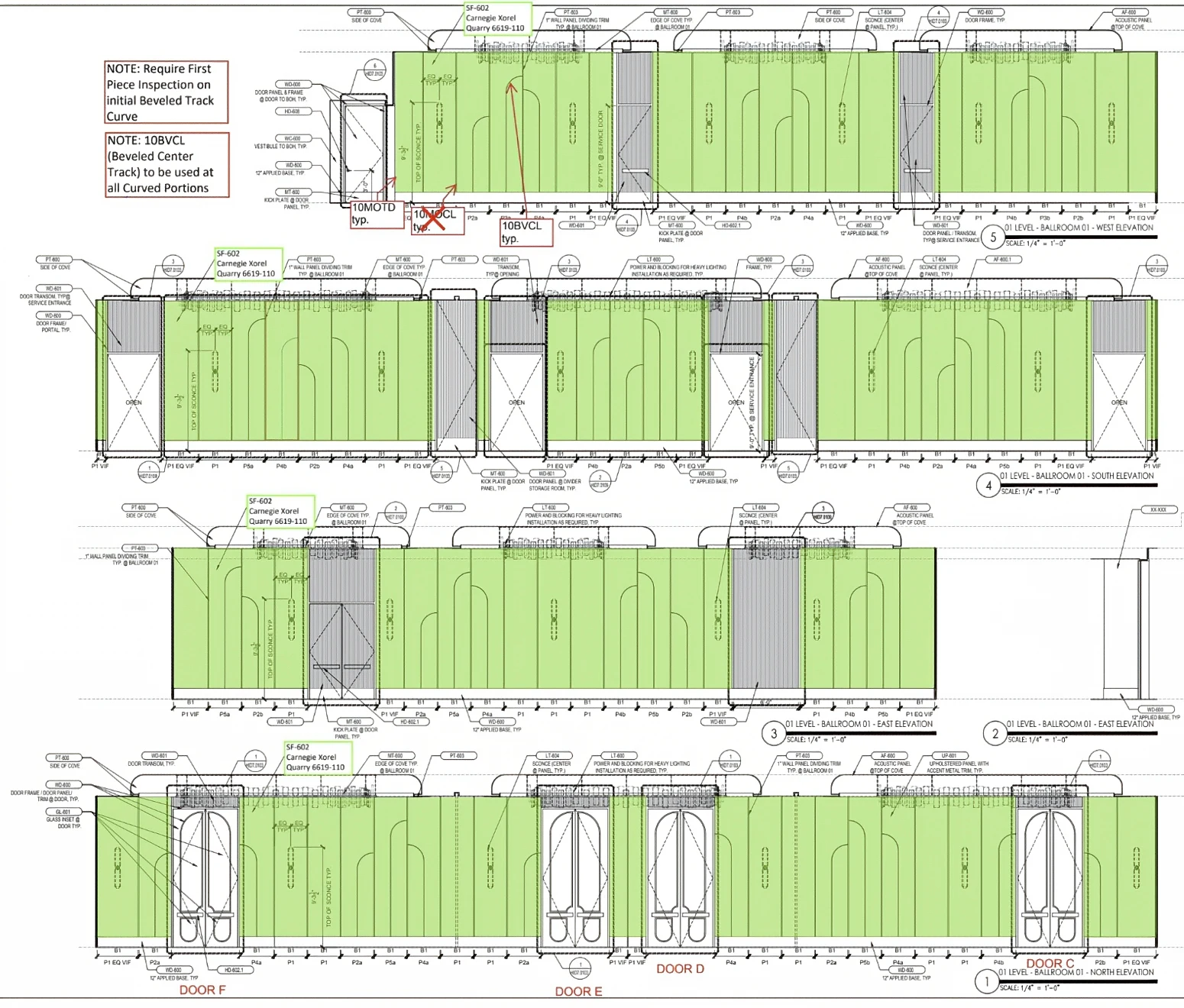
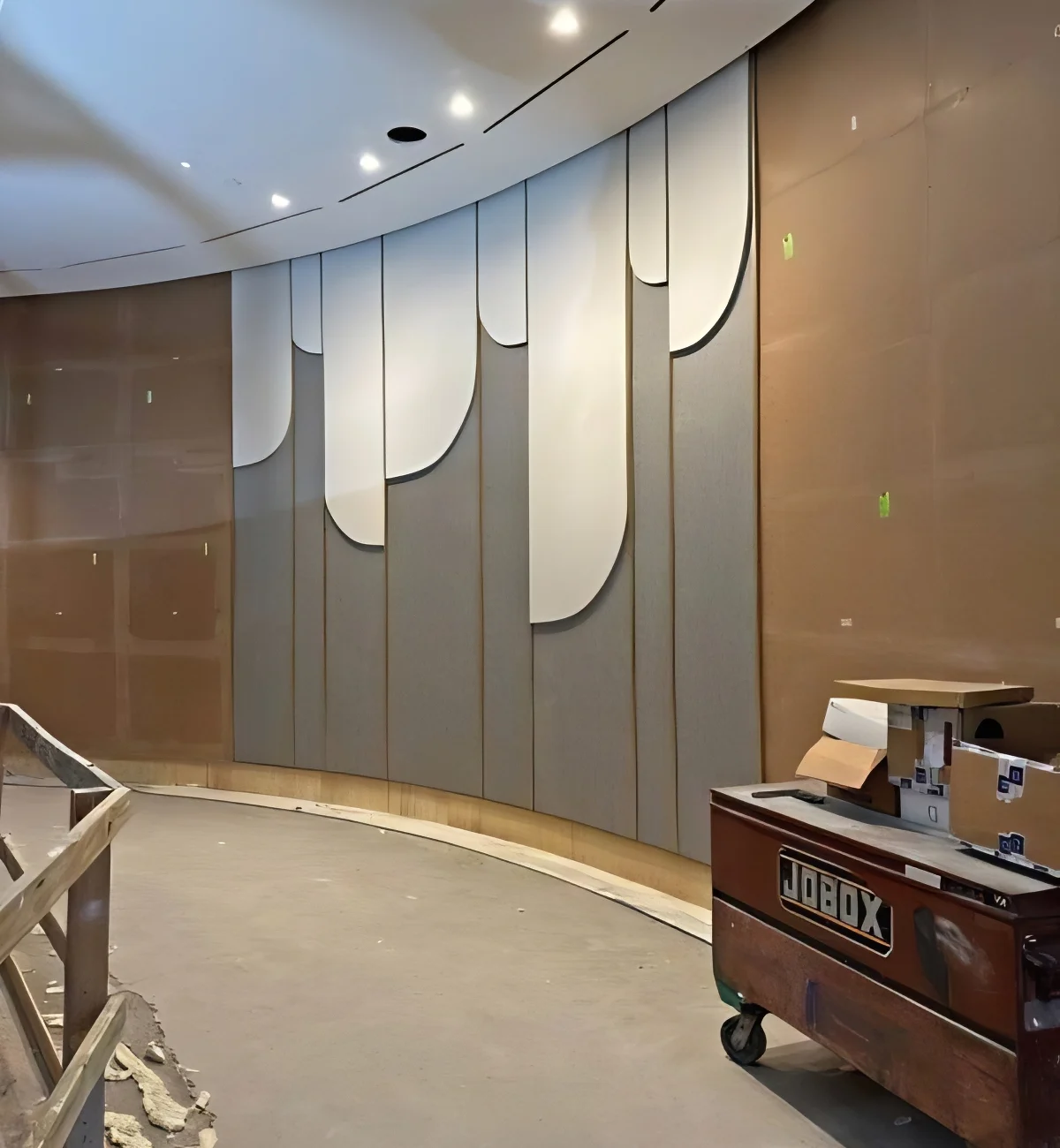
Our team installed more than 10,000 square feet of stretched fabric panels across three distinct ballrooms and their corridors. In rooms with curved walls, we used beveled edge track in a back-to-back configuration to precisely follow the curvature. These curved installations required close collaboration with the millworker and architect to ensure perfect alignment and visual continuity.
In the corridors, a dual-depth strategy was implemented: 2-inch panels were installed on the upper half of the wall, while 1-inch panels covered the lower half. A custom curved trim separated the two zones, creating a dimensional, layered look that was both modern and acoustically effective.
Noise Control Strategy by Design
Unlike many commercial retrofits, this project prioritized acoustic design from the outset. By including a noise control strategy early in the design phase, the team avoided common issues like expensive afterthought fixes or aesthetic compromises. Fabric wall panels are particularly effective in hotel environments because they:
- High NRC Performance: Rated 0.80–1.15 by thickness
- Improved Clarity: Enhances speech in large rooms
- Custom Integration: Fits branding & architecture
- Lasting Durability: Withstands high-traffic use
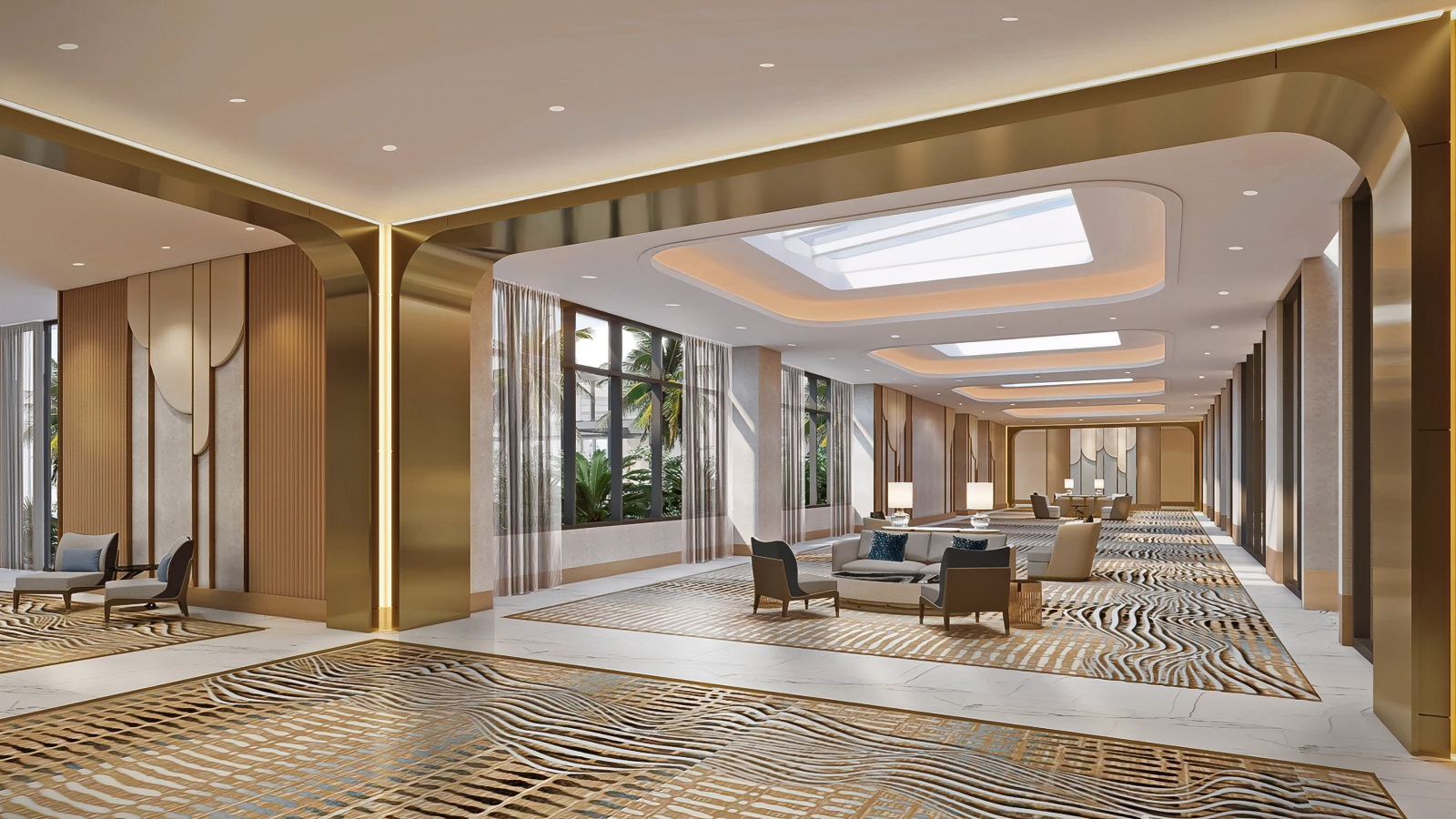
In this case, the combination of full-height panels, beveling, and curvature allowed the design team to create elegant walls that serve both visual and acoustic functions. The variation in panel thickness also helped optimize absorption across different frequency ranges, including the low frequencies often generated by music and crowd noise.
Coordinated Install for Complex Hospitality Spaces
Installing stretched fabric wall systems—especially in a project with curved and beveled geometries—requires precise field coordination. Our installation team worked hand-in-hand with the millwork subcontractor to meet exact tolerances and alignments. Key execution strategies included:
- Precision Layout: Laser-guided for complex wall geometry
- Custom Furring: Creates layered, floating wall designs
- Trade Coordination: Synced with all schedules & scopes
Because the Pier Sixty-Six renovation was a large-scale, multi-trade project, our installers had to remain flexible while maintaining our schedule. Materials were staged in phases to minimize on-site disruption, and every step of the install was reviewed with the GC and architect to ensure consistent quality.
Result: Functional and Elegant Noise Reduction
The final outcome is a set of ballrooms and corridors that function as premier acoustic environments for high-end hospitality events. Guests experience crisp, intelligible speech and reduced background noise—enhancing the value of every gathering.
More importantly, the acoustic solution doesn’t feel like an add-on. The stretched fabric walls are fully integrated into the architectural identity of the hotel, delivering comfort and clarity while supporting the luxurious visual branding of the venue.
Pier Sixty-Six’s design team demonstrated how powerful a proactive noise control strategy can be when thoughtfully implemented. This case study proves that sound quality can be an asset—not just an afterthought—in hotel ballrooms.
For product specifications, lead time estimates, or acoustic integration support on your next hotel or hospitality project, contact the team at Commercial Acoustics. We provide submittals, install coordination, and layout guidance to help your team deliver world-class results—on both design and schedule.
FAQs: Noise Control in Hotel Ballrooms
What is the best noise control strategy for a hotel ballroom?
For large, high-occupancy spaces, full-wall acoustic panels such as stretched fabric wall systems are ideal. They reduce reverberation and echo while blending seamlessly with high-end finishes.
Why is NRC important in hospitality spaces?
NRC (Noise Reduction Coefficient) indicates how much sound a material absorbs. In event spaces, higher NRC values help reduce echoes and create a more comfortable acoustic environment.
Can acoustic panels follow curved or complex walls?
Yes. With custom beveled-edge track systems, acoustic panels can be shaped to follow curves or complex wall geometry, making them ideal for sophisticated interior designs.
Is it better to address acoustics before or after construction?
Always before. Integrating noise control strategy into the design phase avoids costly retrofits and results in better coordination with other architectural elements.
How thick should fabric panels be in a ballroom?
Thickness depends on performance needs. This project used 1″ and 2″ panels to balance high absorption with aesthetic detailing. Thicker panels tend to offer better low-frequency control.