Table of Contents
Project Overview: Speech Privacy Enhancements at Miami-Dade Police HQ
- Project: Soundproofing & Acoustic Treatment of Interrogation Rooms
- Address: 9105 NW 25th Street, Doral, Florida 33172
- Facility Type: Law Enforcement Headquarters – Police Department
- Objective: Eliminate sound transfer between adjacent interview spaces
- Scope: Four interrogation room clusters across multiple crime divisions
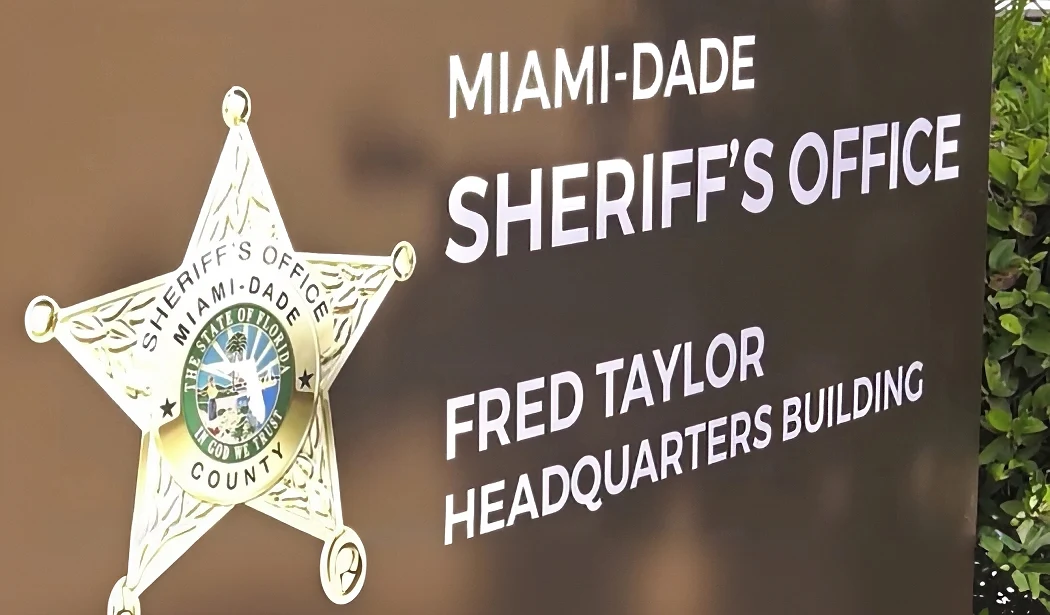
The Miami-Dade Police Department (MDPD) identified a critical gap in acoustic security at its Fred Taylor Headquarters Complex. Over time, investigators noticed that conversations from one interrogation room were clearly audible in the next—compromising case integrity and allowing for the possibility of suspect collusion.
To resolve this, Commercial Acoustics was brought in as the acoustic consultant to implement a comprehensive treatment plan tailored to law enforcement needs. Our team conducted a full site evaluation to identify flanking paths, reverberation issues, and potential sound bleed between rooms. The goal was twofold: ensure complete speech privacy in interrogation and interview rooms, and deliver high-fidelity audio capture for recordings that may serve as legal evidence. From product selection to installation sequencing, every element was designed to meet the strict acoustic demands of high-stakes, confidential environments.
Four Divisions, One Unified Acoustic Approach
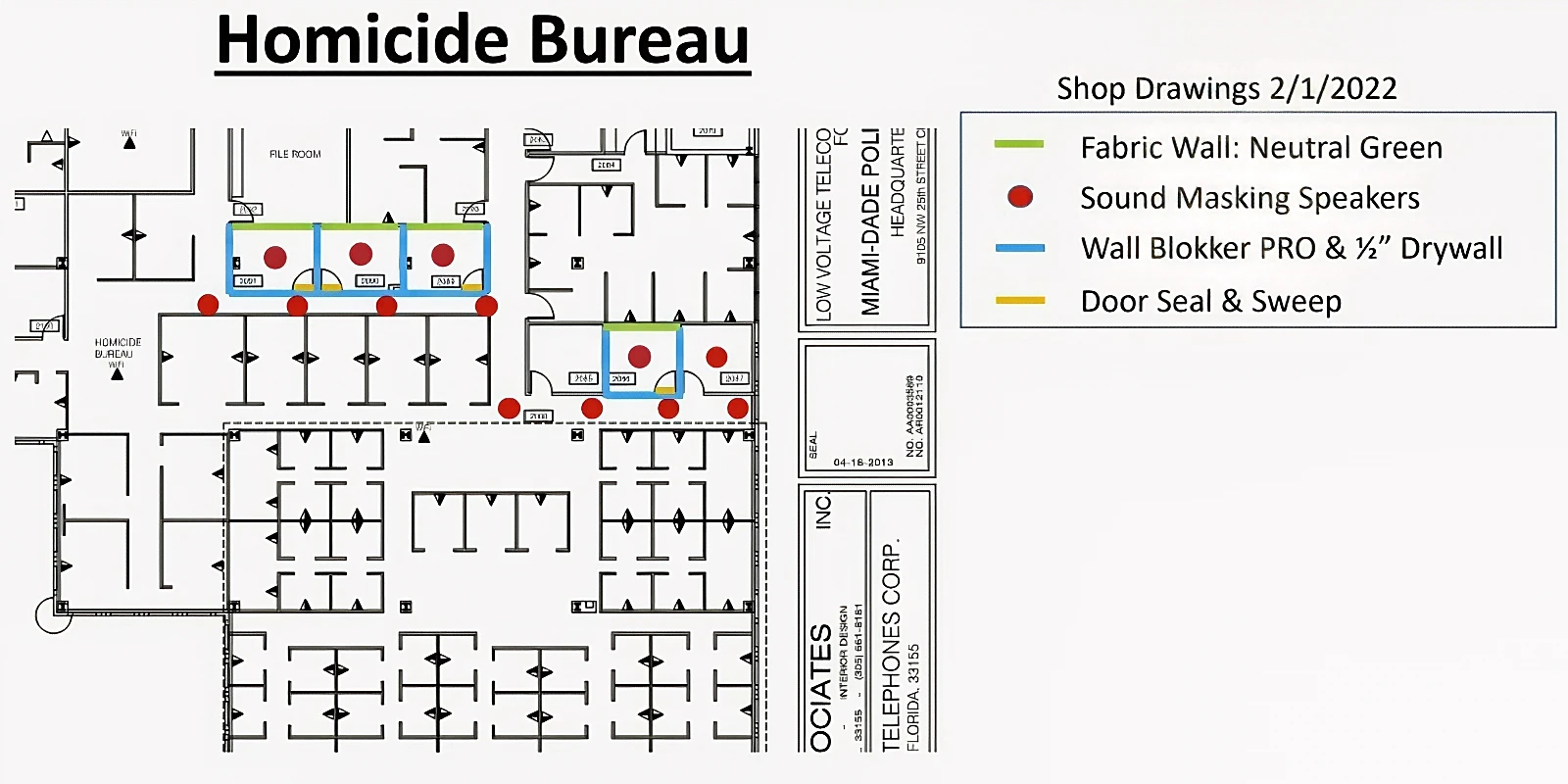
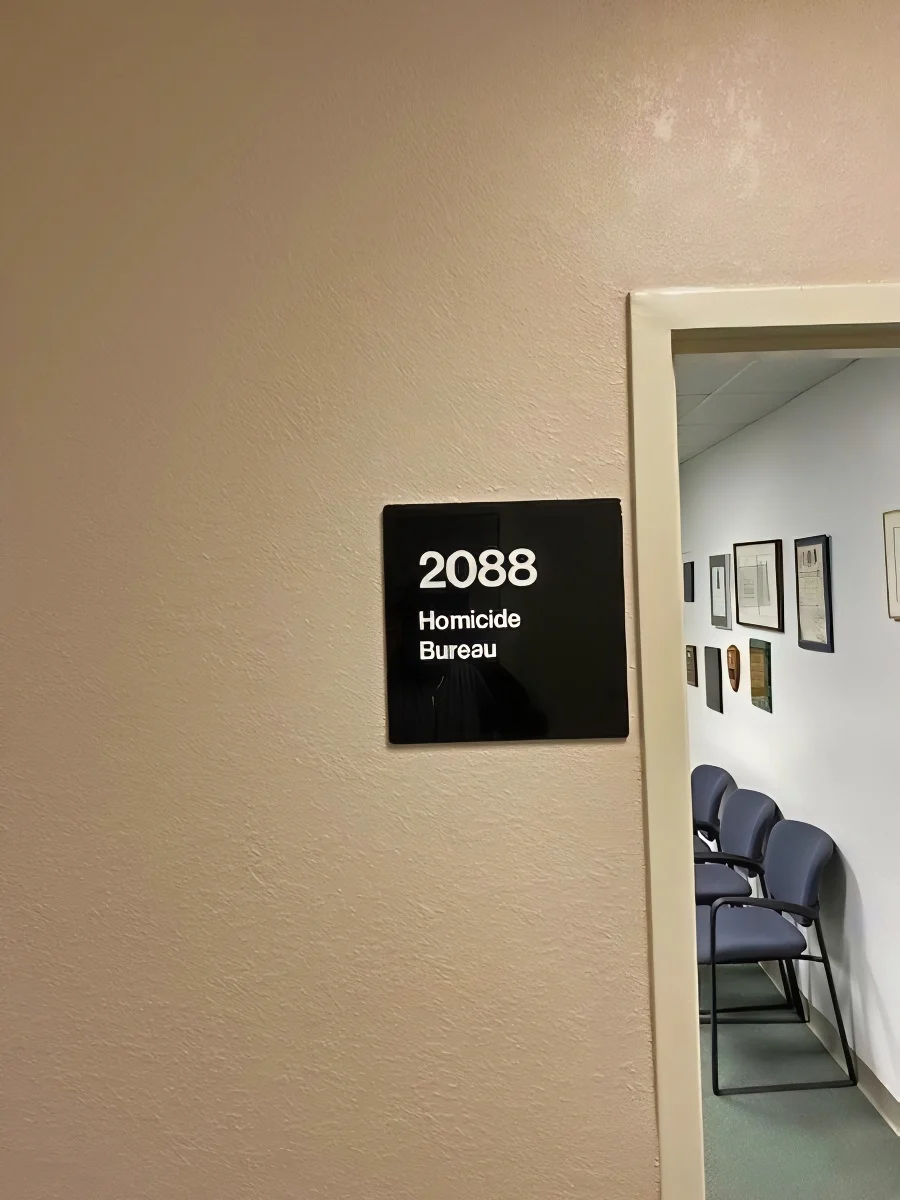
- Departments Involved: Homicide, Robbery, Special Victims & Human Trafficking
- Project Timeline: Completed over three weeks with active room rotation
- Installation Schedule: Staggered to minimize operational disruption
Each division at the Fred Taylor Headquarters Complex had its own cluster of interrogation rooms requiring sound isolation upgrades. These high-use spaces remained in service throughout the buildout, so the project was phased strategically—one suite at a time—allowing uninterrupted access to remaining rooms. Commercial Acoustics ensured consistent results across all departments, meeting operational needs while significantly improving speech privacy facility-wide.
Products & Materials Used in the Soundproofing Scope
- Wall Treatment: Wall Blokker PRO and new double drywall assemblies
- Acoustic Panels: Fabric-wrapped stretched wall systems for absorption
- Ceiling Treatment: Sound masking systems above rooms to prevent flanking
In an interrogation setting, acoustic solutions must address both isolation and clarity. The first step was stripping the demising walls to the studs and rebuilding with Wall Blokker PRO and new drywall to boost STC ratings.
This was followed by installation of acoustically transparent fabric walls to reduce internal echo and enhance voice recording clarity. Overhead, a plenum-based sound masking system added an extra layer of discretion, masking residual sound that could otherwise leak above walls or through ceiling tile systems.
Door & Entryway Sealing for Maximum Isolation
- Door Hardware: Seal kits added to every interrogation room entrance
- Sound Containment: Prevents noise from bullpen and hallway intrusion
- Privacy Impact: Ensures unbroken acoustic control from wall to wall
Even with strong wall assemblies, sound can still leak through untreated doors. To solve this, Commercial Acoustics installed complete perimeter and bottom door seals for every room.
These seals prevent acoustic bleed from entering or leaving the room, especially critical in open-plan police bullpen environments. The result is a completely contained space—protected from internal and external distractions alike.
Added Finishes Requested by the Client
- Wall Finish: FRP wall board added to non-acoustic surfaces
- Durability: Tough, easy-to-clean surface ideal for law enforcement use
- Client-Driven Scope: Included at MDPD’s request for added functionality
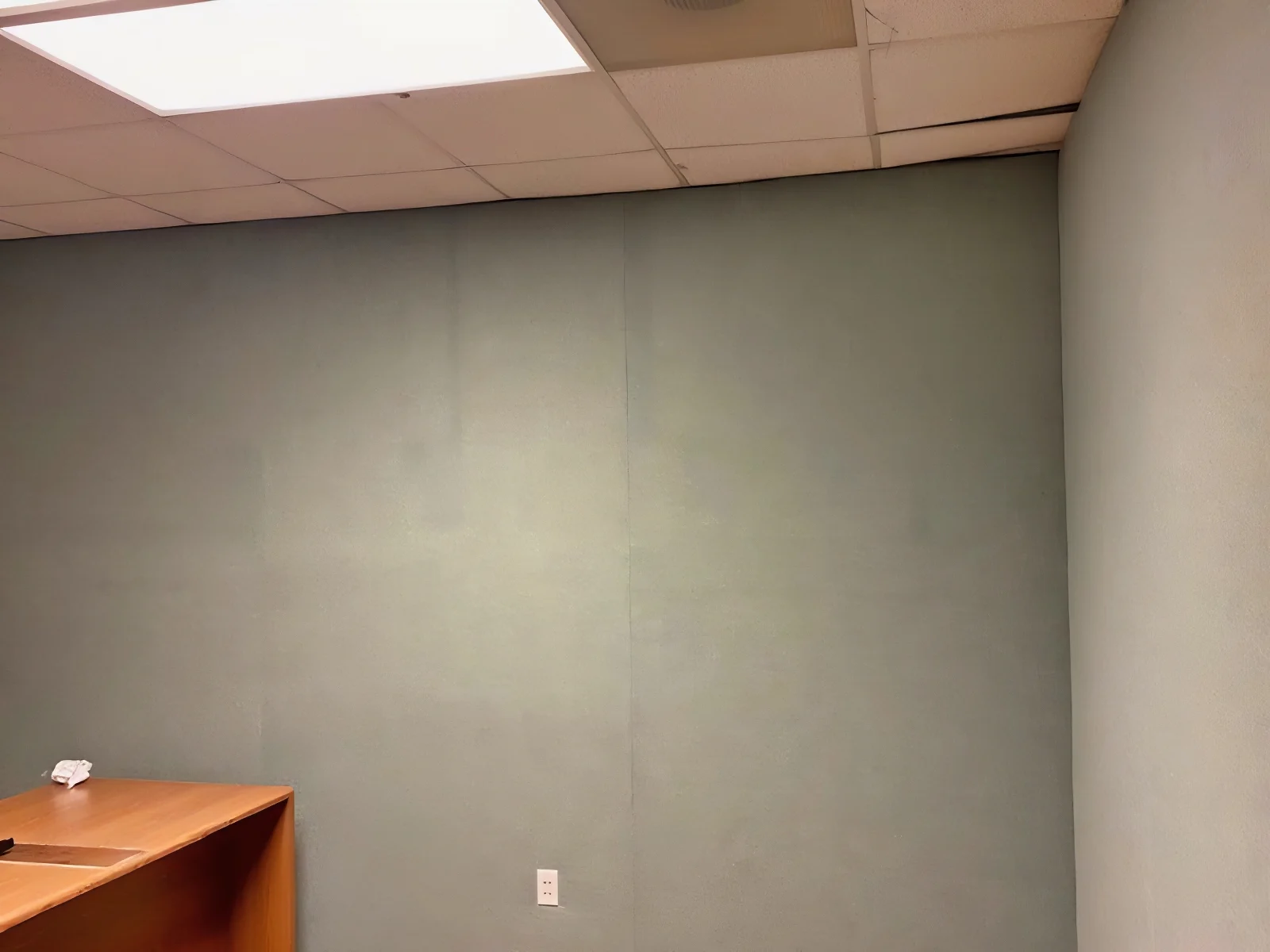
While not acoustical, FRP (fiberglass-reinforced plastic) panels were installed on remaining wall areas at the client’s request. Since Commercial Acoustics was already working on the room interiors, this was a cost-effective opportunity to improve the room’s durability and cleanability.
FRP panels are common in law enforcement environments because of their ability to resist impact and staining, and because they support a highly sanitized, low-maintenance finish.
Seamless Phasing in a Mission-Critical Environment
- Demolition: Original demising walls removed and rebuilt to new spec
- Coordination: Work timed to avoid disrupting active case interviews
- Project Flow: One room cluster treated per week over a three-week span
Police departments never sleep, so acoustic upgrades must be done without halting critical casework. In this project, the sequencing of demolition, wall treatments, and finish installation was planned to work around the MDPD’s interview schedule.
By isolating and treating one room cluster per week, the team was able to maintain investigative continuity while completing a full-scope acoustic overhaul across four distinct crime units.
Why Speech Privacy Is Essential in Law Enforcement
- Legal Integrity: Prevents suspects from overhearing or colluding
- Recording Accuracy: Ensures clean AV capture for evidence use
- Operational Security: Protects interview details from external leakage
Interrogation rooms are some of the most sensitive spaces in any public safety facility. If a suspect overhears another interview, it can compromise the case or even result in inadmissible testimony. If the AV system picks up too much echo, the recording could be too poor to use in court.
That’s why verbal privacy is a design requirement—not an option. Properly treated rooms provide isolation, clarity, and consistency that allow investigators to work confidently and legally within their space.
Conclusion: Built for Silence, Designed for Justice
Speech privacy isn’t just a technical feature—it’s a legal safeguard, a security layer, and a foundational part of modern interrogation room design. At the Miami-Dade Police Department, the acoustic vulnerabilities between interview rooms were clear. And the solution needed to be equally decisive.
Commercial Acoustics delivered a phased, turnkey retrofit that elevated both the sound isolation and internal clarity of each interrogation suite. From wall rebuilds and masking systems to door seals and acoustic panels, every detail was tailored to ensure complete confidentiality.
If you’re designing or upgrading an interrogation space—or any environment where privacy and accuracy matter most—our team is ready to help. Reach out to our team to take the next step toward uncompromised acoustic performance.
FAQs: Interrogation Room Soundproofing & Speech Privacy
What materials are best for blocking sound between interrogation rooms?
The best materials include dense layers such as mass loaded vinyl, multiple layers of drywall, and soundproof door sealing. These improve the STC rating of walls and limit sound transfer.
Can acoustic work be done without disrupting police investigations?
Yes. With the right phasing and coordination, upgrades can be performed on a room-by-room basis, allowing interview operations to continue uninterrupted.
Why do interrogation rooms need sound-absorbing panels if the walls are already soundproof?
Soundproofing blocks noise from entering or leaving. Absorbing panels like fabric walls reduce echo inside the room, which helps with recording clarity and prevents speech from bouncing off hard surfaces.
