
Table of Contents
Project Overview: Dallas Luxury Cinema Multi-Auditorium Build
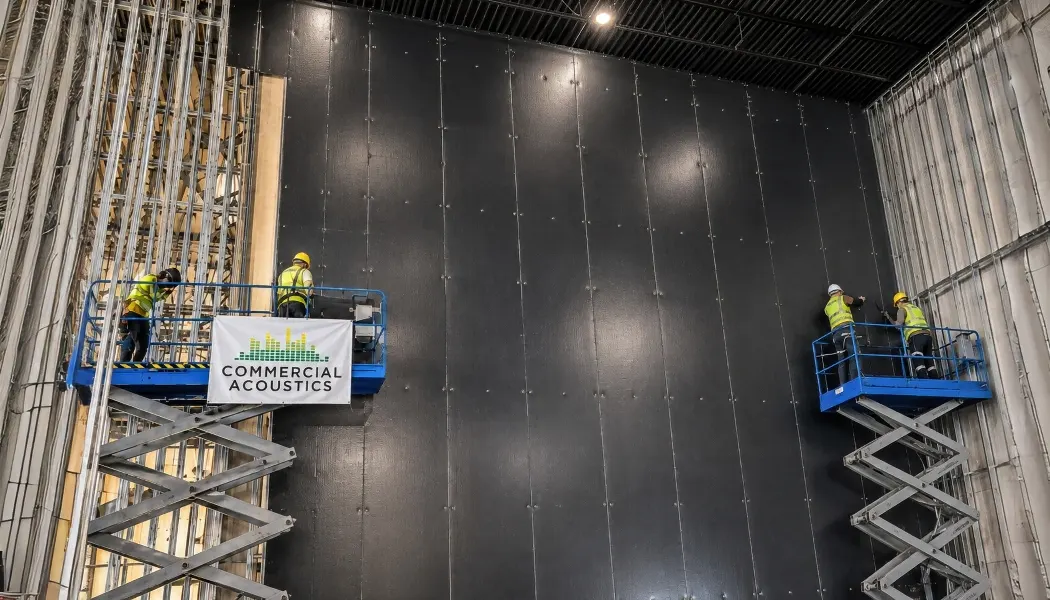
- Project: Multi-auditorium luxury cinema demising wall acoustic build
- Client: Luxury cinema operator (multiple auditoriums in a single complex)
- Location: Dallas, TX
- Performance Targets: STC 65 wall plus 20+ dB attenuation in the 50 to 80 Hz band
- Assembly: Wall Blokker membrane on each side of the studs, 1 layer drywall over the top
- Lab Testing: Custom wall system tested at Riverbank Acoustical Laboratories
- Result: 60-70 percent better bass attenuation than gypsum-only design, 3-point STC gain
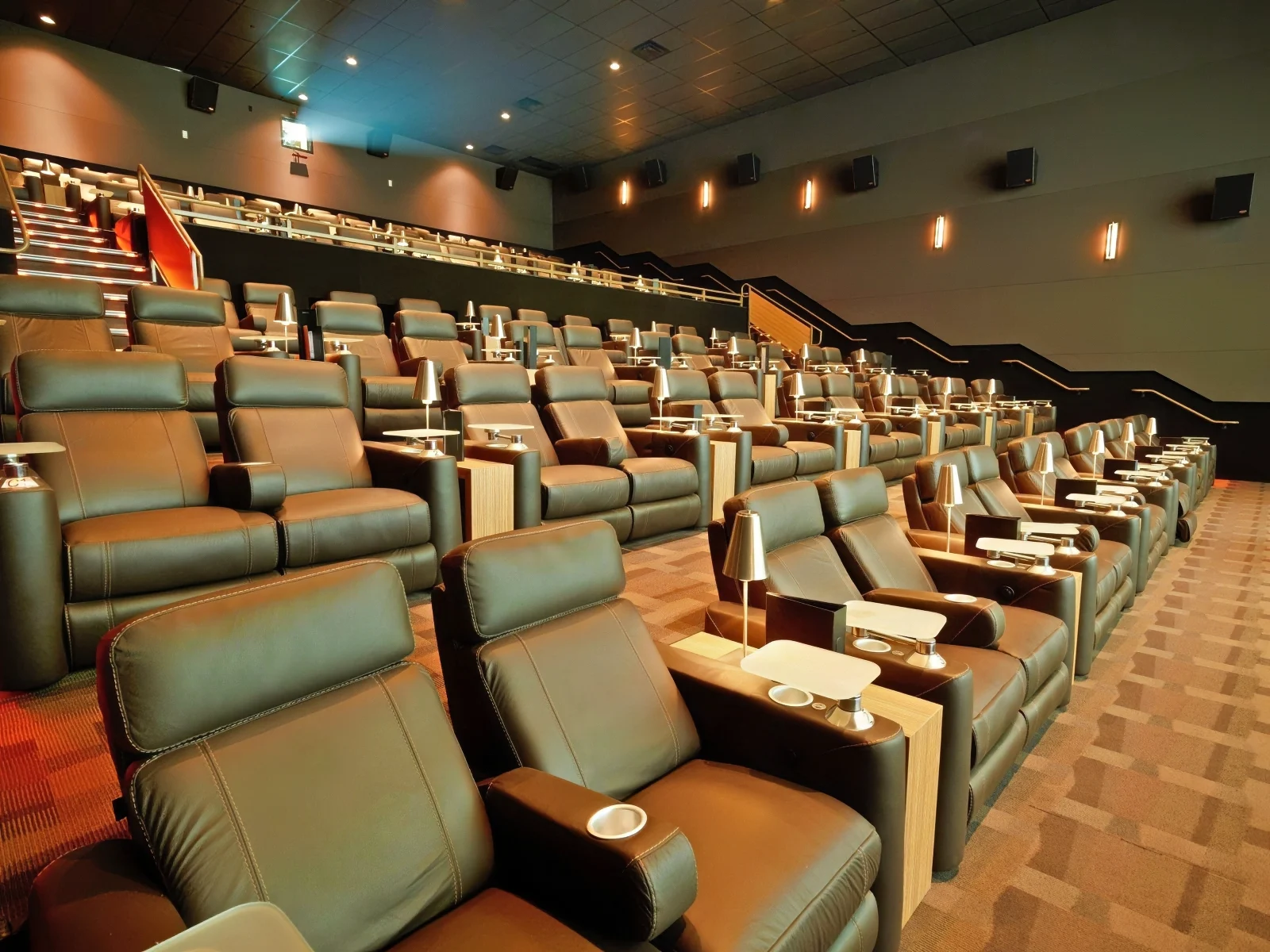
This Dallas luxury cinema needed walls that did something most theater drawings ignore. The auditoriums sit shoulder to shoulder, and an action movie running at peak volume next door cannot be audible in the quiet drama starting on the other side. The STC 65 spec was just the start. The real performance requirement was 20+ dB attenuation in the 50 to 80 Hz range, the band where explosion soundtracks live.
Commercial Acoustics built a hybrid wall assembly that paired Wall Blokker membrane against the studs with a single layer of drywall on each side, then sent the design to Riverbank Acoustical Laboratories for third-party verification. The lab numbers came back better than the original stacked-drywall spec the architect had drawn, and the install ran a day faster per auditorium across the entire build.
Why Movie Theater Acoustics Lives Below the STC Range
STC ratings only describe how a wall performs between 100 and 4000 Hz. The whole rating system was built around speech privacy. Speech sits in that band. Music sits in that band. Most of the noise problems in offices and apartments sit in that band.
Movie theaters do not. The explosion at the start of a Marvel movie hits 50 Hz with full theatrical bass. The crash on a Fast and Furious chase scene lives at 60 Hz. Those frequencies are below where STC even starts measuring. A wall can clear STC 65 on paper and still leak audible bass into the next auditorium.
The wall has to be designed for the frequency band the movies actually produce, not the band the rating system covers.
The 50 to 80 Hz Problem in Cinema Walls
Stacked drywall is the default cinema demising wall spec. Two layers of 5/8 inch Type X each side of a double metal stud, R-13 batt in the cavity. On the STC test that assembly performs well. In the 50 to 80 Hz band it performs poorly.
The reason is resonance. Drywall layers behave like coupled membranes at low frequencies. The pair of drywall faces vibrate as a system, and at the resonant frequency of that system, sound transmits through the wall almost unimpeded. For typical cinema-spec assemblies that resonance lands right in the 50 to 80 Hz band where the worst bass content lives. Adding another drywall layer barely helps because it just shifts the resonance, not eliminate it.
Wall Blokker vs Stacked Drywall: Lab-Tested Bass Attenuation
- Membrane Position: Wall Blokker applied directly to the studs, drywall over the top
- Damping Effect: Membrane mass and damping interrupts the drywall coupling that causes low-frequency resonance
- Lab Result: 60 to 70 percent better attenuation in the 50 to 80 Hz band versus gypsum-only
- STC Result: 3-point gain on the overall rating, with the bass band carrying the real win
The Riverbank lab tested the assembly against the architect’s original stacked-drywall design. The single layer of drywall over Wall Blokker outperformed the double drywall on bass attenuation by a wide margin while clearing the STC 65 target with room to spare. The damping mass of the membrane is what made the math work.
For a parallel cinema case using mass-loaded vinyl in a different wall configuration, see the Cinepolis cinema soundproofing case.
Wall Blokker vs Soundbreak & QuietRock
The other path cinemas take is acoustically-enhanced gypsum. Soundbreak XP, QuietRock 530, and similar products embed a viscoelastic damping layer inside the drywall panel itself. The acoustic principle is similar to a Wall Blokker assembly. The economics are different.
Acoustic drywall costs three to four times standard 5/8 inch Type X per sheet. A Wall Blokker plus single drywall assembly delivers comparable bass attenuation at a lower material cost, faster install time, and the option to spec standard drywall behind the membrane. The membrane decouples the design from the drywall supply chain.
Install Method: 33-Foot Rolls and Scissor Lifts
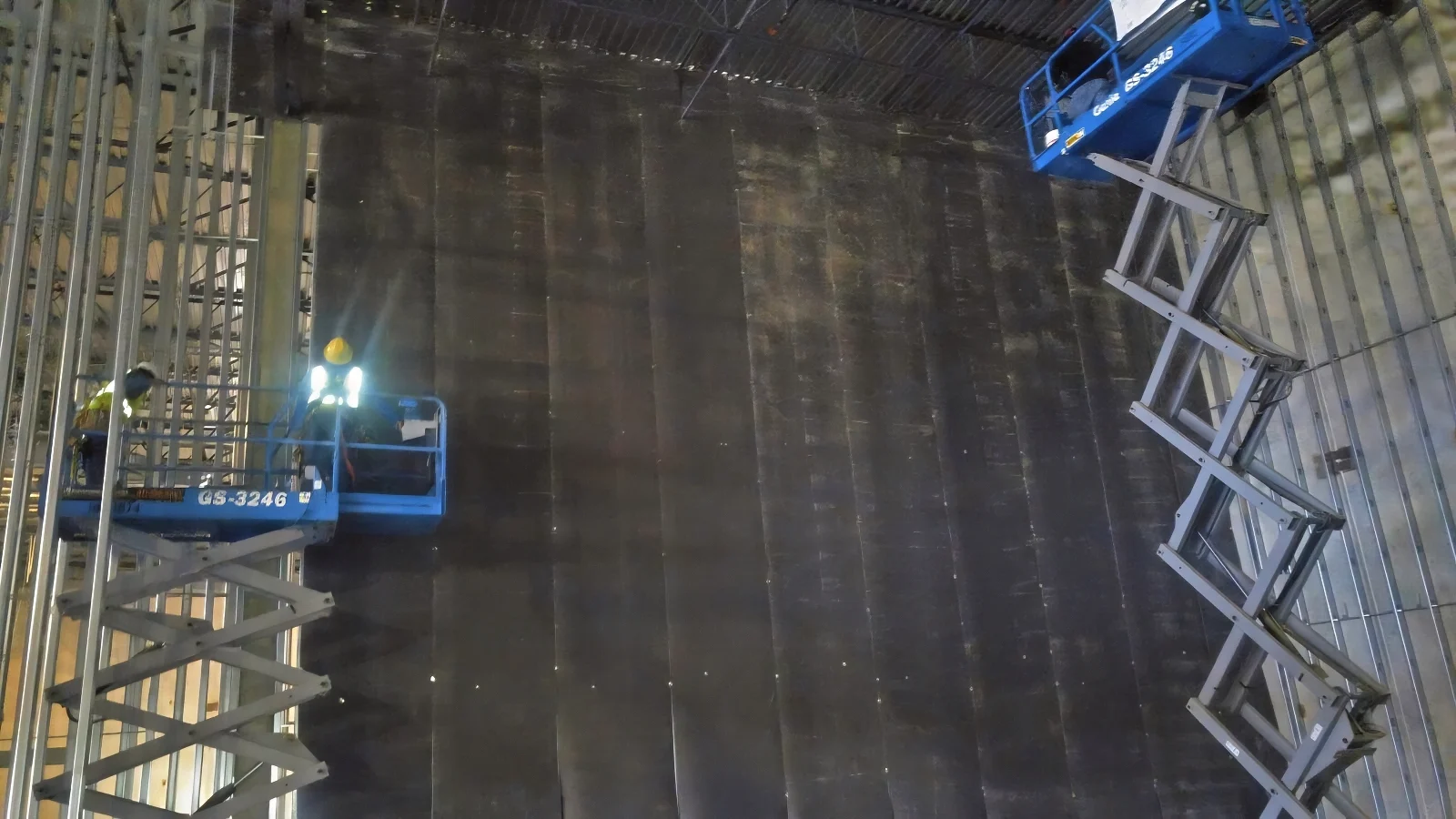
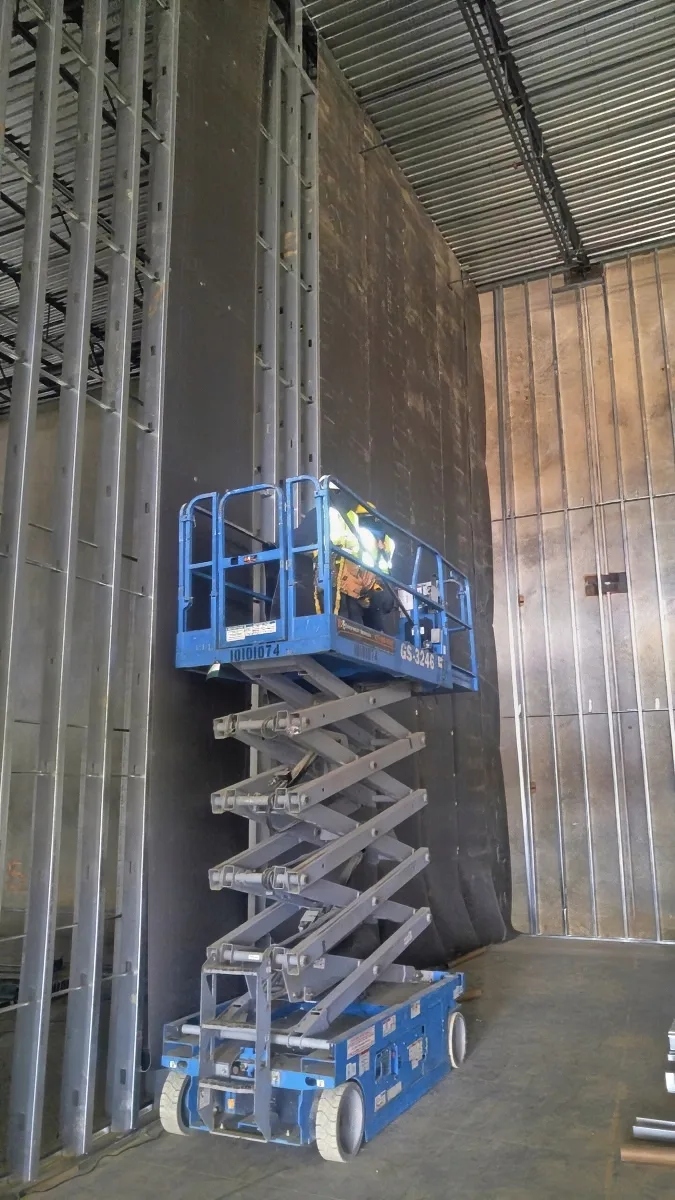
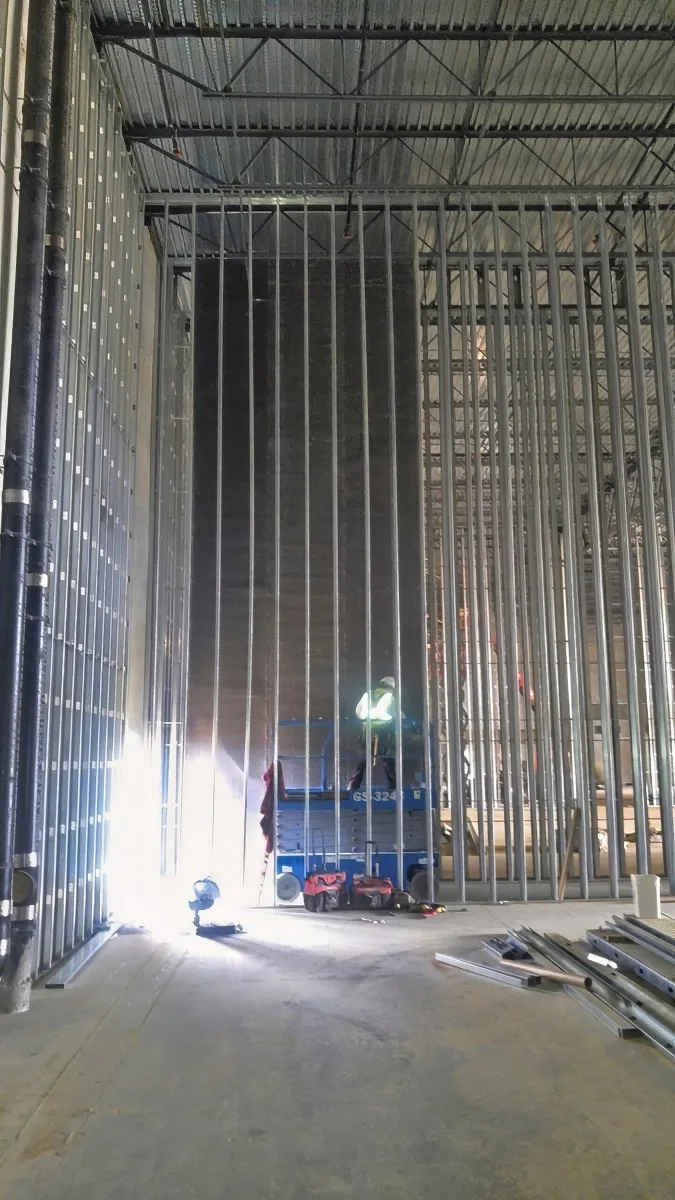
Cinema walls run tall. Auditorium ceilings sit 30 feet up, the walls are 25 to 28 feet vertical, and every linear foot of demising wall has to be sealed end to end. Standard membrane rolls run 4 feet wide and require seam taping at every horizontal join.
For this project Commercial Acoustics manufactured custom 33-foot rolls. The crew hoisted each roll to the top header track with a scissor lift, fastened the top with 4 screws, and unspooled the membrane down the wall as the lift lowered. One pass per wall section. No horizontal seams. Each auditorium completed in under a day where stacked drywall would have run two.
What Cinema Developers Should Spec
- Sub-STC Spec: Add a 50-80 Hz attenuation target alongside the STC number
- Lab Test: Send the wall design to a third-party acoustic lab before construction
- Membrane Approach: Wall Blokker on the studs delivers bass damping without stacking drywall
- Custom Roll Length: Order rolls matched to wall height for seamless single-pass install
- Schedule Recovery: Faster install per auditorium is the easiest place to recover weather delays
The STC number alone is not enough for cinema demising walls. Specifying a 50-80 Hz target alongside the STC catches the actual problem before construction.
Conclusion: Movie Theater Acoustics Done Right
Movie theater acoustics is a bass problem masquerading as an STC problem. The rating system stops at 100 Hz, and the loudest content in a modern film starts below that. A wall built with Wall Blokker membrane against the studs delivers 20+ dB of low-frequency attenuation that stacked drywall and acoustic gypsum alternatives cannot match at a comparable cost.
If you are scoping a luxury cinema build, multiplex retrofit, or any high-end auditorium where bass leakage between rooms would kill the guest experience, talk to a cinema acoustic consultant about the wall scope before drywall goes up.
FAQs: Movie Theater Acoustics & Bass Attenuation
What STC rating does a movie theater wall need?
STC 65 is the typical luxury cinema demising wall target. STC alone is not enough. The wall also needs 20+ dB of attenuation in the 50 to 80 Hz band where explosion soundtracks and action movie bass content live. Adding the low-frequency spec to the wall design catches the real problem before construction.
Why does the STC rating miss low-frequency bass leakage?
STC measures sound transmission only between 100 and 4000 Hz. The rating was developed for speech privacy in offices and apartments. Movie theater bass content sits between 30 and 100 Hz, which is below the STC band entirely. A wall can clear STC 65 on paper and still leak audible bass into the next auditorium.
How does Wall Blokker compare to Soundbreak or QuietRock?
All three use damping mass to interrupt the drywall coupling that causes low-frequency resonance. Acoustic drywall like Soundbreak XP or QuietRock 530 builds the damping into the panel itself and costs three to four times standard drywall. A Wall Blokker membrane plus standard drywall delivers comparable or better bass attenuation at a lower material cost.
Can a cinema wall be built faster than stacked drywall?
Yes when the membrane install is sequenced right. Custom 33-foot rolls hoisted with a scissor lift install in a single top-down pass per wall section. Each cinema auditorium completed in under a day on this Dallas project, against the two days a stacked-drywall scope would have run.

Walker Peek|Founder & CEO, Commercial Acoustics
Walker founded Commercial Acoustics in 2013 to bring aerospace-grade engineering discipline to soundproofing, and runs the firm as CEO from its 12,000 sq ft Tampa production facility. The company designs custom acoustic panels, sound membranes, and masking systems for multi-family, hospitality, healthcare, and commercial projects across the US — built around Walker’s invention, Wall Blokker, an EVA-based sound barrier that hits STC 50-plus at roughly $1 per square foot installed.
A Jacksonville native, Walker spent five years at Kennedy Space Center with Craig Technologies before founding Commercial Acoustics — certifying aerospace manufacturing to the AS9100 standard and leading Six Sigma Black Belt process-improvement teams on NASA programs. He is a certified Industrial Noise Control Engineer and the author of Architectural Acoustics: A Practical Handbook.
