
Table of Contents
Project Overview: Enhancing Learning at St. Johns River State College
- Project: Classroom & general-purpose room acoustic treatment
- Address: 5001 St. Johns Ave, Palatka, FL 32177
- Facility Type: College classrooms & multipurpose spaces
- Client: St. Johns River State College
- Objective: Improve speech clarity & control reverberation
- Scope: Fabrication & installation of custom acoustic wall panels in multiple rooms
At St. Johns River State College, acoustic design isn’t an afterthought—it’s a foundational element of classroom performance. As part of a recent renovation, the college partnered with Commercial Acoustics to deploy a soundproofing solution that supports focused learning and clear communication. This project included a combination of visually integrated panels and precision mounting techniques tailored specifically for academic environments.
About St. Johns River State College
- Multi-Campus Institution: Campuses in Palatka, Orange Park & St. Augustine
- Founded in 1958: Part of the Florida College System
- Diverse Programs: Offers A.A., A.S., and select bachelor’s degrees
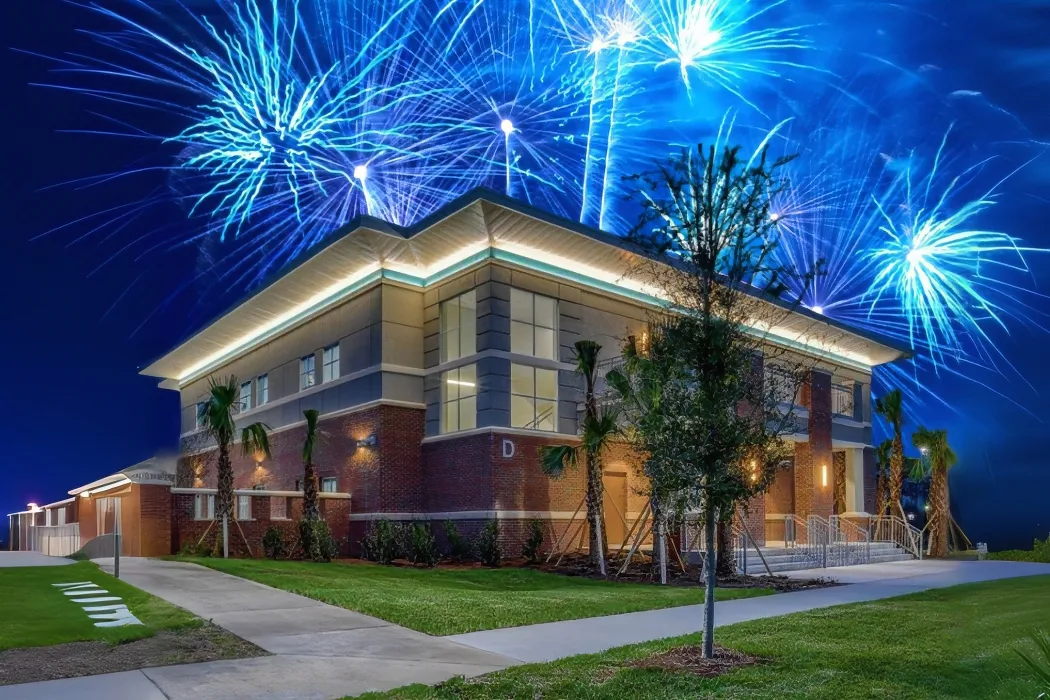
St. Johns River State College (SJR State) is a public college serving Northeast Florida with a strong commitment to accessible, high-quality education. Established in 1958, the college has grown from its roots in Palatka to include additional campuses in Orange Park and St. Augustine—ensuring coverage across Putnam, Clay, and St. Johns counties.
The Palatka campus remains the flagship location and is home to the Florida School of the Arts, the state’s first arts conservatory. The Orange Park campus opened in 1977 to expand educational access in Clay County, while the St. Augustine campus followed in 1986 with a modern 165-acre facility.
SJR State offers a range of degree options including Associate in Arts (A.A.) for university transfer, Associate in Science (A.S.) for technical careers, and select bachelor’s programs in high-demand fields. Known for workforce training, veteran support, and adult education, the college provides both academic and practical learning pathways. With nearly 10,000 students, SJR State continues to play a vital role in Florida’s higher education system.

Classroom Challenges & Acoustic Goals
- Soundproofing Need: Echo & reverberation reduced speech clarity
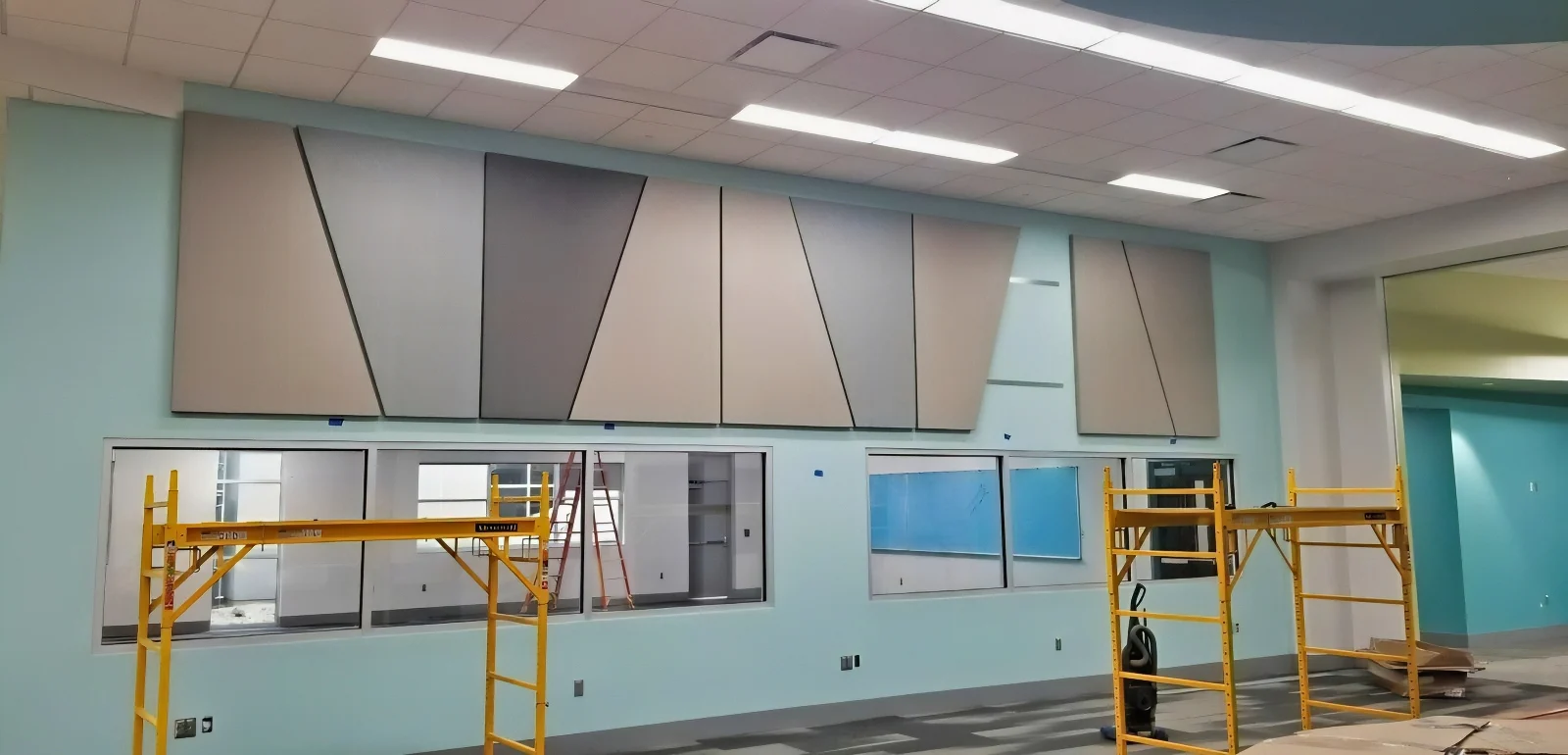
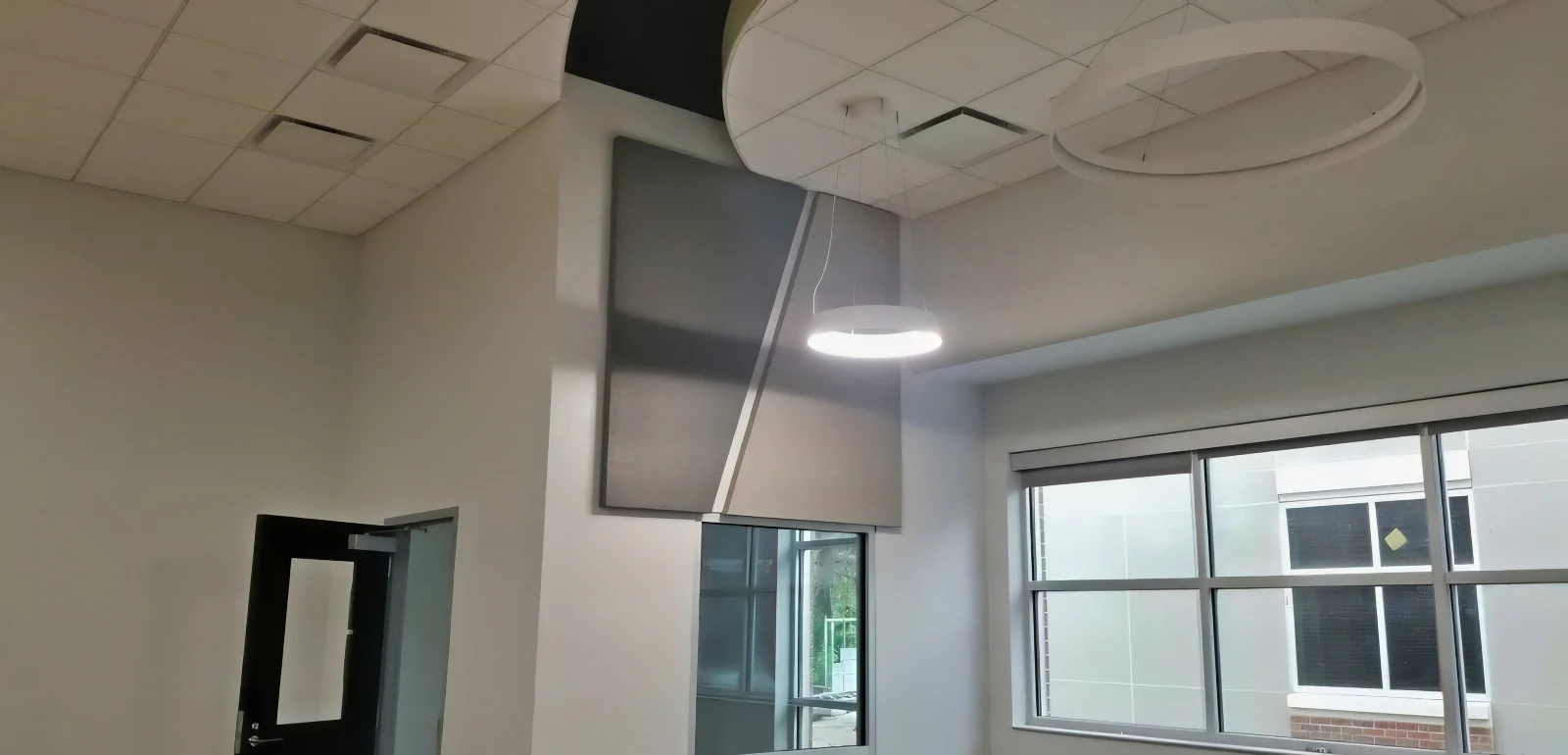
- Panel Placement: Panels were installed high on the wall, below ceiling grid
- Classroom Usage: Spaces used for lectures, presentations & group instruction
In college classrooms, where lectures and verbal instruction are constant, intelligibility is everything. Without the right acoustic treatment, even the best AV systems and educators can’t overcome poor sound performance. Prior to occupancy, St. Johns River State College planned for this by specifying acoustic wall panels into the design phase. Valencia College in Orlando, FL took a similar approach, incorporating panels into its IT labs to ensure clear instruction and student focus.
This decision ensured that the rooms could meet target reverberation times between 0.4 and 1.0 seconds—ideal for both classrooms and conference-style instruction. Had the rooms been occupied before treatment, echo buildup and listener fatigue would have become inevitable. Pre-install planning allowed for faster, cleaner execution and avoided costly schedule conflicts.
Custom Acoustic Panels for Educational Settings
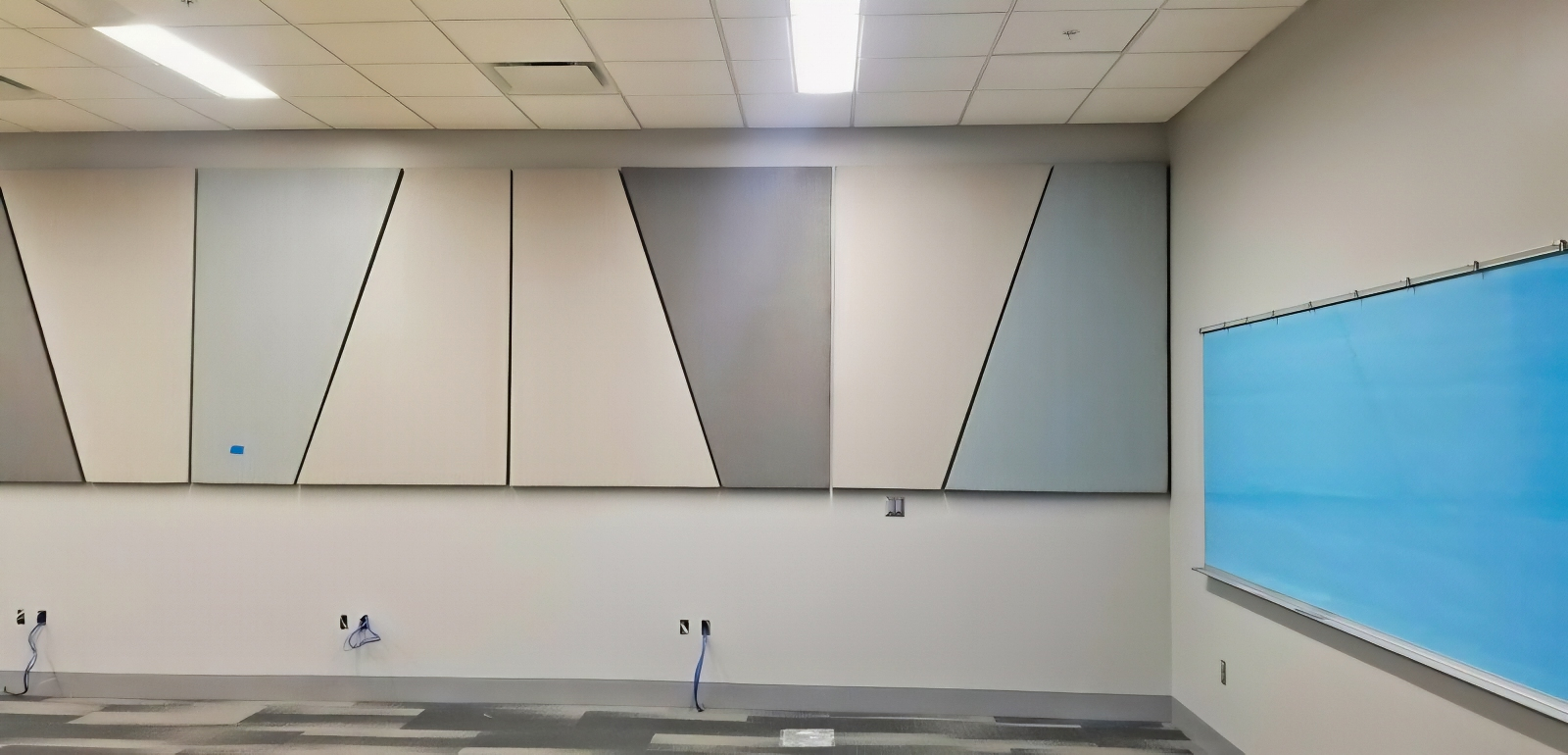
- Angled Panels: Fabric-wrapped panels featured unique custom cuts
- Color Variation: Three colors of acoustically transparent fabric used
- Mounting Hardware: Installed using two-part metal Z-clips for stability
To meet both functional and aesthetic goals, Commercial Acoustics fabricated custom-sized panels with angled edges, wrapped in three coordinated fabric colors. These acoustically transparent fabrics enhanced visual interest while allowing sound absorption to remain consistent throughout the room.
Each panel was mounted using Z-clip hardware—selected over impaling clips for a more level, secure fit. Panels were placed just beneath the acoustic ceiling grid to keep them above student reach and prevent damage, dents, or stains. For schools that don’t need tackable panels, this approach is ideal, and protective resin edge hardening ensures long-term durability.
Benefits of College Classroom Soundproofing
- Improved Clarity: Reduces echo & enhances speech intelligibility
- Distraction Control: Helps limit noise from hallways or adjacent rooms
- Enhanced Comfort: Promotes focus & reduces vocal strain for instructors
The completed installation delivered immediate acoustic improvements for both students and faculty. Speech intelligibility increased, reverberation decreased, and the learning environment became noticeably more comfortable and quiet.
In a general-purpose room, the same principles apply: controlling how sound moves and bounces allows the space to adapt for multi-functional use. From small study sessions to full-class lectures, these treated rooms now offer consistent performance and reduced background noise—without disrupting aesthetics or layout flexibility.
Why Timing & Material Selection Matter
- Pre-Occupancy Install: Avoids costly downtime & overnight work
- Fabric Selection: Balances acoustic performance & visual design
- Flexible Application: Can be adapted to new or existing spaces
Timing is critical when implementing acoustic treatments in academic facilities. At St. Johns River State, the panels were installed before occupancy—avoiding expensive overnight labor and classroom relocations. This proactive approach saved time, reduced risk, and ensured that the building would function acoustically from day one.
Material selection was equally important. By choosing acoustically transparent fabric in school-approved colors, the design team achieved both performance and visual integration. And with scalable panel types, this same solution can be applied to lecture halls, conference rooms, or other instructional environments across campus.
Conclusion: Delivering Acoustic Clarity in College Classrooms
Classroom soundproofing isn’t just about eliminating noise—it’s about optimizing how people learn. At St. Johns River State College, the use of custom acoustic wall panels helped create high-performance spaces that support speech clarity, student engagement, and instructor comfort. Whether planning a renovation or new construction, integrating acoustic design early ensures the best long-term outcomes.
For architects and general contractors, this project is a reminder that acoustic performance is both measurable and manageable. Want to achieve similar results in your next academic buildout? Reach out to our team today to discuss tailored solutions for your educational space.
FAQs: College Classroom Soundproofing & Acoustic Panel Design
Why is college classroom soundproofing important?
It improves speech clarity, limits echo, and creates a more focused learning environment—especially important in lecture-heavy settings.
What types of acoustic panels work best in classrooms?
Fabric-wrapped wall panels mounted high on the walls are effective, especially when combined with acoustic ceiling tiles for full-spectrum absorption.
Can acoustic panels be installed after a space is occupied?
Yes, but it’s less efficient and may require schedule disruptions, overnight work, or temporary class relocations.
Why were Z-clips used instead of impaling clips?
Z-clips provide a more stable, level mount and are ideal for angled or high-mounted panels where visual alignment matters.
How do you choose the right reverberation time for a classroom?
Aim for 0.4 to 1.0 seconds—enough to preserve speech clarity without making the room feel acoustically dead.
