Table of Contents
Project Overview: Tampa Custom Home Build
- Project: Second floor soundproofing in a new-construction custom home
- Client: Custom home owner, Tampa FL
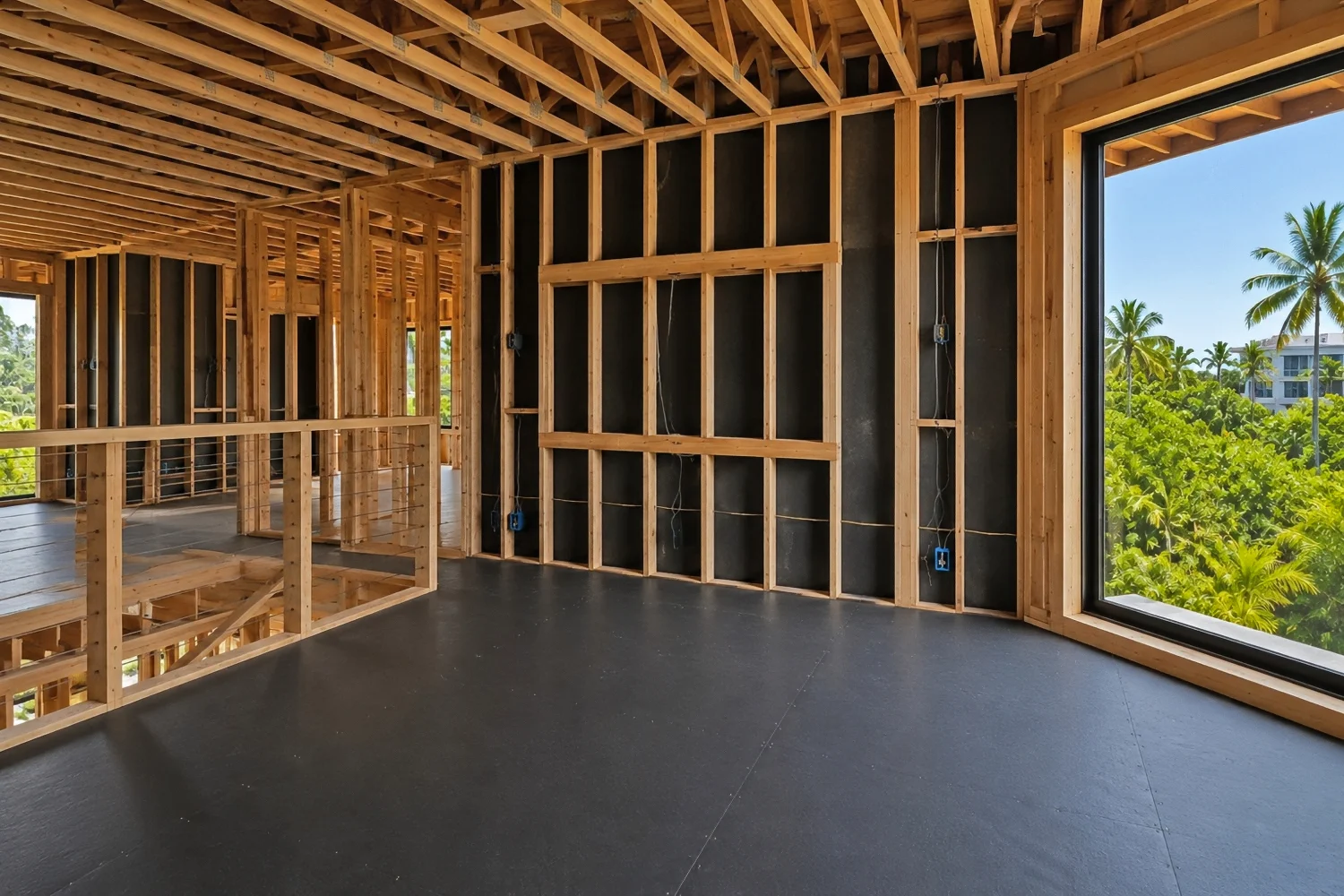
- Build: 6″ wood stud framing, 12 ft ceilings, two-story plan
- Rooms Treated: Upstairs playroom and entertainment room, downstairs master bedroom suite
- Floor Result: Second-story IIC raised from low 30s to approximately 45
- Products: Wall Blokker Pro on walls, Floor Blokker membrane in the 2nd-story subfloor
- Cost & Timeline: $3,000 to $7,000 turn-key, single-day install plus quality check
The owner wanted the master bedroom downstairs to sound nothing like the upstairs playroom. The playroom would see kids most days. The entertainment room would see a sound system most evenings. The master bedroom would see two adults trying to sleep through all of it. New construction made the fix straightforward as long as the work happened before drywall and finished flooring went in.
Why Second Floor Footfall Is the Hardest Home Noise to Fix
Most home noise is airborne. Voices, music, TV. The wall between two rooms blocks airborne sound effectively when it has any mass at all. Footfall does not work that way.
Footfall is impact noise. A heel hits the floor, the energy travels through the subfloor into the joists, and the joists radiate sound directly into the room below. Adding mass to the wall does nothing. The path is structural, not airborne.
The rating that captures impact noise is IIC, Impact Insulation Class. A bare wood-frame floor with hardwood on top measures IIC in the low 30s. Walking sounds like walking from the room below. IIC 50 is the working target for a quiet master bedroom under a kids’ floor. The delta is real, and closing it requires a product inside the floor assembly itself.
Field Result: IIC From Low 30s to 45
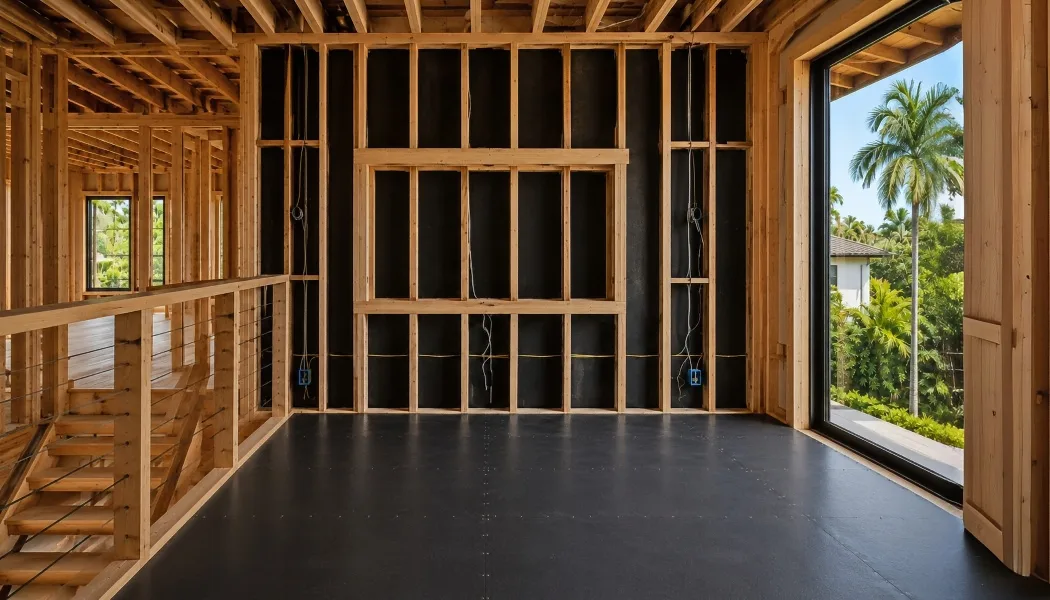
The bare 2nd-story floor system at this Tampa build measured IIC in the low 30s, which is what a wood-frame floor with hardwood on plywood subfloor delivers by default. After adding Floor Blokker membrane over the plywood subfloor and below the hardwood, the same floor measured IIC approximately 45.
That 12 to 13 point jump moves the floor across two perceptibility thresholds at once. At IIC 30 every step is audible as a discrete event. At IIC 45 footfall reads as a softer thump, less distinct, less likely to wake a sleeper below. The master bedroom became usable as a sleeping space again.
To model how IIC changes with different floor assemblies and underlayment options, run the IIC calculator.
The Three-Zone Scope: Floor, Walls, Master Bedroom
- Floor System: Floor Blokker membrane over plywood subfloor, below the hardwood finish
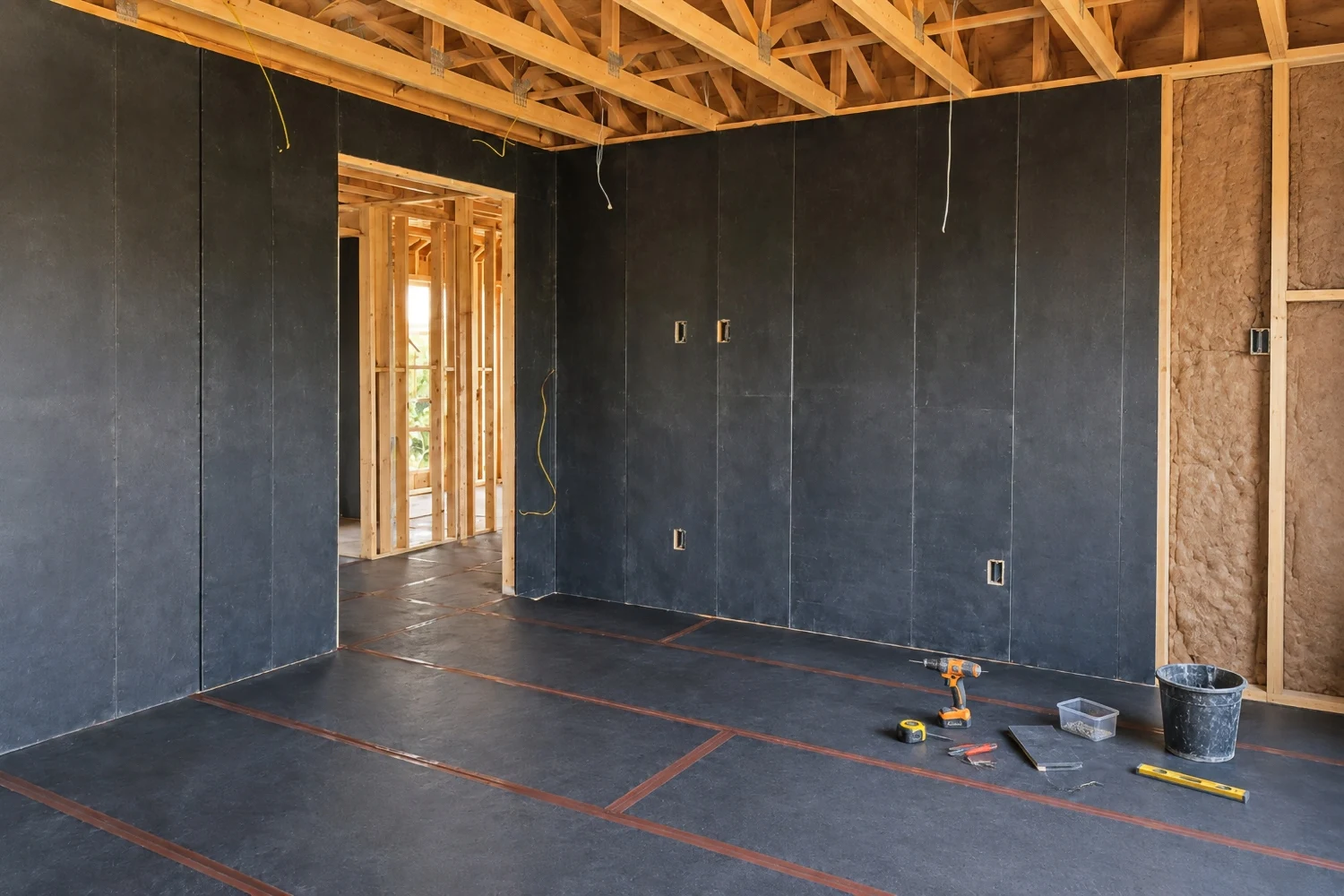
- Source-Room Walls: Wall Blokker Pro on the playroom and entertainment room walls upstairs
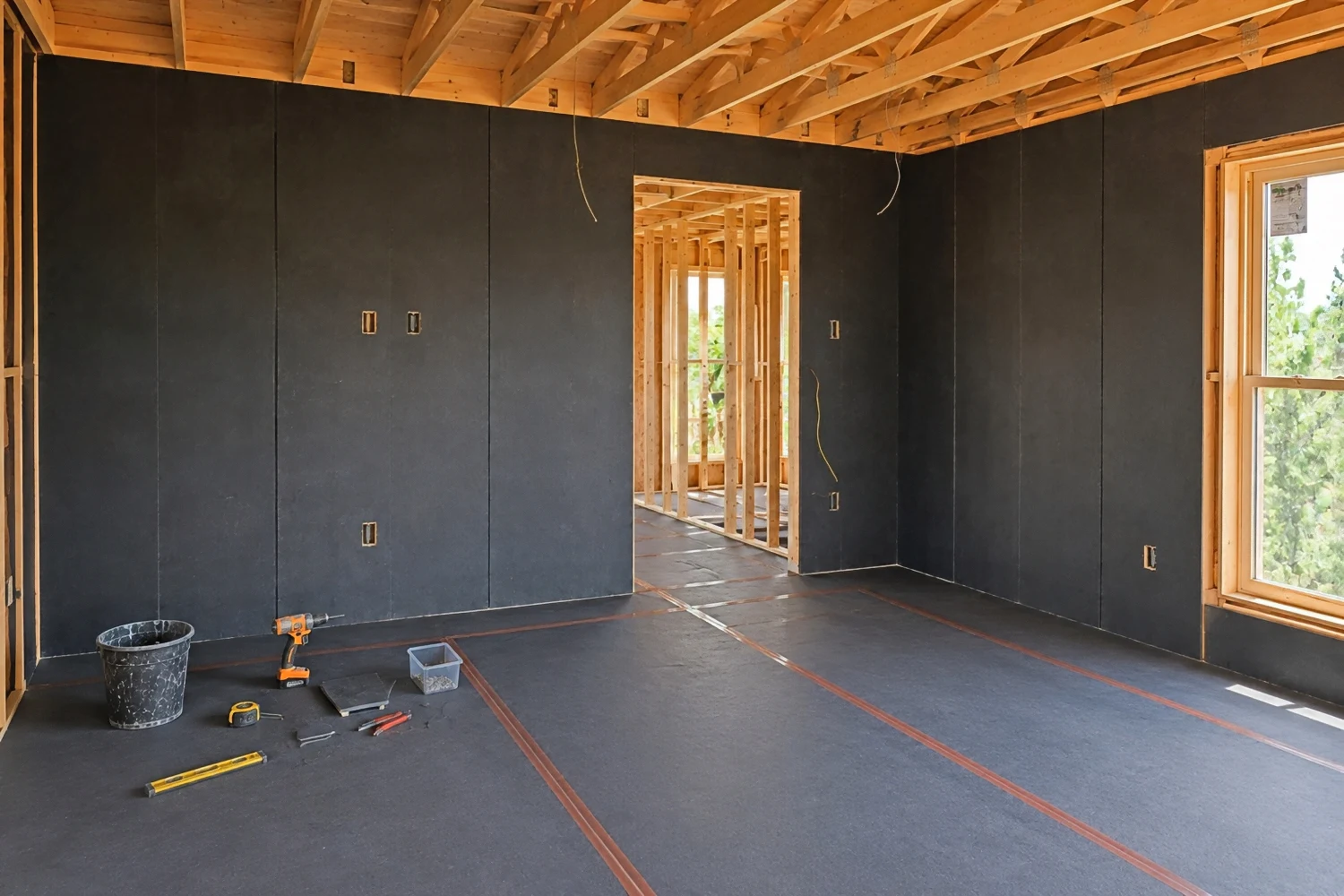
- Master Suite: Full envelope treatment, walls and ceiling, isolating the receiving room
- Penetrations: Outlets cut clean, wall-to-floor joints caulked with acoustic sealant
Three zones because no single product closes the path on its own. The floor handles impact, the walls handle airborne, and the master suite envelope guarantees the receiving room is isolated from every adjacent path. One product alone would have left a flank.
Floor IIC Targets by Room-Below Use Case
What floor IIC you actually need depends on the room directly below. The table maps the working targets.
For a dedicated home theater build where the room itself drives a different target, see the custom home theater fabric wall case.
Why Doing It During Framing Beats Retrofit
The cheapest moment to soundproof a home is during framing. The studs are open, the subfloor is exposed, and every membrane installs with hand tools and screws. No demolition, no finish removal, no displacing the homeowner.
The same project as a retrofit costs three to five times more and disrupts the home for weeks. Builders who include the membrane spec in the framing scope deliver a quiet house at a fraction of the cost of fixing it later, which matters because most homeowners never realize how loud the second floor will be until they have moved in.
What Custom Home Builders Should Spec
- Floor Membrane: Floor Blokker over plywood subfloor, below the hardwood
- Source-Room Walls: Wall Blokker Pro on playroom, entertainment, and gym walls
- Master Envelope: Full wall and ceiling treatment, not just the shared partition
- Penetrations: Caulk every outlet, switch, and wall-to-floor joint
- Sequencing: Install during framing, not after finish, for 60 to 80 percent cost savings
Pulling the spec into the framing package is the single biggest decision. After that, the install is a one-day add to an existing rough trade scope, not a separate trade visit.
Conclusion: Second Floor Soundproofing Done Right
Second floor footfall is the noise that ruins downstairs sleep in custom homes. A bare wood-frame floor sits at IIC low 30s by default, which means every kid step lands in the master bedroom below. Floor Blokker over the subfloor plus Wall Blokker Pro on the source-room walls moves the floor system to IIC 45 and isolates the master suite without a retrofit.
If you are framing a custom home and the floor plan stacks living above sleeping, talk to an acoustic consultant about the membrane scope before the subfloor goes down.
FAQs: Second Floor Soundproofing & Floor IIC
What IIC rating does a master bedroom need under a kids floor?
IIC 45 is the working minimum for a master bedroom directly under an active second-floor room. A bare wood-frame floor lands at IIC 30 to 32 which leaves every step audible. Floor Blokker membrane over the subfloor brings the assembly to roughly IIC 45 and removes most of the discrete impact events.
Can you soundproof a second floor without redoing the subfloor?
Yes but cost and disruption climb significantly. A retrofit either adds a floating floor on top of the existing finish (lifts every door and trim line) or pulls the hardwood, lays the membrane, and reinstalls. The cleanest path is to install Floor Blokker during framing before the hardwood goes down.
Why doesn’t adding mass to the wall fix upstairs footfall noise?
Footfall is impact noise, not airborne sound. The energy travels through the subfloor into the joists and radiates into the room below from the ceiling and walls of that lower room. Mass on the wall blocks airborne sound but does nothing for impact noise. The fix has to be in the floor assembly itself.
How much does second floor soundproofing cost during new construction?
Roughly $3,000 to $7,000 turn-key for a typical two-story custom home, depending on square footage and how many rooms are treated. The same scope as a retrofit costs three to five times more because every install touches finished surfaces.

Walker Peek|Founder & CEO, Commercial Acoustics
Walker founded Commercial Acoustics in 2013 to bring aerospace-grade engineering discipline to soundproofing, and runs the firm as CEO from its 12,000 sq ft Tampa production facility. The company designs custom acoustic panels, sound membranes, and masking systems for multi-family, hospitality, healthcare, and commercial projects across the US — built around Walker’s invention, Wall Blokker, an EVA-based sound barrier that hits STC 50-plus at roughly $1 per square foot installed.
A Jacksonville native, Walker spent five years at Kennedy Space Center with Craig Technologies before founding Commercial Acoustics — certifying aerospace manufacturing to the AS9100 standard and leading Six Sigma Black Belt process-improvement teams on NASA programs. He is a certified Industrial Noise Control Engineer and the author of Architectural Acoustics: A Practical Handbook.
