Table of Contents
Project Overview: Pinellas County Library Reading Room
- Project: Sound masking install in a library reading area adjacent to a noisy maker space
- Client: Pinellas County Library in Pinellas, Florida
- Constraint: Demising wall did not extend to the deck, blocking traditional STC fixes
- System: Sound Masking Classic, ceiling-tile-concealed speakers, 15 ft on-center spacing
- Calibration: 45 dBA background, tuned for library reading comfort
- Budget: Approximately $1 per square foot, installed and commissioned within 2 weeks
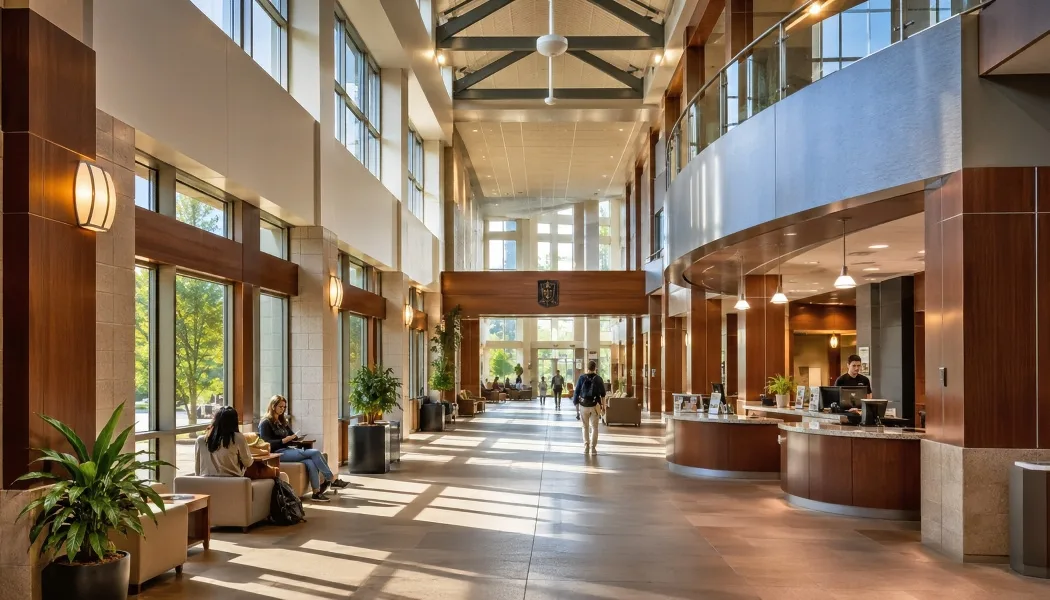
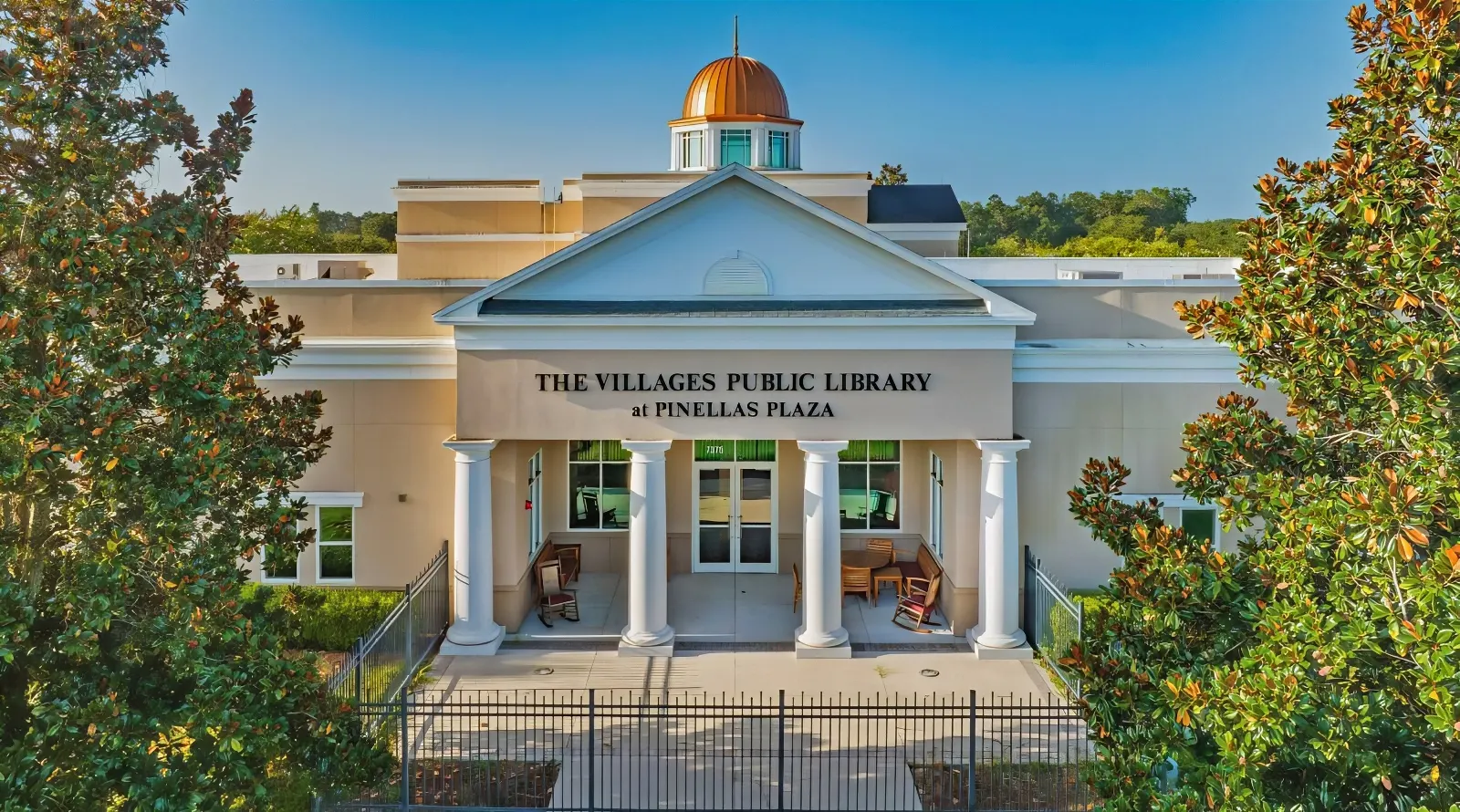
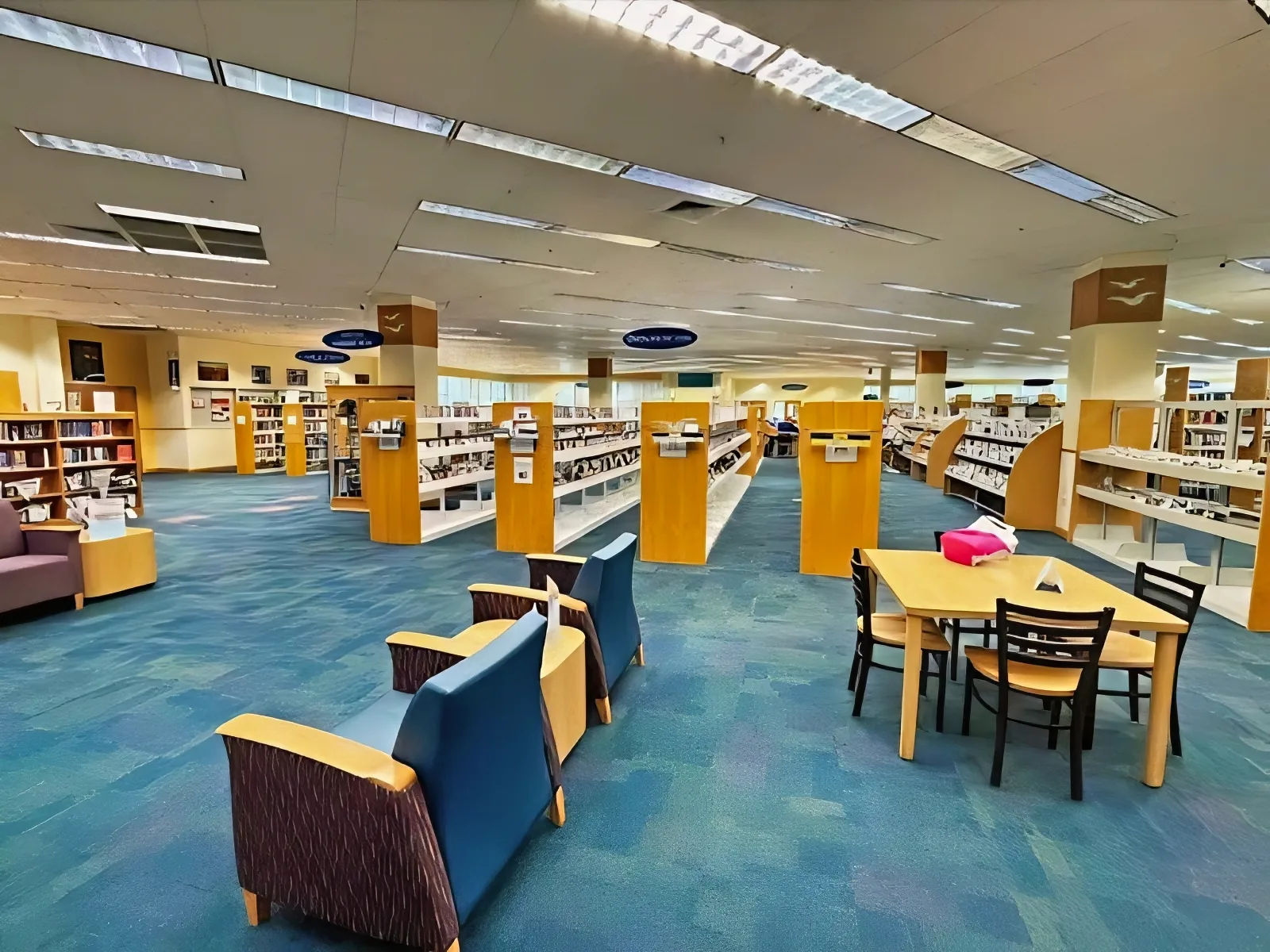
Pinellas County Library had a problem most public libraries face when they add a maker space to a building that was never designed for one. The reading area was quiet by design. The maker space next door was loud by purpose. The demising wall between the two stopped at the suspended ceiling tile, so any wall-to-deck soundproofing scope was off the table without a major renovation. Librarians were watching readers pack up and leave during maker hours.
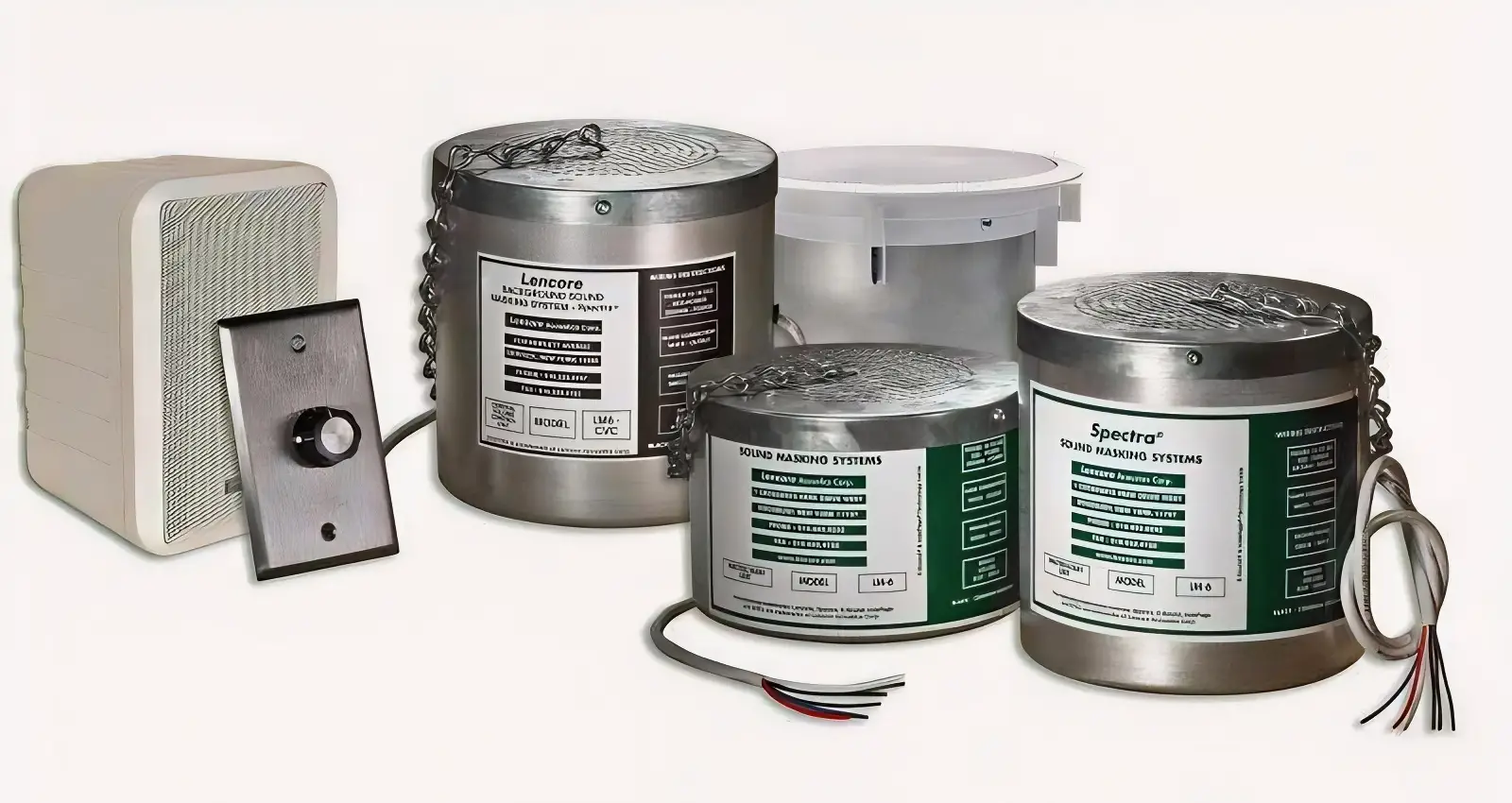
Commercial Acoustics specified a Sound Masking Classic system with speakers concealed above the existing ceiling tile, calibrated to 45 dBA across the reading area. Install and commissioning ran two weeks. The masking raised the ambient noise floor enough that maker space activity no longer stood out as discrete distractions, and the readers stayed.
Why Libraries Are an Underrated Sound Masking Niche
Most published sound masking case studies focus on offices, hospitals, banks, and law enforcement. Libraries get overlooked. The use case is just as strong and the constraints are tighter than any of those buildings.
Public libraries have become hybrid buildings, which is why library soundproofing now has to account for reading rooms, maker spaces, teen areas, and meeting rooms in the same floor plan. The traditional reading room sits next to a maker space, a teen lounge, a community meeting room, a recording studio, a 3D-print bay. Every adjacency is a noise mismatch. The construction was rarely designed for the new program. The budget for retrofits comes from public funds with tight scrutiny on capital projects.
Sound masking fits all three constraints. It installs without construction, costs roughly $1 per square foot, and produces a measurable improvement in the visitor experience that library boards can defend in budget meetings.
The Reading Room vs Maker Space Problem
The Pinellas reading room measured under 35 dBA on a normal afternoon. That is the kind of quiet libraries are built for, and it is exactly what makes the maker space problem so audible. Dynamic range is the gap between background and peak. A laser cutter running in the next room registers a 60 dBA peak. Against a 35 dBA reading-room background, that is a 25 dB jump every time the equipment fires up. Against a 45 dBA masked background, the same peak is a 15 dB jump. The same noise becomes noticeably less disruptive.
The maker space did not get any quieter. The reading room got less sensitive to it. That is the entire job sound masking does.
Why Sound Masking Beats Absorption or Blocking Here
Absorption reduces reverberation by absorbing energy after the noise enters the room. It does nothing to stop the noise from arriving in the first place. Blocking, the other half of traditional acoustic design, requires walls that extend to the structural deck. The Pinellas wall did not, and rebuilding it to deck was outside both the budget and the renovation scope.
Sound masking is a different category. It raises the ambient noise floor so that discrete noise events blend into a continuous low-grade hiss. The reading room sounded acoustically similar to a quiet HVAC running, which library patrons accept without thinking about. The maker space transmissions still happened. They just did not stand out.
For an office-vertical case using the same product family, see the Duke Energy office sound masking case. For a healthcare case with HCAHPS-driven outcomes, see the hospital sound masking HCAHPS case.
System Design: 15-Foot Spacing, 45 dBA Target
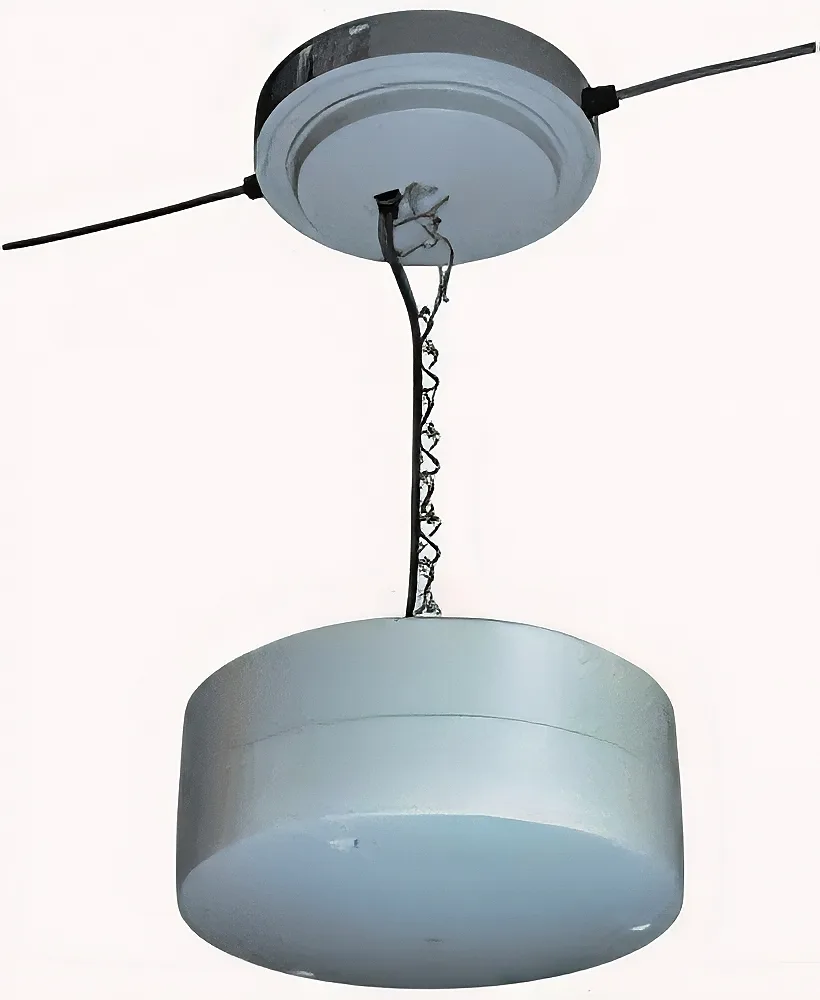
- Speakers: Sound Masking Classic emitters, concealed above the existing ACT
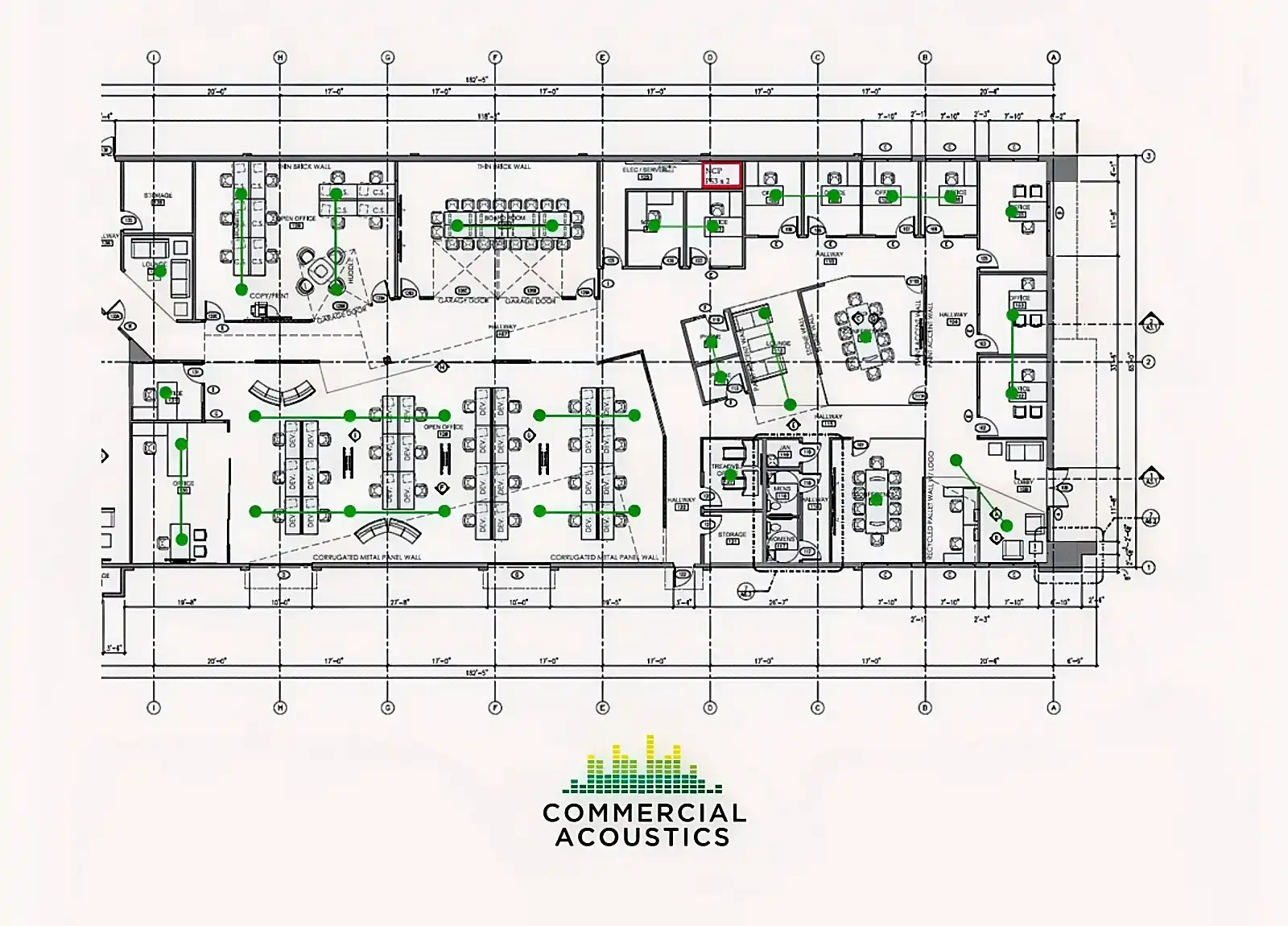
- Spacing: 15 feet on center, a tighter grid than office defaults for even reading-room coverage
- Spectrum: Pink-noise weighted, tuned to mask the maker-space frequency range
- Calibration: 45 dBA target at seated head height across the reading area
- Zoning: Single zone for the open reading area, separate channel for adjacent closed offices if added later
The 45 dBA target is meaningfully lower than the 48 to 50 dBA standard in open-plan offices. Libraries need a quieter masking floor because their visitor expectation starts quieter. Push the masking too loud and the reading room stops being a reading room. Push it too quiet and the maker-space transmissions still stand out.
Sound Masking Targets by Public Space Type
Different public spaces call for different masking levels. The table below maps the working dBA windows for civic and shared-use buildings.
What Library and Civic Facility Managers Should Spec
- Baseline Audit: Measure current dBA in the quiet zone before specifying a masking level
- Speaker Spacing: 12-15 feet on center for library reading areas, tighter than the office default
- Zone Plan: Separate masking zones for reading area, closed study rooms, and staff offices
- Commissioning: Walk-through calibration at seated head height across the entire reading footprint
- Budget: Roughly $1 per square foot turn-key, fits inside operating budget for most public libraries
The discipline matters because libraries are quieter than offices. Generic office-spec masking will sound too loud in a reading room and turn the fix into a complaint of its own.
Conclusion: Library Sound Masking Done Right
Modern libraries are no longer just reading rooms. Maker spaces, teen lounges, community rooms, and recording studios share buildings designed for silence. Sound masking is the only acoustic tool that handles that adjacency without construction, and the budget lands inside what library boards can approve as an operating expense. The Pinellas County Library install kept readers in their seats during maker-space hours for roughly $1 per square foot.
If your library, museum, or community building runs a quiet zone next to an active program, talk to an acoustic consultant about a masking-system scope before the next round of patron complaints.
FAQs: Library Sound Masking & Reading Room Privacy
What dBA should library sound masking target?
44 to 46 dBA at seated head height across the reading area. That is lower than the 48 to 50 dBA standard for offices because libraries start from a quieter baseline. Push masking past 46 dBA in a library and the room stops feeling like a reading room. Drop below 44 dBA and adjacent noise events still stand out.
Why use sound masking instead of soundproofing a library wall?
Many libraries have demising walls that stop at the suspended ceiling tile rather than extending to the structural deck. Soundproofing those walls requires major construction and often exceeds the renovation scope. Sound masking installs above the existing ceiling without modifying the wall and produces a measurable noise-floor change in two weeks.
What does library sound masking cost?
Approximately one dollar per square foot turn-key, including speakers, wiring, calibration, and commissioning. For most public libraries the project lands inside an operating budget rather than a capital request, which is the threshold library boards usually evaluate against.
Does sound masking work in maker spaces and study rooms too?
Yes when zoned correctly. The maker space itself usually does not need masking, the quiet zones adjacent to it do. A networked masking system handles different dBA targets in adjacent zones, so the reading room, the study rooms, and the staff offices can each run their own setpoint.

Walker Peek|Founder & CEO, Commercial Acoustics
Walker founded Commercial Acoustics in 2013 to bring aerospace-grade engineering discipline to soundproofing, and runs the firm as CEO from its 12,000 sq ft Tampa production facility. The company designs custom acoustic panels, sound membranes, and masking systems for multi-family, hospitality, healthcare, and commercial projects across the US — built around Walker’s invention, Wall Blokker, an EVA-based sound barrier that hits STC 50-plus at roughly $1 per square foot installed.
A Jacksonville native, Walker spent five years at Kennedy Space Center with Craig Technologies before founding Commercial Acoustics — certifying aerospace manufacturing to the AS9100 standard and leading Six Sigma Black Belt process-improvement teams on NASA programs. He is a certified Industrial Noise Control Engineer and the author of Architectural Acoustics: A Practical Handbook.
