Table of Contents
Overview: A Better Alternative to Acoustic Drywall
- Common Products: QuietRock, SoundBreak XP, and other soundproof gypsum boards
- Applications: Commercial, multifamily, education, and healthcare construction
- Challenge: High cost and labor-intensive installation
- Solution: Wall Blokker — a mass loaded vinyl (MLV) membrane that achieves higher STC ratings at a fraction of the cost
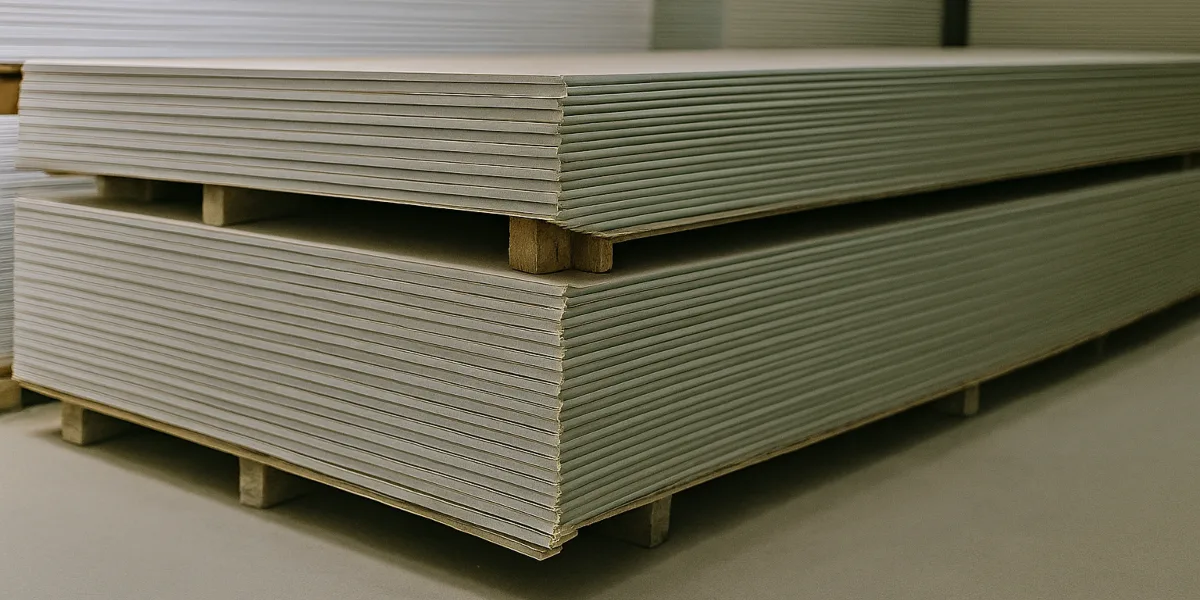
Acoustically enhanced gypsum boards like QuietRock and SoundBreak XP are marketed as high-performance soundproofing materials for walls and ceilings. These products use a viscoelastic polymer core to dampen vibration between two gypsum sheets. While effective in limited-space conditions, they’re heavy, expensive, and slow to install, especially on large commercial projects.
Contractors and architects increasingly choose Wall Blokker instead — a proven QuietRock alternative that combines flexibility, high acoustic performance, and low total installed cost. It’s part of a growing trend toward modern mass loaded vinyl systems that outperform acoustic drywall while simplifying construction schedules.
Why QuietRock and SoundBreak Cost More Than They Should
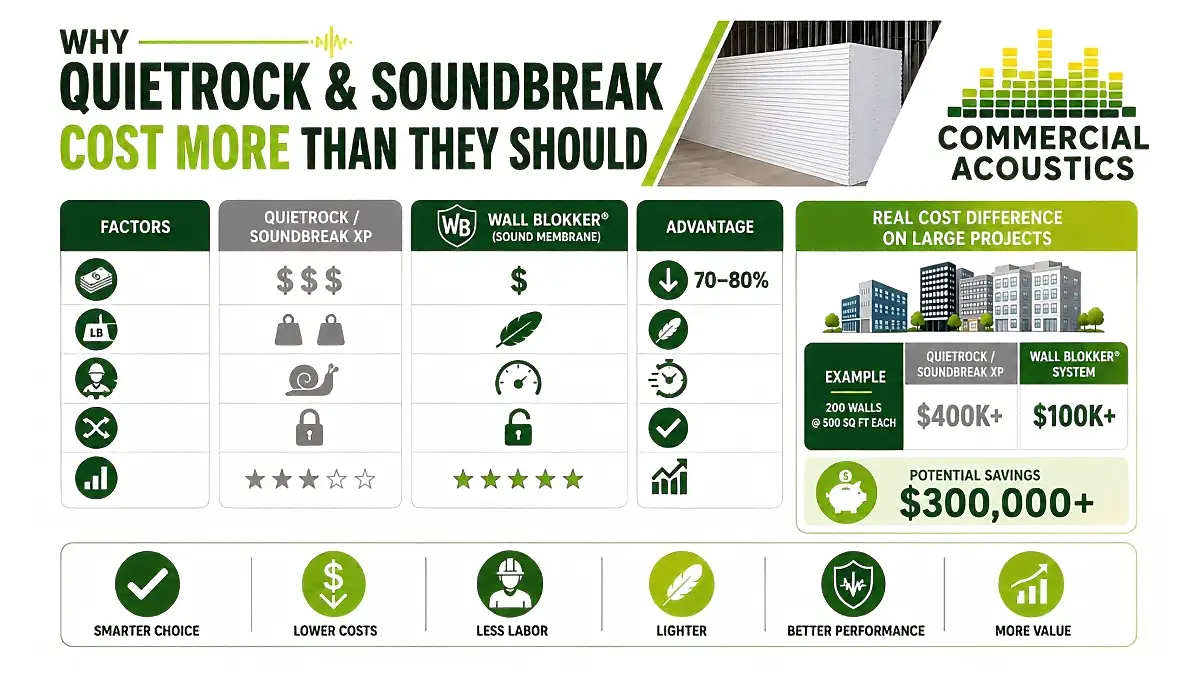
Soundproof gypsum boards are designed for convenience but come with major trade-offs in cost, weight, and efficiency. Many engineers and GCs find that the acoustic gain doesn’t justify the higher price, especially compared to modern sound membranes.
- Material cost: Typically $3–$5 per sq ft (vs. under $1 for Wall Blokker)
- Weight: Around 2 lb/sf, requiring multiple installers
- Labor impact: Slower hanging and finishing, higher fatigue
- Limited flexibility: Difficult for retrofit or ceiling applications
- Small STC gain: Only 3–5 points better than basic drywall
In large-scale builds like schools, offices, or apartments, these added costs quickly multiply. Over hundreds of walls, a more efficient and scalable SoundBreak alternative can save thousands in labor and material while meeting or exceeding the same STC ratings.
Wall Blokker: The Smarter QuietRock Alternative
Wall Blokker is a dense, flexible mass loaded vinyl (MLV) membrane engineered to stop airborne noise and vibration through walls and ceilings. It installs behind a single layer of standard drywall to create a continuous sound barrier that outperforms acoustically enhanced gypsum boards.
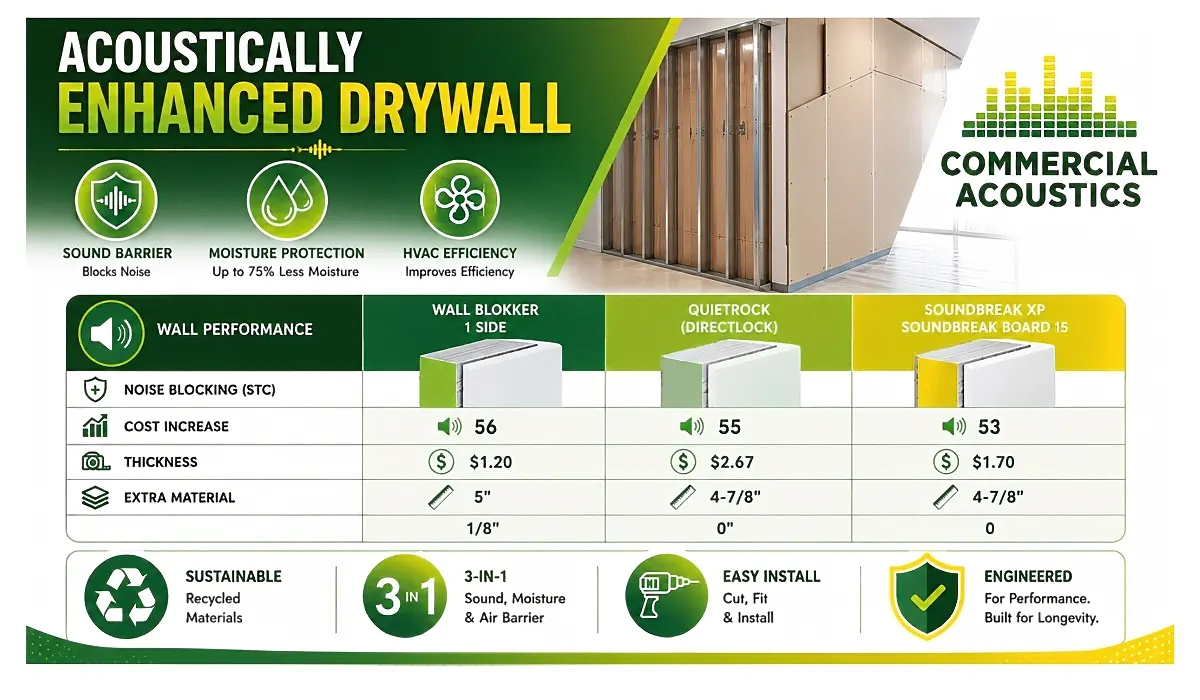
- Performance: Achieves STC 50–55 on standard metal-stud walls
- Installation: Rolls out in minutes — no special tools or heavy panels
- Cost Efficiency: Saves $1.50–$2.00 per sq ft vs. QuietRock or SoundBreak XP
- Weight: ~1 lb/sf — half the weight of acoustic gypsum
- Bonus: Provides noise, moisture, and air barrier protection in one layer
Because it’s lightweight and flexible, Wall Blokker is easier to install overhead or in tight retrofit applications where heavy gypsum boards would be impractical. When combined with resilient channels, sealants, or decoupled wall framing, it can help achieve ultra-high acoustic performance even in demanding commercial environments.
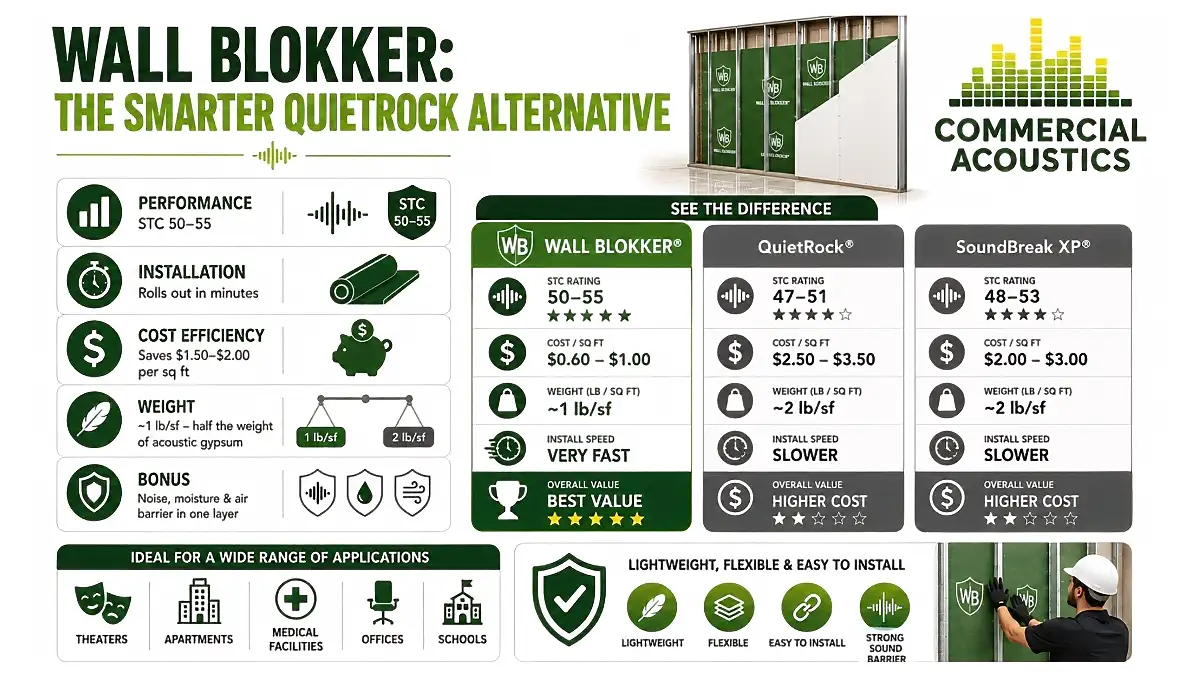
Comparison: Wall Blokker vs. QuietRock / SoundBreak
| Feature | QuietRock / SoundBreak XP | Wall Blokker + Standard Drywall |
|---|---|---|
| Material Cost | $3.00–$5.00 per sq ft | $0.90 per sq ft |
| Labor Time | Heavy sheets, 2–3 workers | Lightweight rolls, single installer |
| Weight | ≈ 2 lb/sf | ≈ 1 lb/sf |
| Typical STC Rating | 47–50 | 50–55 |
| Installation Type | Panel-based (like drywall) | Flexible membrane under drywall |
| Retrofit Capability | Limited | Excellent |
Across both new construction and retrofit projects, Wall Blokker consistently delivers higher performance and faster installation. For architects balancing acoustic targets and cost constraints, it’s a value-engineered solution that keeps jobs on schedule without sacrificing sound isolation.
Installation & Application
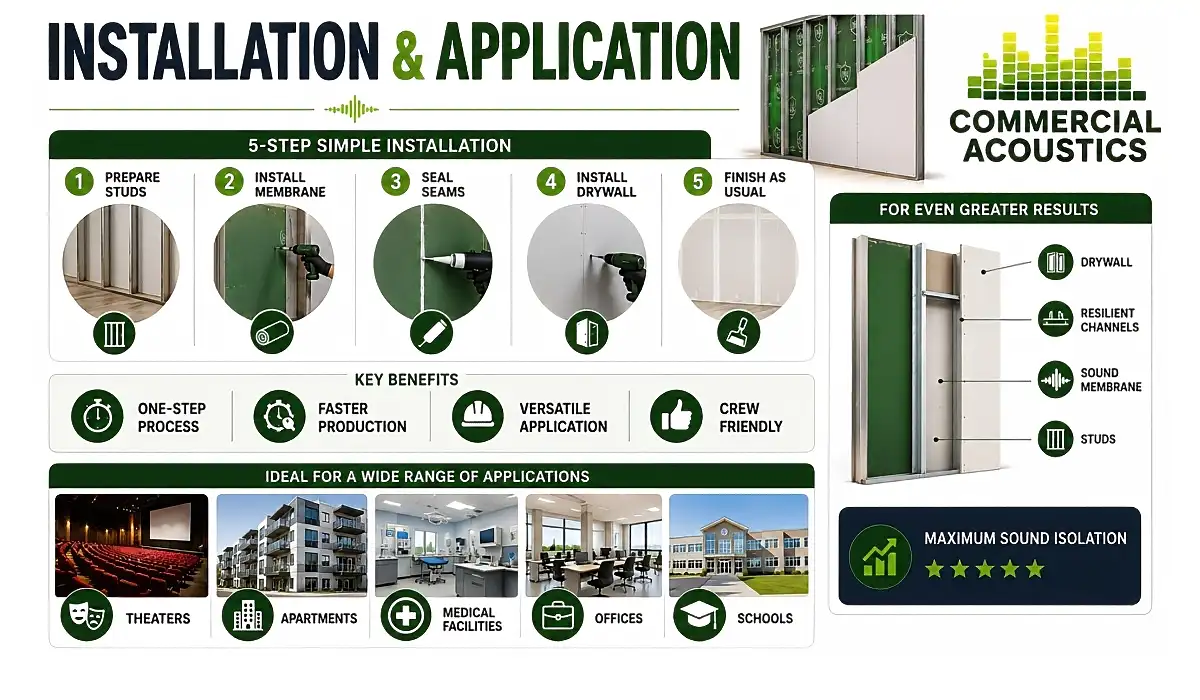
Wall Blokker installs quickly over wood or metal studs using screws, staples, or adhesives. Once seams are sealed, drywall can be installed immediately over the membrane — no special handling required. The installation process is simple, clean, and familiar for any drywall crew.
- One-step process instead of multiple drywall passes
- Easy handling and trimming on-site for faster production
- Compatible with both new construction and retrofit work
The system works exceptionally well in theaters, apartments, medical facilities, and offices where high sound isolation is required. For even greater results, pairing Wall Blokker with resilient channels or decoupled framing creates some of the quietest partitions available.
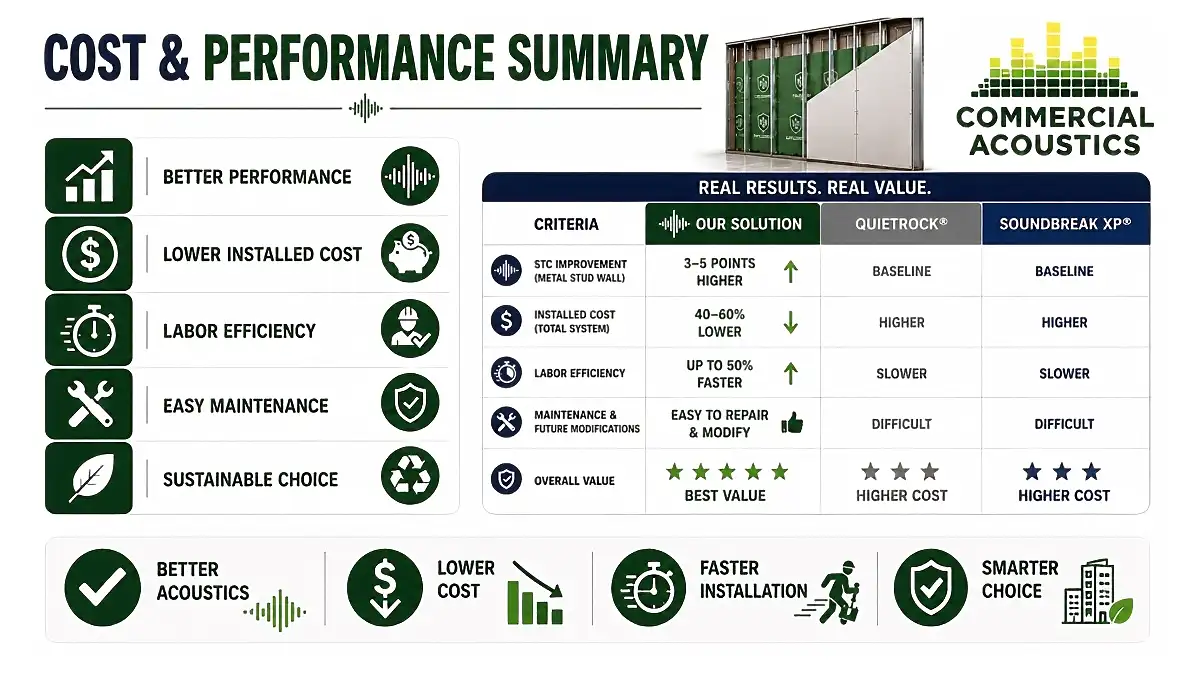
Cost & Performance Summary
- STC Improvement: 3–5 points higher than QuietRock / SoundBreak
- Installed Cost: 40–60% lower total system price
- Labor Efficiency: Up to 50% faster installation
- Maintenance: Easy to repair or modify in future remodels
When comparing total lifecycle cost, Wall Blokker delivers the best balance of acoustic performance, material savings, and installation speed. It’s a practical solution for contractors who want reliable sound control without overbuilding their wall assemblies.
Conclusion: The Proven QuietRock & SoundBreak Alternative
Soundproof gypsum boards like QuietRock and SoundBreak XP can achieve decent noise reduction, but they add unnecessary weight and cost to most wall assemblies. Wall Blokker delivers higher STC ratings, easier installation, and significant savings in both material and labor.
For architects and contractors seeking dependable acoustic performance without the premium price tag, Wall Blokker is the clear alternative. It delivers the sound isolation of specialty drywall systems at a fraction of the cost — ideal for commercial, healthcare, and multifamily projects across the U.S.
FAQs: QuietRock & SoundBreak Alternatives
What is the best alternative to QuietRock?
The best alternative to QuietRock is Wall Blokker, a high-density soundproof membrane that installs behind drywall. It provides comparable or better sound isolation than acoustic gypsum board at a fraction of the cost.
How does Wall Blokker compare to SoundBreak XP?
Wall Blokker consistently achieves 3–5 higher STC points than SoundBreak XP while reducing total wall cost by up to 60%. It’s lighter, easier to install, and compatible with existing wall designs.
What is soundproof gypsum board used for?
Soundproof gypsum boards like QuietRock and SoundBreak XP are used in walls where speech privacy and noise control are important — such as hotels, hospitals, offices, and classrooms.
Can Wall Blokker be used with resilient channels?
Yes. When paired with resilient channels, Wall Blokker further reduces structure-borne vibration and helps achieve even higher STC performance in commercial wall assemblies.
Does Commercial Acoustics provide design support?
Absolutely. Commercial Acoustics offers acoustic modeling, wall design recommendations, and installation support for contractors and architects nationwide.

Walker Peek|Founder & CEO, Commercial Acoustics
Walker founded Commercial Acoustics in 2013 to bring aerospace-grade engineering discipline to soundproofing, and runs the firm as CEO from its 12,000 sq ft Tampa production facility. The company designs custom acoustic panels, sound membranes, and masking systems for multi-family, hospitality, healthcare, and commercial projects across the US — built around Walker’s invention, Wall Blokker, an EVA-based sound barrier that hits STC 50-plus at roughly $1 per square foot installed.
A Jacksonville native, Walker spent five years at Kennedy Space Center with Craig Technologies before founding Commercial Acoustics — certifying aerospace manufacturing to the AS9100 standard and leading Six Sigma Black Belt process-improvement teams on NASA programs. He is a certified Industrial Noise Control Engineer and the author of Architectural Acoustics: A Practical Handbook.
