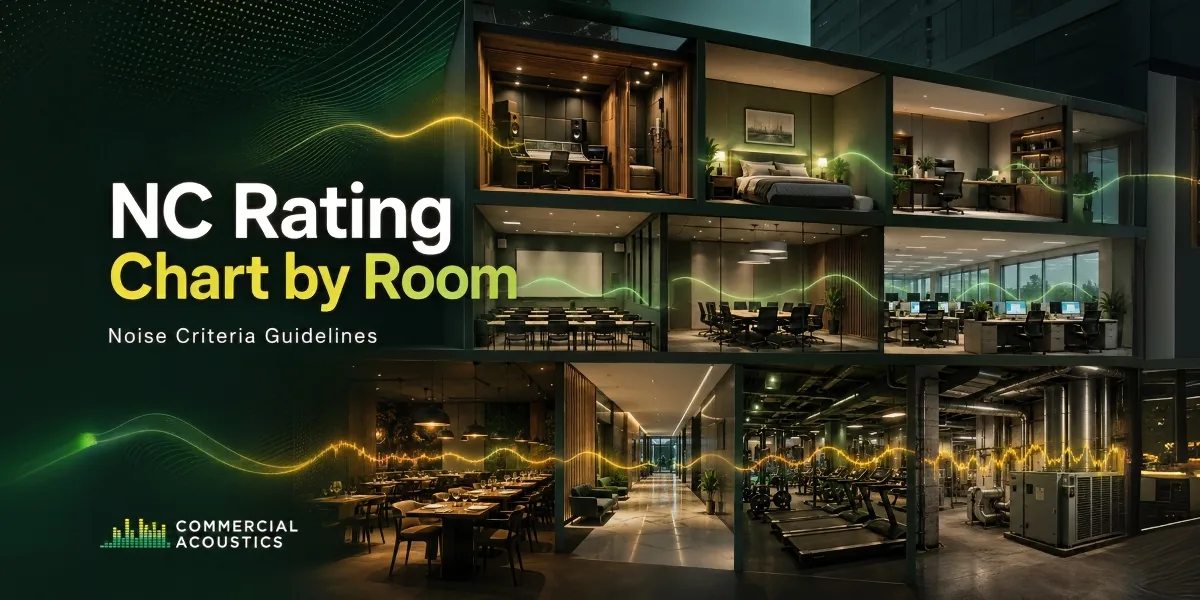
What the NC curves mean, target levels by space type – offices, hospitals, concert halls, classrooms, industrial – and how HVAC equipment and duct silencers drive whether a room actually hits its number.
25
May
May
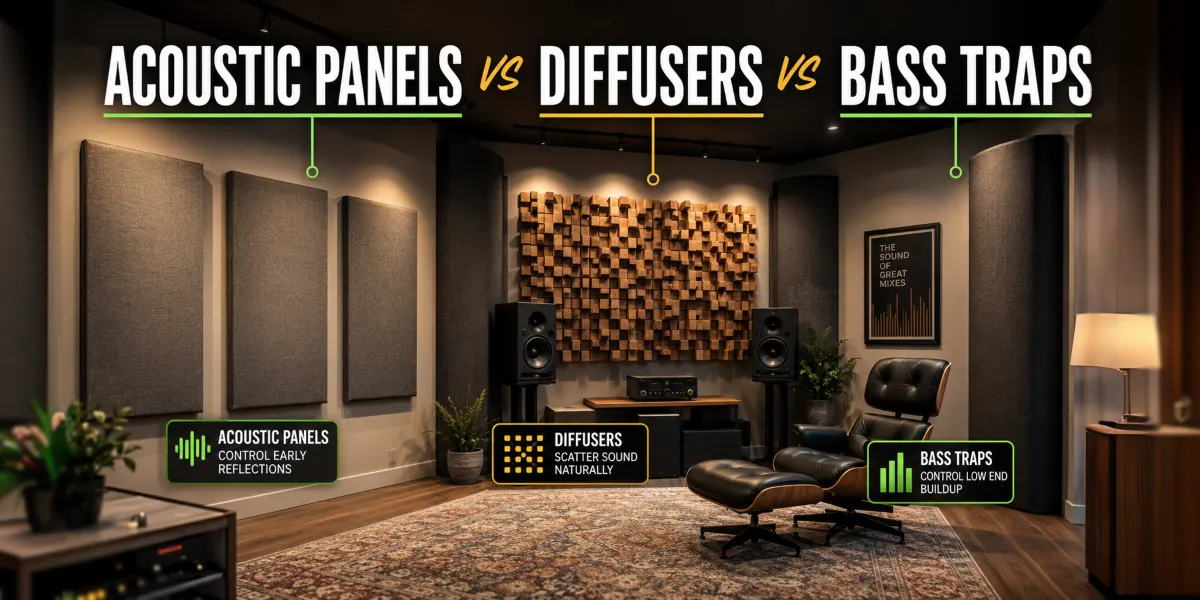
Acoustic panels, diffusers, and bass traps all get sold as ‘sound treatment’—but they solve different problems at different frequencies. Here’s what each one actually does, when to use it, and how to combine them.
24
May
May
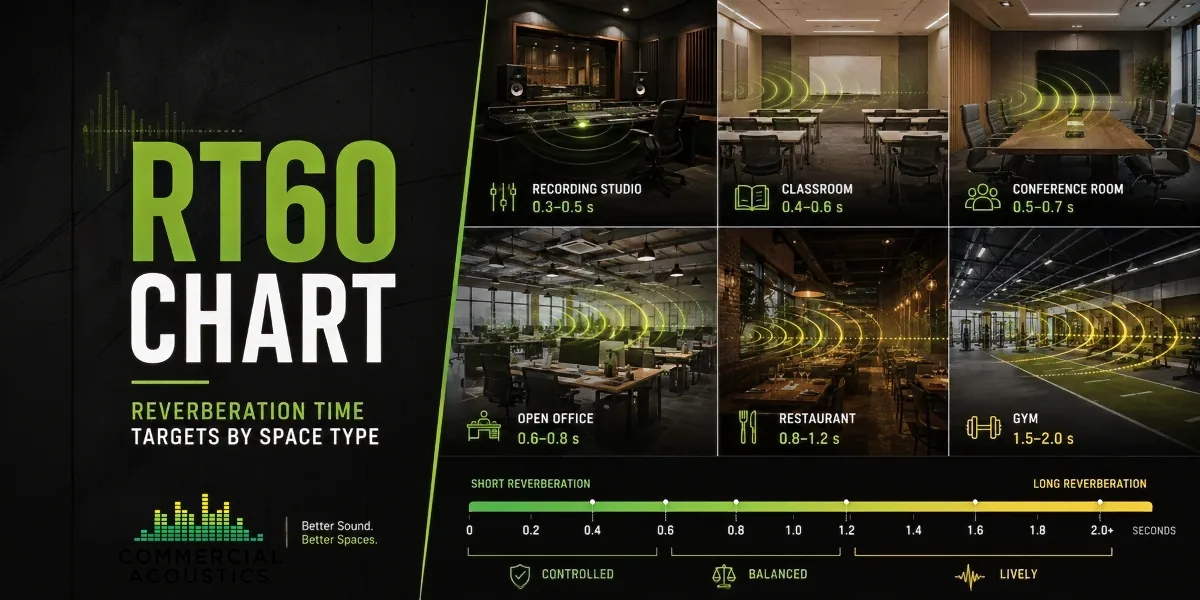
How long a room “rings” after sound stops – RT60 targets from 0.2-second recording booths to 3-second cathedrals, the Sabine formula behind them, and treatment strategies for each frequency band and room use.
23
May
May
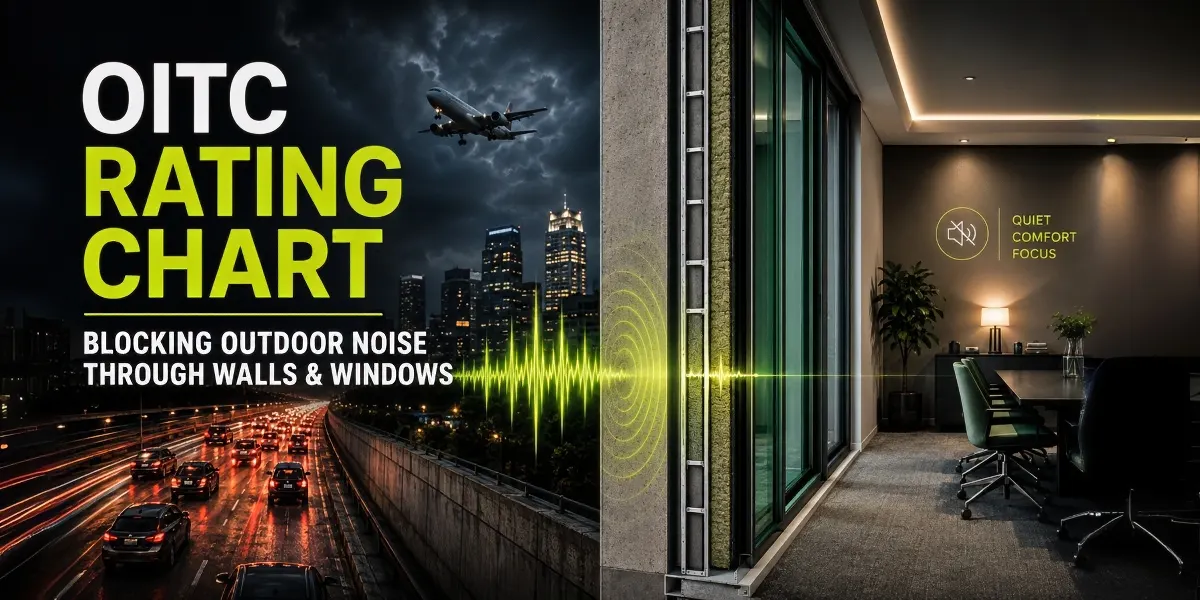
OITC measures how well exterior walls and windows block outdoor noise – traffic, aircraft, trains. A full reference: typical assembly ratings, recommended targets by site, and why OITC numbers run 5-10 points below STC.

22
May
May
How sound waves move through tissue and bone, not just the ear – what low frequencies do to circulation, the nervous system, and cortisol, and why dose, duration, and vibration exposure matter more than volume alone.

27
Apr
Apr
Inside Cornerstone’s new 8,000 SF sanctuary in Lakewood Ranch — a seamless AcoustiBuilt acoustic-plaster ceiling, ACT field, and a 60-foot integrated diffuser dialed in for both spoken word and live worship RT60 targets.
20
Apr
Apr
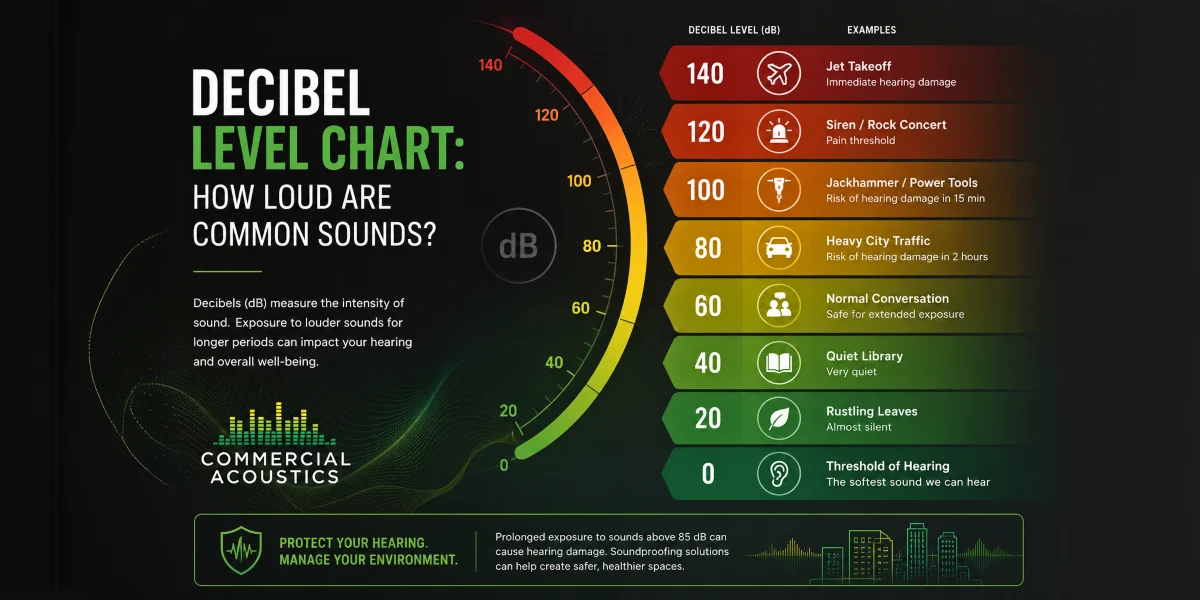
Decibel levels for everyday sounds – from a whisper (30 dB) to a jet engine (140 dB) – plus OSHA safe exposure limits, hearing damage thresholds, and acoustic design context.

10
Apr
Apr
Multi-story acoustic scope at FSU’s Herbert Wertheim Center for Business Excellence — Gordon origami metal ceilings, backlit panels, ACT, and Conwed fabric-wrapped walls coordinated to Goody Clancy’s design intent and ANSI S12.60.
05
Apr
Apr
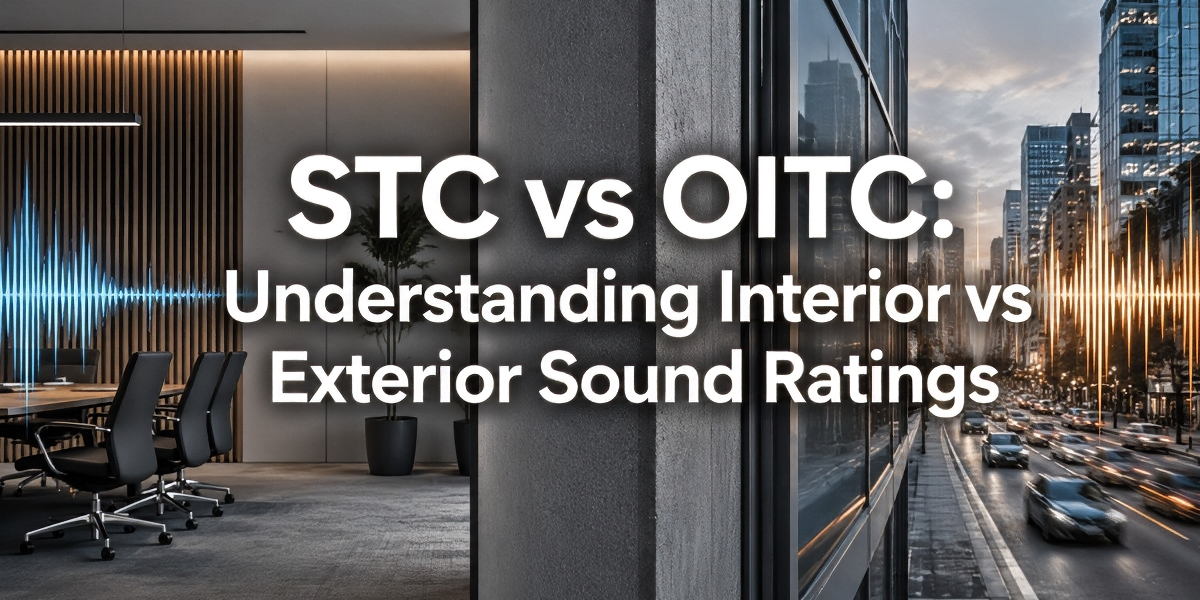
STC rates indoor speech and TV; OITC rates outdoor traffic, trains, and aircraft. Why OITC is always lower on the same assembly, where each rating belongs, and the spec mistake behind most low-frequency complaints.

01
Apr
Apr
The ceiling is usually the largest reflective surface in a room. How ACT systems absorb, block, or diffuse sound, the three main material types, and where they actually deliver acoustic comfort versus just aesthetics.