Miami Flooring Soundproofing Permit Guide: STC/IIC 50 Compliance
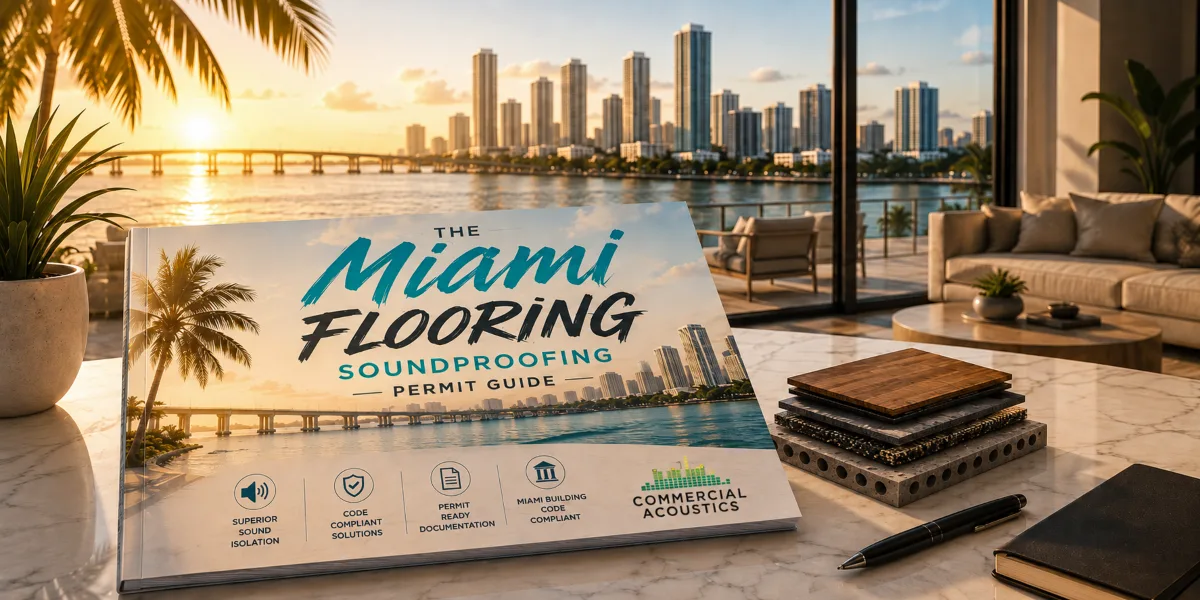
* Floor Blokker / Floor Blokker Lite also reach IIC 57. Ratings Above Assume: tile, concrete, resilient gypsum ceiling, fiberglass batting.
What Miami Wants Before You Replace a Condo Floor
Pull up the carpet in a Brickell or Edgewater condo and three things stand between you and a finished floor: a City of Miami building permit, a notarized sound transmission affidavit, and an assembly that clears Florida Building Code §1207 at STC 50 and IIC 50 between units. Miami’s cosmetic exemption only spares single-family homes, so condo soundproofing work gets permitted. Check your build with our IIC Calculator before you file.
What Miami’s Flooring Permit Checklist Requires
The City of Miami Building Department requires a signed, notarized sound transmission affidavit for condo flooring work. The contractor’s qualifying agent certifies the assembly meets FBC §1207 at STC 50 and IIC 50 and lists each acoustical product by manufacturer and product ID.
The 6 Required Forms & Documents (in 2026)
- City of Miami Building Permit Application: filed through the iBuild portal, usually by a licensed contractor.
- Sound Transmission Affidavit: notarized, certifying FBC §1207 STC 50 and IIC 50, signed by the contractor’s qualifying agent.
- Acoustical Product Information: manufacturer and product ID for each underlayment, listed on the affidavit.
- Floor Plan: drawing of the unit showing the area of new flooring.
- Condo Association Approval: most Miami boards require written sign-off before work starts.
- Notice of Commencement: recorded with Miami-Dade County for projects over $5,000.
All six above go to the City of Miami. Permits are filed online through iBuild, with plan review handled in ePlan. Residential flooring fees run roughly 0.5% of project value plus a small application fee. The Building Department, at 444 SW 2nd Avenue, is reachable at (305) 416-1100.
Once the permit is issued, the City inspects the work. For a sound-rated floor the inspector confirms the installed underlayment matches the products listed on your Sound Transmission Affidavit, and a final inspection closes the permit.
What STC and IIC Mean for Your Permit
- STC (Sound Transmission Class): blocks airborne sound — voices, TV, music.
- IIC (Impact Insulation Class): reduces impact sound — footsteps, dropped objects, chair scrapes.
STC 50 and IIC 50 come from Florida Building Code Section 1207, which adopts IBC 1207. They apply between dwelling units — the wall or floor-ceiling assembly separating your unit from your neighbor’s. STC is tested per ASTM E90 across a full frequency range, while IIC follows ASTM E492 using a tapping machine to simulate footfalls.
At IIC 50, normal walking reads as a soft thump below — drop to IIC 45 and steps become distinct. Field-tested assemblies can clear at STC 45 / IIC 45 because real installations include flanking paths and construction variances. See our lab-tested assemblies for STC and IIC reports ready for Miami plan review, and our IIC/STC ratings guide for condo flooring permits for the deeper code background.
What STC and IIC Should a Miami Condo Target?
| Building Type | Wall STC | Floor IIC | What It Is / Where |
|---|---|---|---|
| 1960s–80s Concrete Tower | 52–55 | 55 | Older Brickell and Coconut Grove slabs, the Brickell Bay Tower era. Thin original assemblies, so retrofit underlayment to kill footfall noise. |
| 2000s Glass High-Rise | 55 | 55–60 | Icon Brickell and the Edgewater towers. HOAs enforce underlayment specs on resale renovations. |
| New-Construction Luxury | 55–60 | 60 | Brickell Heights and Aria on the Bay. The board minimum is baked into the alteration rules at delivery. |
| Penthouse / Ultra-Luxury | 60+ | 65+ | Four Seasons Residences and top-floor units. A floating subfloor on a thick acoustic mat pushes IIC past 65 — effectively silent footstep transmission below. |
Miami packs roughly 262 condo buildings with published floor plans from the Brickell high-rise core through Downtown, Edgewater, and Coconut Grove. The stock splits between 1960s-to-1990s concrete towers like Brickell Bay Tower and the glass towers of the 2000s and 2010s. Those older concrete buildings are where tile-over-concrete retrofits create the worst footfall complaints.
Miami skews higher than most markets. Code-minimum is legal but rare in the saleable luxury stock, and the bulk of Brickell, Edgewater, and waterfront Grove renovations land in the top two rows above. Luxury to penthouse (STC and IIC 55 to 65) is the right band for almost any Miami condo that wants to keep footfall complaints away from the board.
Underlayments that Meet Miami’s Permit Standard
- AcoustiStep: premium rubber mat. Right pick when the HOA requires IIC 55 or 60.
- Floor Blokker: standard acoustic underlayment roll. Clean STC and IIC pass for typical retrofits.
- Floor Blokker Lite: lighter, lower-cost option for budget retrofits that still need to clear code.
All three ship with published STC and IIC test reports you can list on your Sound Transmission Affidavit and attach to your iBuild submittal. The choice comes down to your HOA’s IIC threshold and how much margin you want above the FBC §1207 minimum.
Clearing Miami Plan Review the First Time
Two things decide whether a Miami flooring permit clears on the first pass. First the paperwork, a permit filed through iBuild with a notarized sound transmission affidavit that names the products you actually install. Second the assembly, which has to meet §1207 at STC 50 and IIC 50 with manufacturer test reports for those same products. Line both up and plan review rarely sends it back.
Every underlayment in the Commercial Acoustics catalog ships with the STC and IIC reports a Miami affidavit asks for, formatted to drop straight into your submittal. Match the product to your building’s HOA threshold and the job moves without a second review cycle.
FAQs: Miami Flooring Soundproofing Permits
How much soundproofing does a Miami condo floor need?
Florida Building Code Section 1207 sets the floor at STC 50 and IIC 50 between units, and Miami enforces it. The rating covers the underlayment plus the finish together, tested under ASTM E90 and E492. Most luxury boards push higher, to IIC 55 or 60.
Do I need a permit to soundproof or replace my Miami condo floor?
Yes. Hard-surface flooring in a Miami condo needs a building permit, because the cosmetic exemption only covers single-family homes. You file a notarized sound transmission affidavit with it, and most associations want board approval before work starts.
What is the City of Miami sound transmission affidavit?
It is a notarized form your contractor’s qualifying agent signs to certify the floor meets Section 1207 at STC 50 and IIC 50. It names every acoustical product by manufacturer and product ID, tested per ASTM E90 and E492.
Which underlayment passes Miami soundproofing requirements?
Any product with lab reports showing STC and IIC of 50 or more for your assembly. AcoustiStep clears IIC 60 for luxury boards, while Floor Blokker and Floor Blokker Lite handle standard code retrofits at lower cost.
Does bare concrete meet Miami’s floor sound code?
No. Bare concrete under hard flooring rates around IIC 28, far short of the IIC 50 minimum. A rated acoustic underlayment between the slab and the finish is what gets a Miami condo floor to code.
How do I file the Miami flooring permit?
City of Miami permits go through iBuild, the Accela-based portal, usually filed by a licensed contractor with plan review in ePlan. Start at the Building Department, 444 SW 2nd Avenue, or call (305) 416-1100.