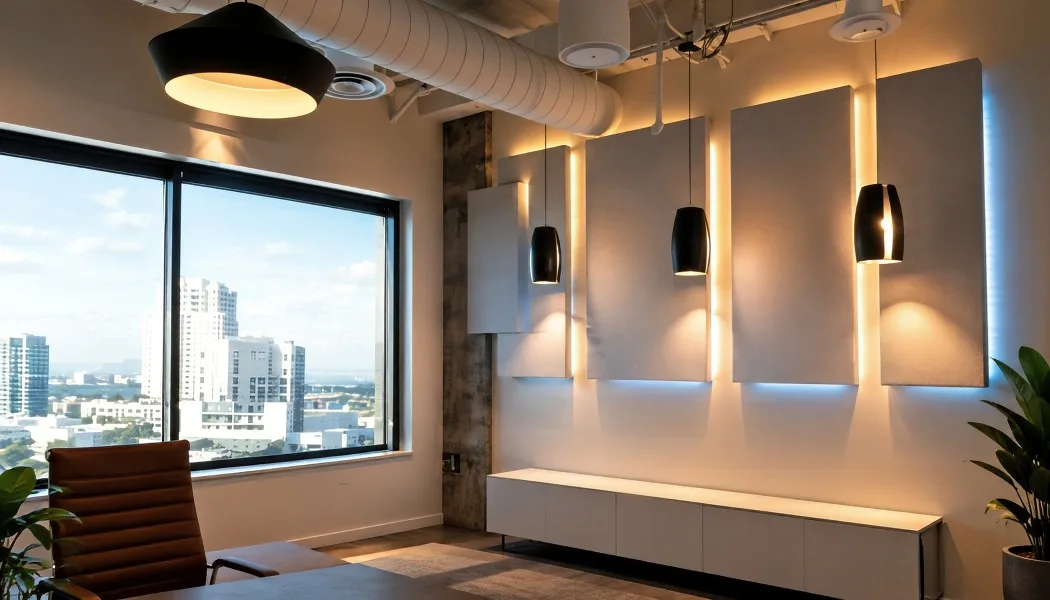
 1.2 s → 0.7 s
Corporate Conference Room — Clearwater, FL
Fourteen custom fabric-wrapped panels, sized by sabin count, brought a hard-finished telecom room into the conference range.
Read the case study →
Enter your room’s size, use, and finishes to see exactly how many acoustic panels it needs — and where to put them.
It depends on three things: how big the room is, how it’s used, and how hard its surfaces already are. A small office with carpet might need a handful of panels, while a gym with block walls and an open deck can need hundreds. This acoustic panel calculator works out the exact count from the same reverberation math acousticians use, instead of a flat coverage percentage.
As a rule of thumb, most rooms land somewhere between 10% and 40% wall coverage. Use these ranges as a sanity check on the calculator’s result. Rooms with hard finishes sit at the high end of each range.
The right number of panels in the wrong spots still leaves a room sounding off. Spread panels around the room rather than covering one wall, and start where sound bounces first.
Every room type has its own trouble spots. Here’s where panels earn their keep in the spaces we treat most.
 Corporate
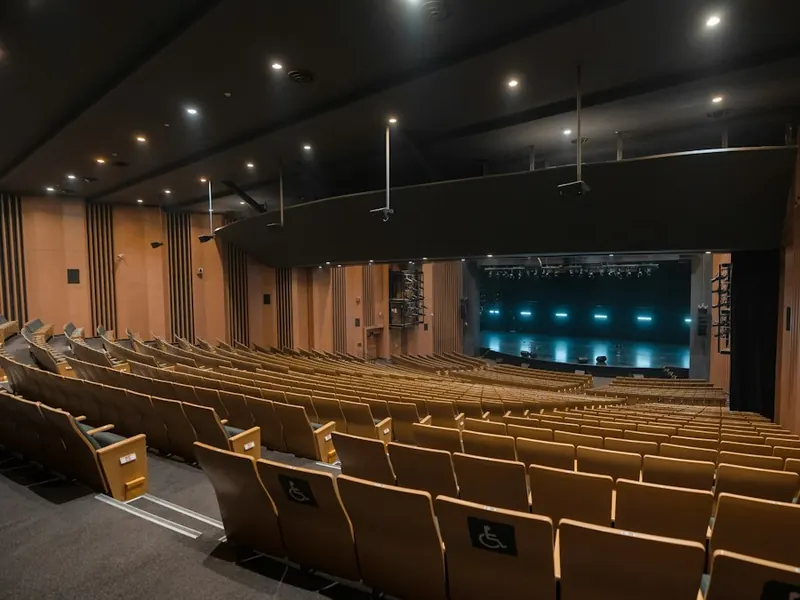 Worship & Assembly
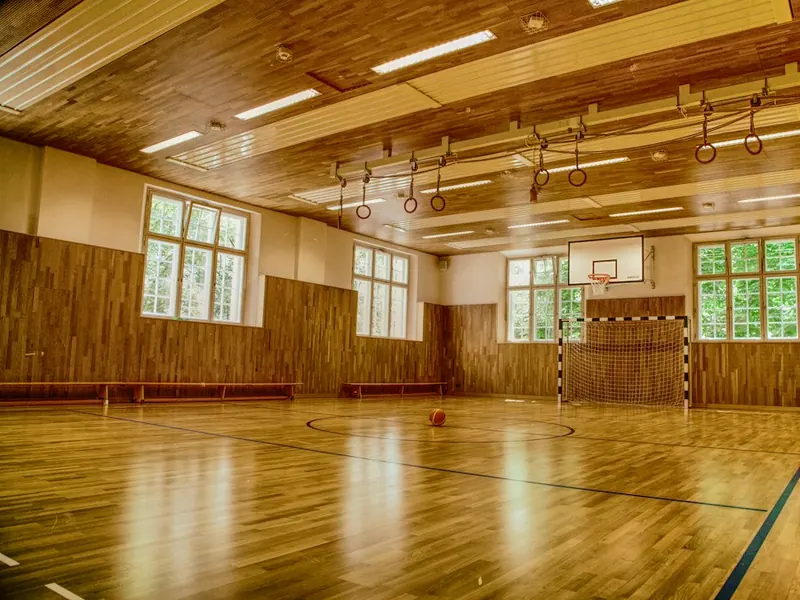 Athletics
NRC is how much sound a panel absorbs. Thicker panels absorb more of the lower voice range, so a room needs fewer of them. Tackable panels add a thin hard board under the fabric, so you can pin papers to them and they stand up better to bumps. These are the tested NRC values the calculator uses. Our room acoustics calculator shows the full reverb picture if you want to compare finishes.
Acoustic panel projects across offices, schools, restaurants, and worship spaces — with the reverb times before and after.
1.2 s → 0.7 sFourteen custom fabric-wrapped panels, sized by sabin count, brought a hard-finished telecom room into the conference range.
Read the case study → 1.6 s → <1 s
Custom panels placed for the room’s geometry let diners hold a conversation again over marble and tile finishes.
Read the case study → Open Office
Wall panels, ceiling clouds, and baffles under an exposed metal deck took a 1.2-second office down to a workable range for calls.
Read the case study → 4,000 SF Panels
4,000 sq ft of wall panels and 120+ ceiling-mounted panels across a gym, two dining halls, and a music room.
Read the case study → 98,000 SF
Wall panels, ceiling tile, and stretched fabric cut excess reverb across a large sanctuary, lobby, and classrooms.
Read the case study → Classrooms
Custom wall panels in classrooms and multipurpose rooms, mounted to blend in while improving speech clarity.
Read the case study →Enter the room’s size, pick how it’s used and what it’s made of, then choose a panel thickness. The calculator estimates the current reverb time, compares it with the target for that room type, and converts the missing absorption into a panel count.
Most rooms need 10–25% wall coverage, and very live rooms like gyms need 25–40% or more. Past about a third of the wall area, it’s usually better to add ceiling clouds than to keep covering walls.
Start at ear height on the walls where sound reflects first, and stagger panels on opposite parallel walls to stop flutter echo. Spread them around the room instead of grouping them on one wall.
Clouds are panels hung flat a few inches below the ceiling. They make sense when the walls are taken up by windows, glass, or screens, or when the ceiling is high or open, like gyms, open offices, and restaurants with an exposed deck. Because sound reaches both faces, each cloud absorbs more than the same panel on a wall, but clouds work best when they cover at least 30% of the ceiling in smaller rooms and about 50% in large open rooms. Pick Ceiling Clouds in step 4 of the calculator to see the count.
No. Panels absorb echo inside the room, but they don’t stop sound from passing through walls. Blocking sound between rooms takes mass and decoupling, which our STC calculator covers.
2-inch panels are the best value for most rooms (NRC 1.05), so they’re our most popular. 1-inch panels (NRC 0.80) suit offices where a slim profile matters. Either can get a tackable face if people will pin things to the wall.
A tackable panel has a thin hard board under the fabric, so pins and tacks hold like a bulletin board and the face resists dents. It’s popular in classrooms, offices, and hallways, and it absorbs slightly more than a standard panel of the same thickness.