
Table of Contents
Project Overview: Museum Acoustics Solutions
- Project: Acoustical Solutions for Bamboo-to-Concrete Flooring Renovation
- Location: 719 Central Ave, St. Petersburg, FL 33701
- Facility Type: Art Museum and Event Space, Three Gallery Rooms
- Client: The Morean Arts Center
- Objective: Hold RT60 at 1.4 Seconds Through the Flooring Conversion
- Scope: Sabin Recalculation, Six 4×4 Ceiling Clouds Across Three Rooms
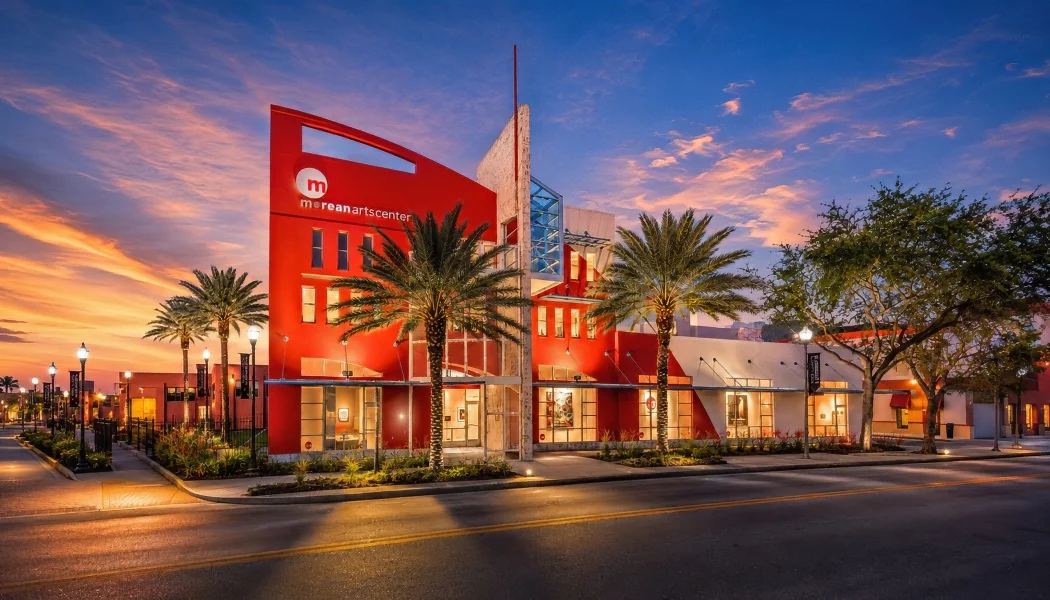
This project was completed at the Morean Art Museum during a planned bamboo-to-concrete flooring renovation across three main gallery rooms. Six 4×4 acoustic ceiling clouds at NRC 1.05 held the reverberation target before the harder floor surface ever went down, sidestepping the post-renovation noise complaints the manager would otherwise have inherited.
The Morean Arts Center and the Flooring Renovation
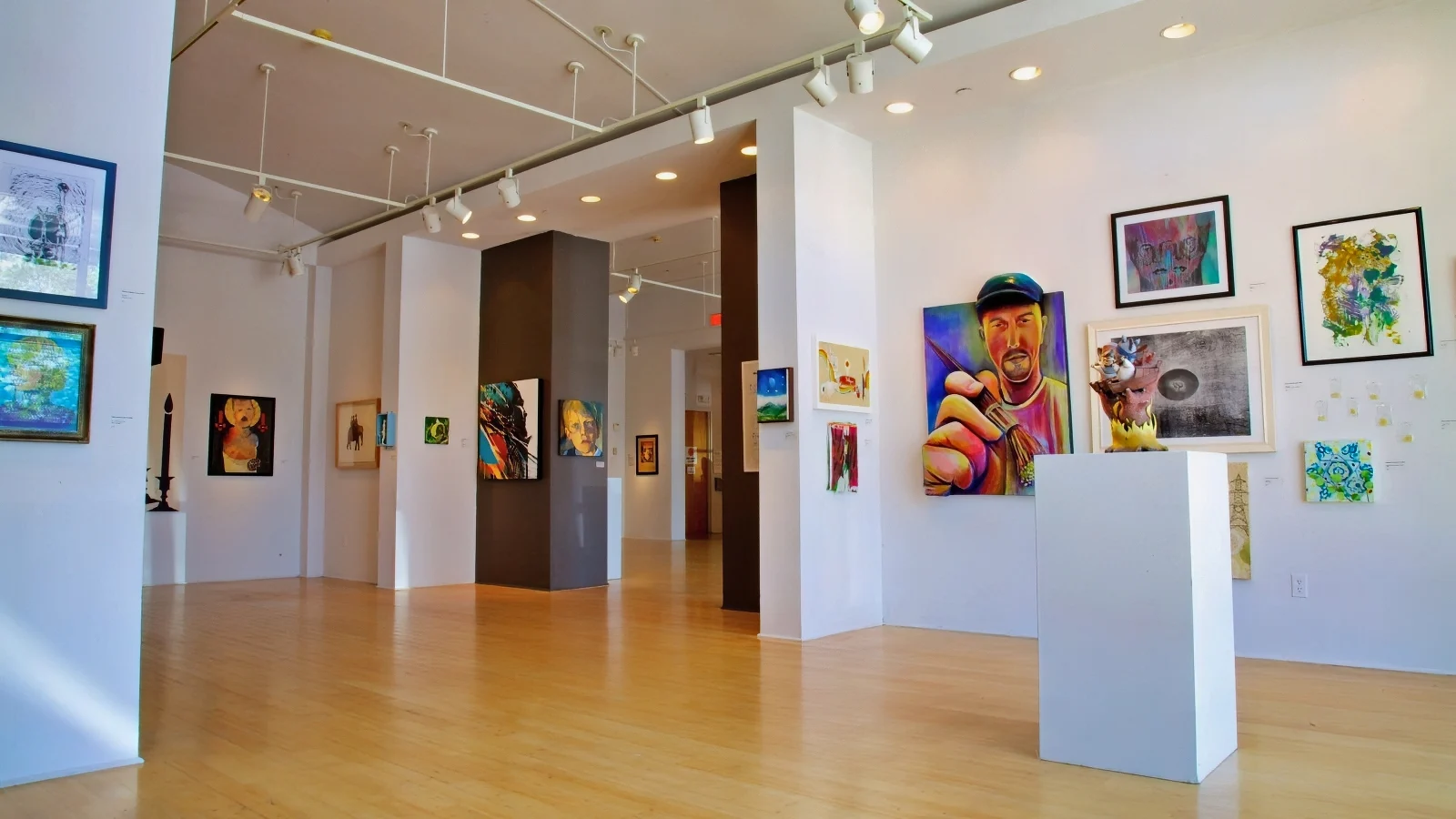
The Morean Arts Center sits in downtown St. Petersburg and runs one of the busier art-event programs in the Tampa Bay corridor. The gallery rooms doubled as event venues and read fine acoustically on bamboo flooring, which acted as a mild underfoot absorber.
When the facility planned the switch to polished concrete, the manager flagged the reverb risk before the renovation rather than after. That timing turned a potential post-renovation noise complaint into a single afternoon of cloud install.
Why Polished Concrete Pushes RT60 Up
- Bamboo Floor Absorption: NRC ~0.05 to 0.08, mild but not negligible
- Polished Concrete: NRC ~0.01 to 0.02, near-zero absorption
- Predicted RT60 Shift: 1.6 to 1.8 seconds across the galleries
- Compounding Factors: Hard Walls, Open Volume, Large Event Groups
Bamboo flooring is not a heroic absorber, but it removes a small slice of energy from the speech band that polished concrete simply does not. Across three gallery rooms with hard walls and high ceilings, that small slice was the difference between an event the curator could hold a conversation in and one that became a wash of overlapping voices.
The other variable is the crowd. Art-event nights at the Morean fill the room with people who absorb sound on their own. On quiet viewing days the rooms read calmer than any reverberation calculation predicts, and on event nights they run on the louder end of the same calculation.
Sabin Calculation: Six 4×4 Clouds Across Three Rooms
- Pre-Retrofit RT60: 1.6 seconds, bamboo flooring baseline
- Post-Concrete Projection: 1.8 seconds without treatment
- Target RT60: 1.4 seconds for speech clarity at events
- Required Absorption: Six 4×4 clouds at NRC 1.05, 96 SF total
Sabin’s formula is the right way to size any reverberation retrofit. Required Sabins equal room volume divided by target RT60 multiplied by a constant, and the math returned 96 SF of high-NRC absorption distributed across three rooms. The room acoustics calculator walks the same equation anyone can run on their own space.
Two clouds per room kept the visual rhythm symmetric and gave each gallery a balanced absorption footprint. That symmetry matters in a gallery where the ceiling is a sightline the visitor reads alongside the artwork.
Ceiling Cloud Spec and Color Match
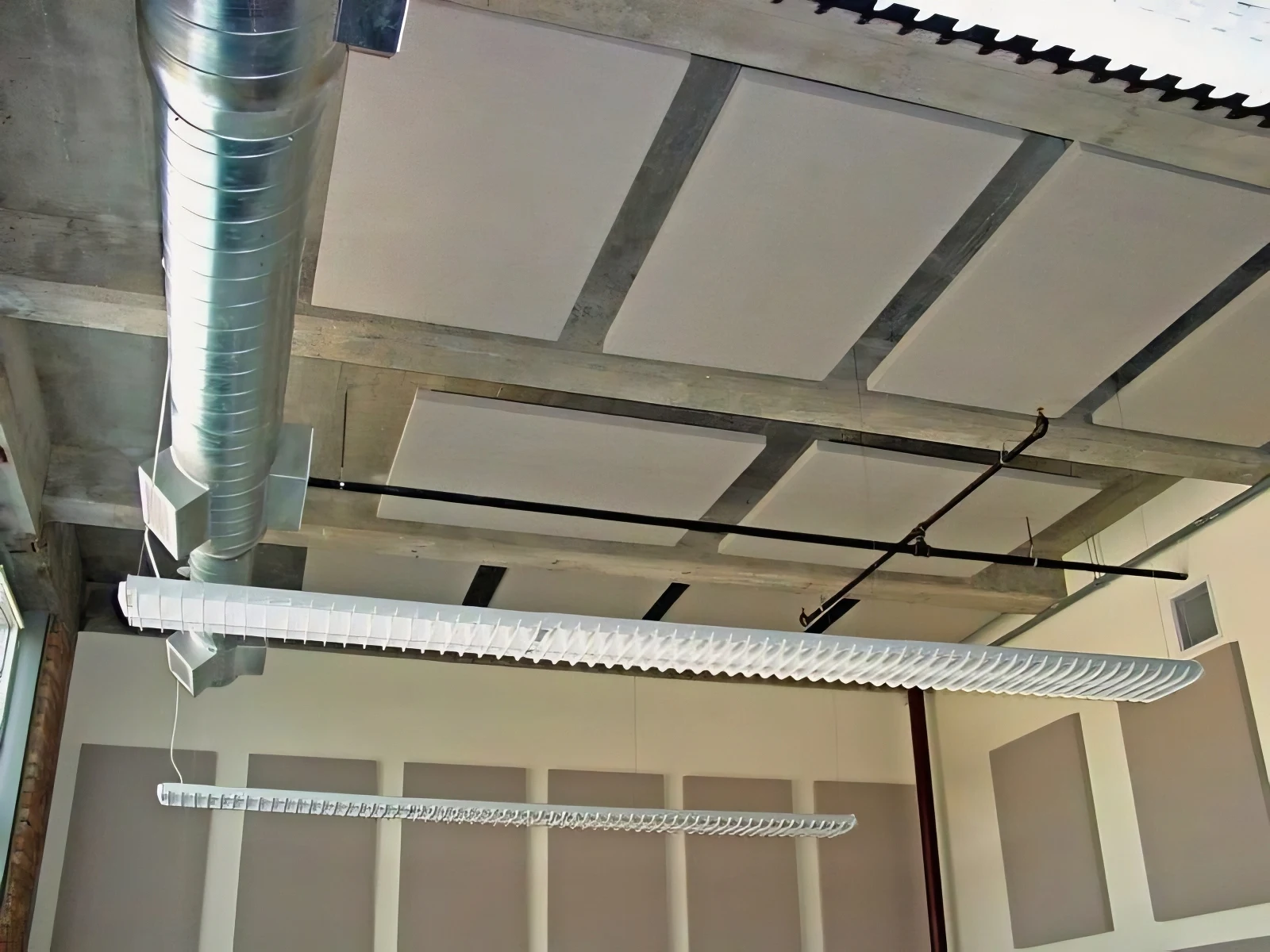
- Size: 4×4 ft, 2-inch fiberglass core
- NRC: 1.05 across the speech band
- Color: White to match the existing gallery ceilings
- Mount: Aircraft cable, suspended below the ceiling plane
Acoustic ceiling clouds were the right call here because the walls were already serving as artwork hanging space. The clouds absorb on both faces while staying off any vertical surface that would otherwise compete with a painting or installation.
White was the only viable color. The Morean galleries run a clean modern aesthetic with white ceilings, and matching the cloud color to the ceiling kept the treatment visually quiet against the artwork below.
Install: Single Morning, Three Rooms
- Crew: Two installers, suspended cable hardware
- Time: One morning across all three rooms
- Disruption: Gallery closed for half a day
- Cost: Approximately $3,000 total, including lead time
Cable-mounted clouds install fast because the work happens above head height with no wall demolition or finish work. Two installers handled the six clouds across three rooms in a single morning, and the gallery reopened in the afternoon.
Lead time on the clouds ran a few weeks from order to delivery, which fit cleanly inside the broader flooring renovation schedule. The broader picture on when to spend acoustic dollars during a renovation lives in our cost of acoustic mitigation reference.
When Ceiling Clouds Beat Wall Panels for Galleries
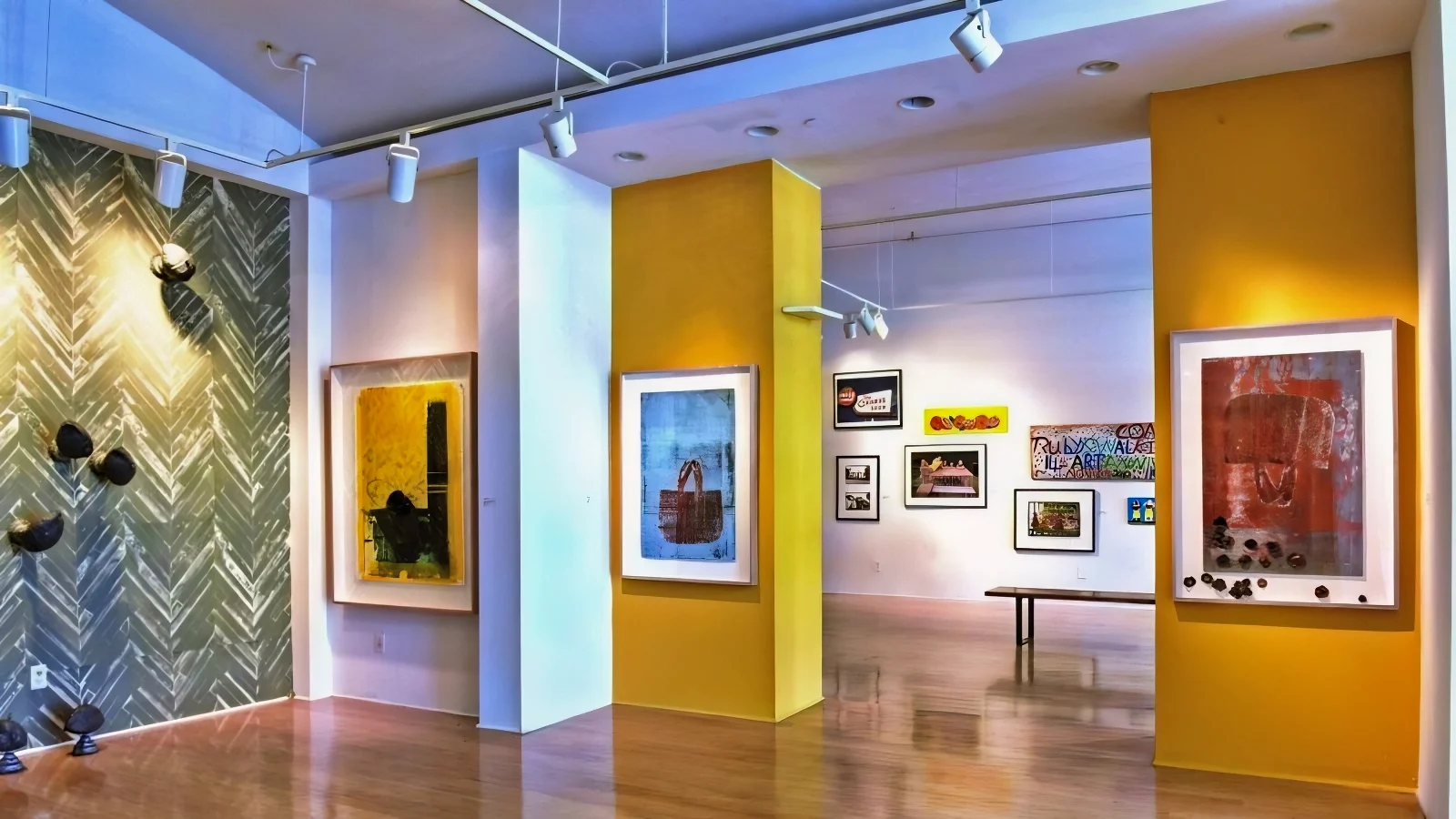
- Wall Real Estate: Galleries need walls free for hanging art
- Visual Read: Clouds float above the sightline, panels compete with the work
- Absorption Geometry: Two-sided clouds versus one-sided wall panels
- Future Flexibility: Clouds can be moved between rooms
Wall panels are the right tool in restaurants, conference rooms, and most echo problems where the walls are open. In an art gallery the walls belong to the artwork, and acoustic panels on those walls become the dominant visual element in the room. The visitor reads the panels before the art.
Ceiling clouds solve the same acoustic problem without taking wall space. A different museum project at the Sazerac House museum project in New Orleans took the opposite path because the problem was sound transmission between exhibits, not gallery reverb.
Conclusion: Museum Acoustics Solutions
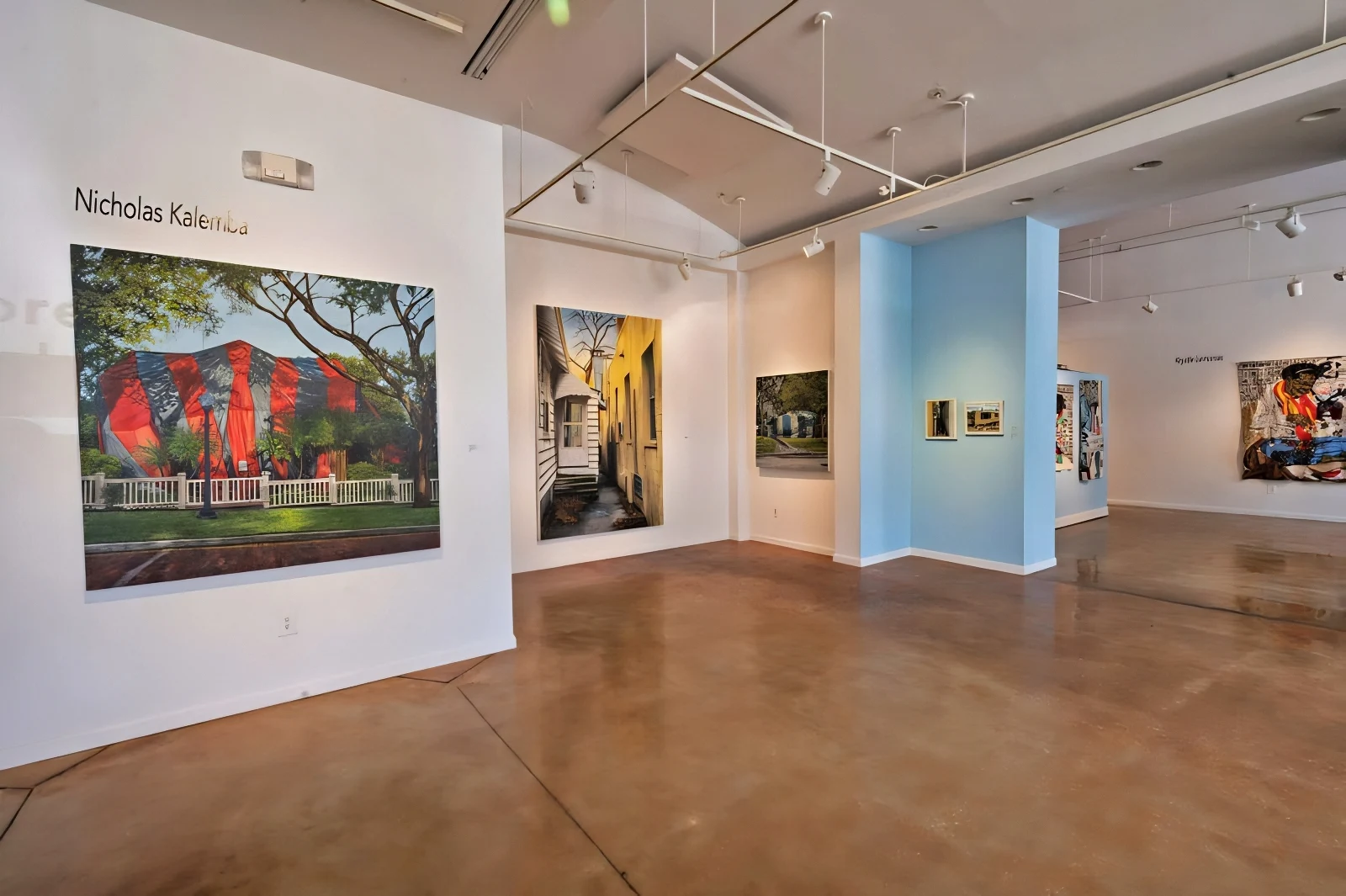
The Morean install made the case for proactive acoustic work during a flooring renovation, not reactive treatment after the noise complaints. Six ceiling clouds at NRC 1.05 hit the 1.4-second target before concrete ever went down. The team behind this work can walk the same math on your gallery or event space.
FAQs: Museum Acoustics
What RT60 target makes a museum gallery feel comfortable?
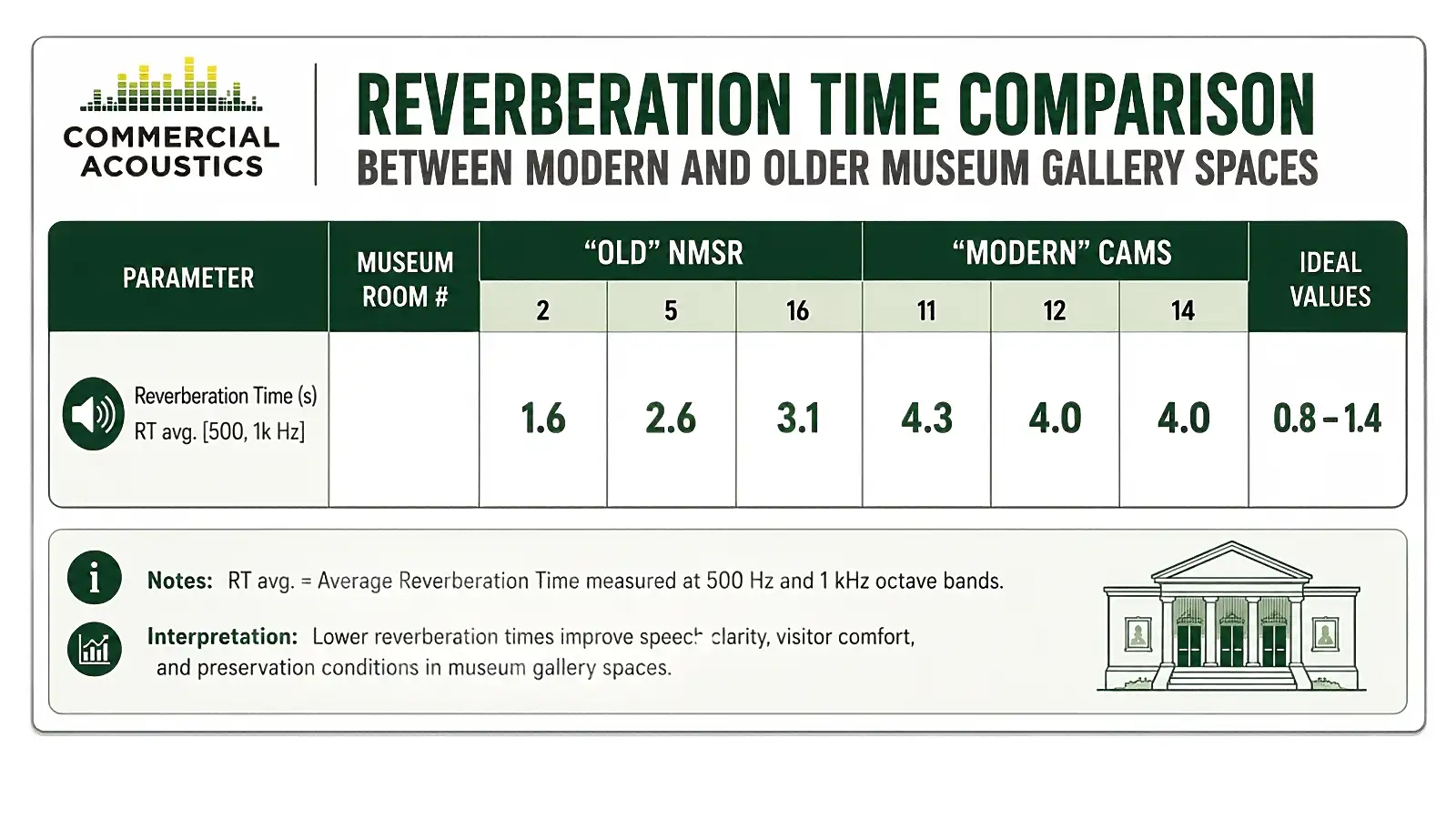
Most galleries hit a comfortable read between 1.2 and 1.4 seconds of RT60. Higher than 1.6 starts to sound washy at event volume. Lower than 1.0 begins to feel acoustically dead and pulls the room out of its live gallery character.
Why use ceiling clouds instead of wall panels in a museum?
Gallery walls hold the artwork. Mounting acoustic panels on those walls turns the panels into the dominant visual element in the room. Clouds absorb above the sightline, leaving the wall plane free for the work itself.
How much does a museum-scale ceiling cloud install cost?
A typical small-museum retrofit runs roughly $500 per 4×4 cloud installed, materials and labor included. The Morean project came in around $3,000 for six clouds across three rooms. Larger volumes or custom shapes shift the unit cost.
When should you treat a museum acoustically, before or after a renovation?
Before. The cost of acoustic mitigation drops sharply when the install happens during a planned closure. Adding treatment after a flooring or finish change usually means a second shutdown and a separate punch list.

Walker Peek|Founder & CEO, Commercial Acoustics
Walker founded Commercial Acoustics in 2013 to bring aerospace-grade engineering discipline to soundproofing, and runs the firm as CEO from its 12,000 sq ft Tampa production facility. The company designs custom acoustic panels, sound membranes, and masking systems for multi-family, hospitality, healthcare, and commercial projects across the US — built around Walker’s invention, Wall Blokker, an EVA-based sound barrier that hits STC 50-plus at roughly $1 per square foot installed.
A Jacksonville native, Walker spent five years at Kennedy Space Center with Craig Technologies before founding Commercial Acoustics — certifying aerospace manufacturing to the AS9100 standard and leading Six Sigma Black Belt process-improvement teams on NASA programs. He is a certified Industrial Noise Control Engineer and the author of Architectural Acoustics: A Practical Handbook.
