Room Acoustics Calculator: Acoustic Treatment & RT60 Tool

Estimate reverberation time (RT60) and determine how much acoustic treatment is needed for your space. Our Room Acoustics Calculator is built for architects and GCs working on offices, classrooms, healthcare facilities, and other commercial interiors where echo and speech clarity matter.
THE ROOM ACOUSTICS CALCULATOR
BY COMMERCIAL ACOUSTICS
Table of Contents
What Is Room Acoustics?
Room acoustics describe how sound reflects, decays, and disperses within a space — factors that directly impact speech clarity, comfort, and code compliance. Our acoustic treatment calculator uses Sabine’s Formula to estimate reverberation time (RT60) from your room’s dimensions and surface finishes, helping you determine if additional treatment is needed.
How the Acoustical Calculator Estimates RT60
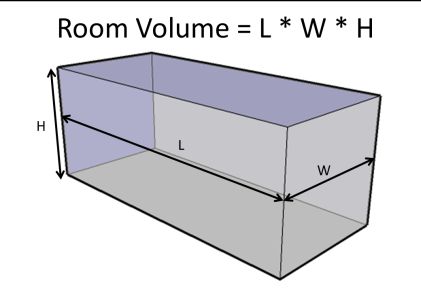
This tool applies Sabine’s Formula — a proven method for predicting reverberation time — using your room’s volume and the Noise Reduction Coefficient (NRC) of each surface.
- Step 1: Calculate total absorption in sabins (surface area × NRC for floors, walls, and ceiling).
- Step 2: Apply the formula: RT60 = 0.05 × Volume ÷ Total Absorption.
The result is your estimated reverberation time in seconds, helping architects, contractors, and designers quickly assess whether additional acoustic treatment is needed before construction or renovation.

Target RT60 by Room Type
- Classrooms & Offices: 0.4–0.6 sec for speech clarity
- Conference Rooms & Clinics: 0.5–0.8 sec for balanced acoustics
- Cafeterias & Gyms: 1.0–1.5 sec for echo management
- Auditoriums & Sanctuaries: 1.2–1.8 sec for musical warmth
Floor assemblies vary widely in performance. Carpet over slab delivers high IIC values due to soft surface absorption. In contrast, vinyl or tile over hard slab without underlayment performs poorly. For hard surface floors, adding acoustic underlayment and a suspended ceiling below dramatically boosts performance — especially in wood-framed systems where vibration transfer is higher.
Absorption vs. Diffusion in Acoustic Design
- Absorption: Reduces echo by converting sound energy (e.g., panels, carpet)
- Diffusion: Scatters sound evenly to preserve liveliness (e.g., 3D diffusers, clouds)
- Best Strategy: Absorption controls reverberation; diffusion improves clarity & balance
Effective acoustic design typically combines both strategies. Absorption shortens RT60 and removes harsh reflections, while diffusion ensures the room doesn’t feel “dead” by breaking up concentrated sound energy. This balance is essential in commercial spaces where controlling echo and achieving optimal room acoustics directly impacts speech clarity and occupant experience.

Case Studies: Absorption in Action
Polk State College: Music Building Diffuser & Panel Upgrade
Polk State College renovated its Arts & Music Building to improve clarity & manage reverberation in performance, rehearsal & teaching spaces. Ceiling diffusers, fabric panels & scatter units were integrated to balance frequencies while supporting the school’s busy music program.
👉 Explore our Polk State College music building absorption case study.

Pearl River Central High School: Auditorium & Music Room Acoustics
Pearl River Central High School needed precision acoustics for its auditorium & band rooms. More than 450 fabric panels & barrel diffusers were installed to reduce reverberation, improve speech intelligibility & enhance performance quality for students & audiences.
👉 See how we delivered absorption solutions at Pearl River Central High School.

Del Webb Lakewood Ranch: Clubhouse Restaurant Noise Reduction
At Del Webb’s 55+ community in Bradenton, FL, the clubhouse restaurant struggled with excessive echo that hurt speech clarity. Our team installed a fabric wall system across all available surfaces, cutting RT60 from 1.75 to 1.0 seconds and creating a comfortable, conversation-friendly dining space.
👉 Explore this restaurant clubhouse absorption case study in Florida.

Gulf Coast Bank: Fabric Wall Installation for Office Privacy
At Gulf Coast Bank in Metairie, LA, hard surfaces from a recent remodel created echo that hurt speech clarity & client confidentiality. Our team installed a seamless fabric wall system aligned with cabinetry, delivering both sound absorption & professional design integration.
👉 Learn more in our Gulf Coast Bank fabric wall absorption case study.

FAQs: Using the Room Acoustics Calculator Effectively
What is RT60 and Why is it Important?
RT60 is the standard measure of reverberation time. It tells you how echoey or controlled a space is, and affects everything from speech clarity to noise complaints.
How Accurate is the Acoustics Calculator?
It’s based on real-world NRC values and proven acoustic formulas. For pre-construction planning, it’s highly reliable. Final tuning may require field testing in sensitive applications.
What if my Calculated RT60 is too high?
That means your room is too reflective. You’ll need to add acoustic absorption, such as wall panels, ceiling baffles, or even carpets and drapes depending on the setting.
Should I use Wall Panels or Ceiling Treatments?
Ceiling treatments are most effective in large or tall rooms; wall panels are best at targeting side reflections and speech paths. Use both when possible for balanced control.